The salt spray tastes different on the western shore of the Red Sea. In Djibouti, the wind does not just blow; it scours, carrying the dry, burning memory of the Danakil Depression across a narrow strip of water that separates two entirely different realities.
To the east, across that twenty-mile throat of the Bab-el-Mandeb strait, lies a country that has been slowly unravelling for a decade. Yemen is not merely a place torn by conflict; it is a monument to the exhaustion of human endurance. And now, according to the United Nations, more than 10,000 human beings are projected to pack what little they can carry, step onto overloaded wooden skiffs, and cross that dangerous water in the coming months, seeking sanctuary in a nation smaller than New Jersey.
Numbers sterilize catastrophe. Ten thousand is an abstract statistic, a neat column in a quarterly report filed by aid organizations sitting in air-conditioned boardrooms in Geneva. But numbers do not bleed. Numbers do not have names, or bruised shins, or children clutching damp shirts in the dark.
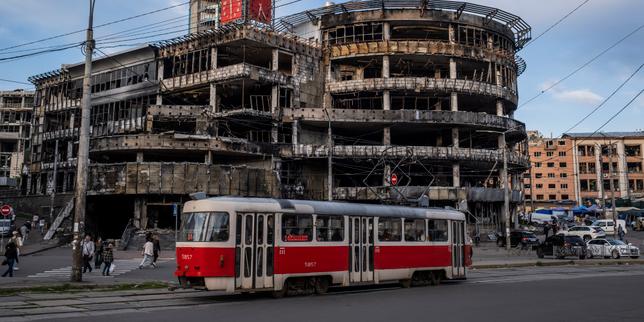
Consider a hypothetical father named Tariq. In Sana'a, Tariq was an accountant. His office building is now a hollowed-out concrete carcass with iron rebar reaching toward a smoke-streaked sky like broken fingers. His children no longer ask about school; they ask about bread. When the mortar rounds began dropping closer to their neighborhood last month—close enough to rattle the cheap glass in their kitchen windows and send dust sifting down onto their meager plates—Tariq did not consult a geopolitical map. He looked at his youngest daughter’s ribs, stark against her skin, and made a choice that every parent understands and every bureaucrat fears.
He decided to run toward the sea.
The journey to the coast is a gauntlet of checkpoints, extortion, and dust. The roads are scarred by craters and memory. When families finally reach the ports of Al Hudaydah or smaller, nameless fishing villages carved into the salt-crusted shoreline, they find a grim marketplace. Smugglers—men who trade in desperation—demand fortunes for seats in boats designed for half their load.
Let us be entirely honest about the physics of this crossing. The Bab-el-Mandeb is one of the busiest shipping lanes on Earth, churning with gargantuan container ships and oil tankers that throw wakes capable of capsizing a fragile fiberglass skiff. The winds here are erratic. The currents are treacherous. People drown here not because they sought adventure, but because staying behind was a guarantee of a slower, more agonizing death.
When those boats touch the volcanic rock of Djibouti's northern coast—near Obock, a town where the desert meets the sea in a blinding flash of white and blue—they do not arrive into an embrace of milk and honey.
Djibouti is a country of stark contrasts. It is geopolitically vital, hosting military bases for global superpowers, studded with gleaming port facilities designed to siphon Ethiopia's booming trade to the world. Yet, internally, it battles its own profound economic anxieties, chronic water scarcity, and high unemployment. To welcome 10,000 new arrivals is not a casual administrative adjustment for Djibouti. It is an immense strain on a fragile ecosystem of social services, medical clinics, and food distribution networks.
Walk through the makeshift reception areas outside Obock, and the scale of the human drama becomes inescapable. The air is thick with the scent of unwashed clothes, diesel, and baking dust. Tents made of scavenged tarps and thorn-tree branches flutter in the relentless wind.
Here, you meet women like Aisha. She arrived two weeks ago with three children and no husband—he was claimed by the conflict three winters ago. She speaks in a low, flat monotone, the voice of someone whose capacity for shock was burned away long ago.
"In Yemen," she tells me, her eyes fixed on the horizon where the blue water meets the white glare, "you live listening for the whistle. Every sound in the night is a shell. Here, there are no shells. But there is also no work. There is only the wind."
Aisha’s testimony exposes the cruel paradox of modern displacement. Escaping a war zone does not mean arriving in safety; often, it simply means trading active violence for slow, grinding vulnerability. The United Nations High Commissioner for Refugees and local Djiboutian authorities are scrambling to scale up water points, medical screening, and shelter capacity. But international donor fatigue is real. The world’s attention span is short, easily hijacked by newer crises, leaving forgotten wars to simmer in the dark.
Why does this matter to someone sitting thousands of miles away, reading this on a glowing screen in a quiet room?
Because borders are historical fictions, but human vulnerability is universal. The collapse of civil order in Yemen is not an isolated tragedy confined to the Arabian Peninsula. It is a stress test for our collective humanity. When thousands of people are forced to choose between the certainty of a bomb and the gamble of the sea, the moral fabric of the international community is measured by what happens next.
The UNHCR’s projection of 10,000 refugees is not a weather forecast. It is a warning. It is an SOS tapped out in Morse code by administrative reports, signaling that the pressure cooker in Yemen is reaching a new threshold.
If you look closely at the maps of the Horn of Africa, you see a region held together by fragile threads. Ethiopia, Somalia, Sudan, Yemen, Djibouti—they are locked in a regional dance of instability and displacement. When one corner stumbles, the shockwave ripples through all the others.
What happens when those boats keep coming? What happens when the meager rations in Obock run thin?
These are not rhetorical questions. They are policy crises waiting to explode, human stories waiting to break hearts. The international community cannot simply write checks after the tragedy occurs. Prevention requires sustained diplomatic pressure to end the war in Yemen, combined with robust, unflagging financial and logistical support for frontline host countries like Djibouti that bear the brunt of the humanitarian fallout.
Back on the shore at Obock, the sun is beginning its rapid, blinding descent into the desert. The sky turns the color of bruised copper. The wind doesn't die down; if anything, it grows sharper, whistling through the wire fences of the camp.
A group of children are kicking a deflated soccer ball in the dust, their laughter sharp and bright against the gloom. They do not know about UN projections, or geopolitical transit corridors, or donor conferences in European capitals. They only know that today they are alive, and tomorrow the sun will rise over the same water, bringing more of their countrymen across the red sea, running from the fire, hoping against hope to find a place where the wind is just wind, and the night is just dark.