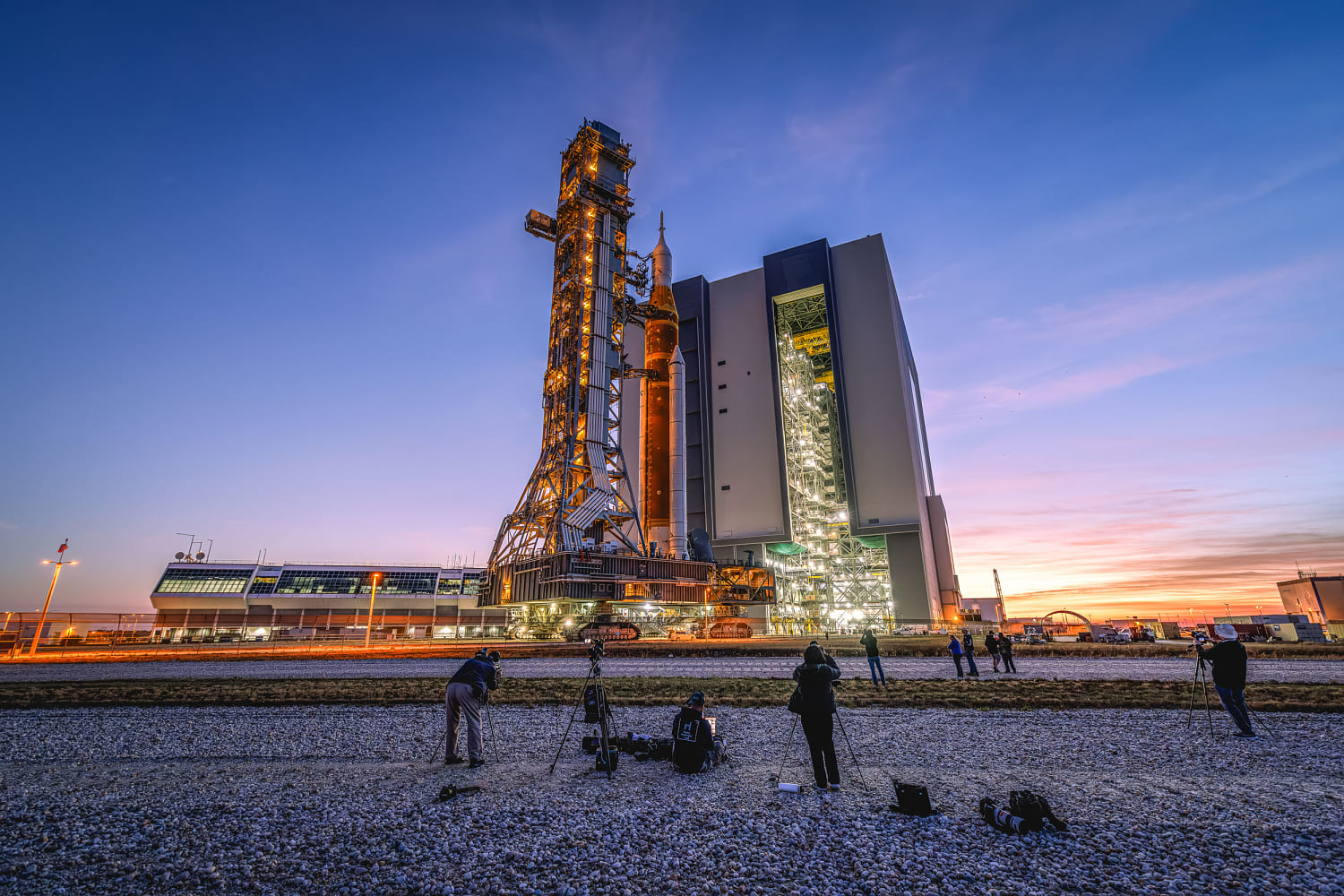
The wait is almost over. NASA just confirmed that the Space Launch System (SLS) rocket and the Orion spacecraft will begin their slow crawl back to Launch Complex 39B at the Kennedy Space Center. After weeks of intense labor inside the Vehicle Assembly Building (VAB), the agency is officially eyeing an April 1 liftoff. It’s a date that carries a bit of irony, but for the teams at Cape Canaveral, this is no joke. They’ve been working around the clock to fix the gremlins that stalled previous attempts.
Getting a 322-foot-tall rocket to stay functional is a nightmare of engineering. You aren't just dealing with engines and fuel. You're dealing with miles of wiring, thousands of sensors, and seals that have to survive the literal freezing temperatures of liquid hydrogen. Most people think of a launch as a single event. It isn't. It's the culmination of a thousand small victories over physics.
Why the SLS Stayed in the Hangar So Long
If you followed the news last month, you know the rollout didn't go as planned. Engineers found a series of nagging issues during the pre-launch checks. Specifically, there were concerns about a faulty check valve in the interim cryogenic propulsion stage and a stubborn hydrogen leak that refused to go away.
NASA doesn't take chances with a multi-billion dollar asset. They rolled the stack back into the VAB to get a controlled environment for repairs. Working on a rocket at the pad is a headache because of the wind, salt air, and humidity of the Florida coast. Inside the VAB, they can get the heavy-duty platforms in place and really see what's going on. They replaced the seals and tested the valve. Now, they're confident.
The move back to the pad is a four-mile journey that takes nearly 10 hours. It’s done on the massive crawler-transporter 2, a machine that’s been around since the Apollo era but has been upgraded to handle the sheer weight of the SLS. It moves at less than one mile per hour. You could literally walk faster than this rocket travels to its destination.
The Brutal Reality of Liquid Hydrogen
Hydrogen is the "diva" of rocket fuels. It's incredibly efficient, but it's a tiny molecule that finds every microscopic gap to escape through. When you're loading 700,000 gallons of the stuff, even a pinhole leak can scrub a mission. That's what happened last time.
The seals on the "quick disconnect" arms—the umbilical lines that feed fuel from the tower into the rocket—are often the culprit. If these seals don't seat perfectly, the sensors pick up a concentration of gas. Anything above 4% is an explosive risk. NASA's flight rules are written in blood and expensive hardware failures, so they don't "send it" if the numbers are off.
During this stint in the VAB, technicians didn't just swap parts. They ran "stress tests" on the connections. They want to ensure that when the rocket is sitting on the pad on April 1, the hardware can handle the thermal shock of moving from ambient Florida heat to -423 degrees Fahrenheit in a matter of minutes.
What Happens Once the Rocket Reaches the Pad
Once the crawler drops the mobile launcher onto the pedestals at 39B, the clock starts. It takes several days to hook up the power, data, and fuel lines. This isn't just a "plug and play" situation. Every connection has to be verified.
- Hard Down: The launcher is bolted to the pad.
- Power Up: Systems are brought online to check for any damage during the roll.
- Tanking Test: This is the big one. They'll fill the tanks to see if the new seals hold.
- The Terminal Count: The final ten minutes where the onboard computers take over.
If the tanking test goes well, the mission management team will give the "go" for the April 1 window. This mission, Artemis I, is uncrewed. It’s a test flight to prove that the heat shield on the Orion capsule can handle a "skip reentry" into Earth's atmosphere at 25,000 miles per hour. That’s much faster than a return from the International Space Station.
The Stakes for the Artemis Program
Let’s be real about what’s on the line here. The SLS is years behind schedule and billions over budget. Critics often point to private companies like SpaceX and suggest the SLS is a "dinosaur." But right now, this is the only vehicle capable of sending the Orion capsule, its crew, and heavy cargo to the Moon in a single shot.
Artemis I is the foundation for everything that follows. If this flight fails, Artemis II—the first crewed mission to orbit the Moon—gets pushed back even further. We're talking about a timeline that already feels stretched thin. NASA needs a win. The workers at Kennedy Space Center know this. There's a palpable tension in the air every time that crawler starts its engines.
Managing the Weather and the Window
April in Florida is unpredictable. You’ve got the sea breeze coming off the Atlantic, which can trigger lightning or high-altitude winds that would shred a rocket during ascent. The "launch window" isn't just about when the rocket is ready; it's about where the Moon is.
To get into the right lunar orbit, the SLS has to launch at a specific time so that the upper stage can perform the Trans-Lunar Injection (TLI). If they miss the window on April 1, they might only have a few days before the Moon's position makes the mission impossible for that month. They'd have to wait for the next "lunar cycle" window to open up.
Looking for Success Beyond the Hype
Don't expect the launch to be a smooth ride from T-minus zero. Scrubber-happy sensors and temperamental valves are part of the game. If you're planning to watch the livestream, keep your expectations in check. NASA has a history of "holding" the clock to investigate minor data blips.
The important thing is that the rocket is moving. Movement means progress. The repairs are done, the software is patched, and the team is ready. We're watching the most powerful rocket ever built prepare to reclaim our place in deep space.
If you want to track the rollout in real-time, NASA usually provides a live stream of the crawler's progress. It's slow TV at its finest, but there's something therapeutic about watching 6 million pounds of machinery move toward the horizon. Keep an eye on the official Kennedy Space Center Twitter feed for the exact "first motion" time, which is currently scheduled for the overnight hours to avoid the worst of the daytime heat. Check your local weather apps for Brevard County; if there's a hint of lightning within 20 miles, expect a delay in the rollout itself. Once it's on the pad, the real countdown begins.