The official numbers from Kathmandu always arrive sanitized. They move through bureaucratic channels as cold integers on government letterheads before hitting international wire services. But numbers do not capture the stench of decomposing tissue in overcrowded municipal morgues. They fail to convey the desperation of families digging through five meters of slate and mud with bare hands because heavy machinery cannot navigate roads wiped clean by mountain torrents. Nepal flash floods have claimed over one thousand lives, turning the Himalayan foothills into a mass grave while urban centers like Kathmandu confront a grim logistical nightmare of mass burials.
Yet, reducing this catastrophe entirely to unseasonal monsoon fury is a lazy journalistic trope. Mother Nature does not act alone. Decades of unmitigated urban sprawl, compromised environmental impact assessments, and structurally deficient infrastructure transformed routine seasonal rainfall into a hydraulic battering ram. The water came down from the peaks carrying more than just sediment. It carried the accumulated weight of political neglect, corrupt zoning approvals, and an institutional refusal to respect the ecological boundaries of fragile river basins.
The Myth of the Natural Calamity
Rainfall intensity in South Asia has shifted. Climate science has documented this pattern for twenty years. Warmer air holds more moisture, dumping unprecedented volumes of water in compressed windows of time. But water falling from the sky is only half the equation. The disaster unfolded because every natural buffer protecting the valleys had been systematically dismantled long before the first storm broke.
Consider the Bagmati River corridor slicing through the Kathmandu Valley. Historically, this river system functioned as a massive sponge. Floodplains expanded during monsoons, absorbing the surge before slowly releasing the volume downstream. Over the past three decades, land speculators and real estate cartels paved over those very floodplains. Concrete housing colonies, commercial hubs, and government structures rose on land that water had claimed for millennia. When the rivers swelled, they did not overflow into empty fields. They smashed into concrete foundations, redirected violently through narrow streets, and turned urban arteries into deadly flumes.
The official response exposed an apparatus completely unprepared for systemic failure. Emergency stockpiles were inadequate. Communications towers collapsed within the first hour of high winds, plunging whole districts into information blackouts. Rescue choppers sat grounded on tarmac because civil aviation authorities lacked protocols for zero-visibility mountain corridors during simultaneous multi-district emergencies.
When Infrastructure Becomes the Hazard
Engineered interventions intended to tame the landscape often accelerate its destruction. Across Nepal's mid-hills, a massive rural road-building boom has taken place over the past fifteen years. Local politicians pushed for dirt roads to connect remote villages, often using unregulated bulldozers funded by remittance money. Contractors cut switchbacks into steep, unstable slopes without proper drainage engineering or retaining walls.
These poorly cut roads act as collection funnels. During heavy downpours, they gather massive sheets of water, channeling high-velocity runoff directly onto fragile hillsides below. The result is a series of cascading landslides that wipe out entire settlements miles away from the initial cut.
The Morgue Crisis and the Breakdown of the State
In Kathmandu, the human toll overwhelmed the medical infrastructure within seventy-two hours. Teaching hospitals and municipal morgues designed to handle a fraction of daily fatalities quickly ran out of refrigerated storage space. Power grids failed, knocking out backup generators in secondary clinics. Medical examiners faced an impossible triage.
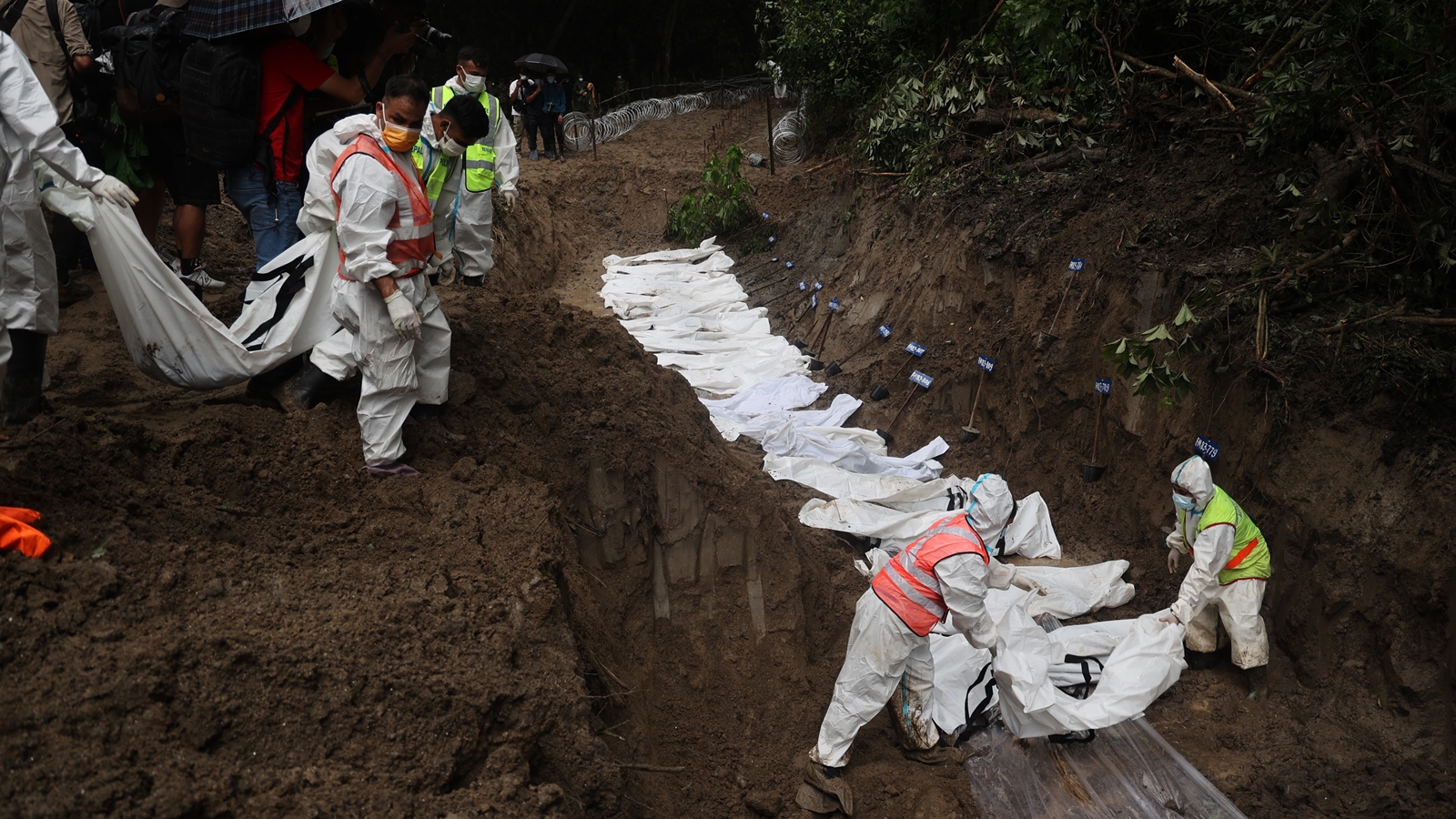
Mass burials began out of sheer biological necessity. Decomposition rates in the humid, post-flood heat accelerated rapidly, threatening secondary public health crises like cholera and typhoid outbreaks. Families were denied the closure of traditional cremation rites, a deeply painful departure from cultural norms that compounded the psychological trauma. The state could not provide body bags, let alone dignified funeral services. Makeshift burial sites materialized on the outskirts of the city, marked only by wooden stakes and handwritten numbers.
Where the Recovery Money Goes
International aid pledges arrived instantly. Millions of dollars were earmarked by foreign governments and multilateral lenders for immediate disaster relief and long-term rehabilitation. Anyone familiar with the political economy of South Asian disaster management knows the darker cycle that follows.
Relief funds frequently vanish into administrative overhead, procurement delays, and political patronage networks. Temporary shelters constructed with substandard tarpaulins fail before the next winter sets in. Embankments rebuilt hastily along riverbanks use cheap gabion wire mesh that rusts and snaps within a single monsoon cycle.
Rebuilding Nepal requires a fundamental paradigm shift away from reactive disaster management toward radical territorial planning. Roads must be engineered with climate resilience at the forefront, not as an afterthought. Floodplains must be reclaimed from developers, even if it means confronting powerful economic interests tied to municipal governments. Early warning systems need decentralization, pushing real-time sensor data directly to vulnerable communities via cellular networks before the rivers breach their banks.
Until the political class stops viewing ecological degradation as an acceptable cost of rapid development, the next monsoon will simply repeat the cycle on an even larger scale, and the temporary graves outside Kathmandu will become permanent monuments to systemic failure