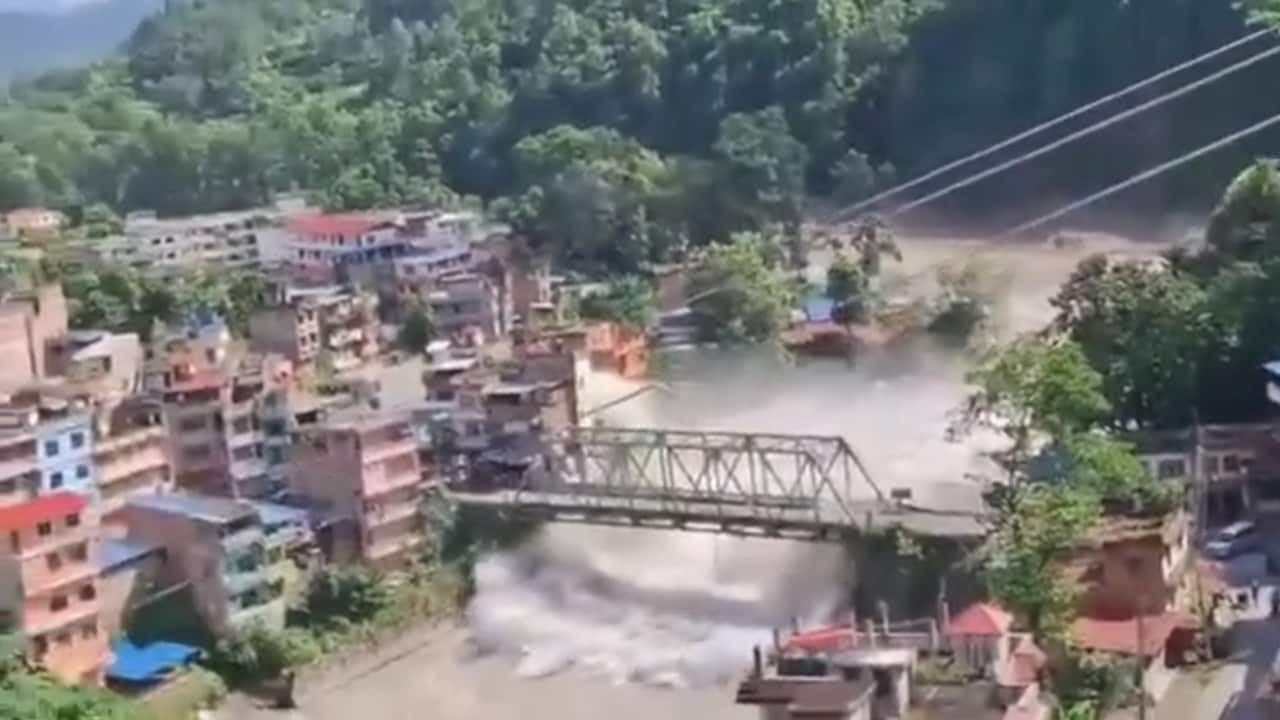
A sudden roar broke through the morning calm in the mountainous Rasuwa district, sounding like a volcanic eruption before a wall of water tore down the valley. At least eight bodies have been recovered, and emergency response teams are scrambling as flash floods wash away villages in Nepal near the Tibet border. Hundreds remain missing, and critical infrastructure projects lie in ruins.
If you look past the breaking headlines, this disaster points to a terrifying recurring reality in the Himalayas. The Bhote Koshi river system turned into a raging torrent around 9 a.m., taking settlements completely by surprise. Waters surged so high that rescue helicopters couldn't land in hard-hit areas like Syapru Besi and Timure.
What Actually Triggered the Crisis
Water doesn't just appear out of nowhere. Experts point to an ice-rock avalanche from a glacier that temporarily blocked a tributary, the Lhende Khola, before releasing a devastating wall of water downstream. This exact pattern mirrors last year's disaster on the same river system, which also claimed lives and severed cross-border trade links.
Climate research organizations note that the Hindu Kush Himalaya region is warming much faster than the global average. Glaciers are melting at an alarming rate, and ice loss has doubled since 2000. When high temperatures or sudden avalanches cause glacial lakes and blocked tributaries to breach, communities downstream face catastrophic risk with minimal warning time.
Across the border in China's Tibet region, the disaster also hit Gyirong County with major mudslides, disrupting roads, power grids, and communication lines at a vital land crossing.
The Immediate Toll on Energy and Life
The human cost is escalating by the hour, but the economic and structural blows are massive too. Nepal's energy ministry reported that roughly 430 megawatts of electricity capacity—more than twelve percent of the nation's total hydropower capacity—got knocked offline or disrupted.
Prime Minister Balendra Shah mobilized police and military units for emergency rescue efforts. Officials issued urgent directives for residents along the Bhote Koshi and Trishuli riverbanks to evacuate to higher ground immediately.
Yet, rescue operations face severe bottlenecks. Landslides and washed-out bridges have cut off access routes, leaving rescue teams struggling to reach isolated pockets. High water levels block aerial extraction, leaving ground teams to fight dangerous currents on foot.
What Needs to Happen Now
Disaster management in high-altitude zones requires an overhaul. Early warning systems cannot rely solely on downstream gauges that trigger only when water is already destroying homes. Cross-border data sharing between Nepal and China is vital, given that these river systems originate in Tibet before tearing through Nepali settlements.
If you live in or travel through vulnerable mountain corridors during the monsoon and melting seasons, treat river proximity as a red zone. Monitor local advisories closely, identify high-altitude evacuation paths ahead of time, and never underestimate the speed of a glacial surge.


