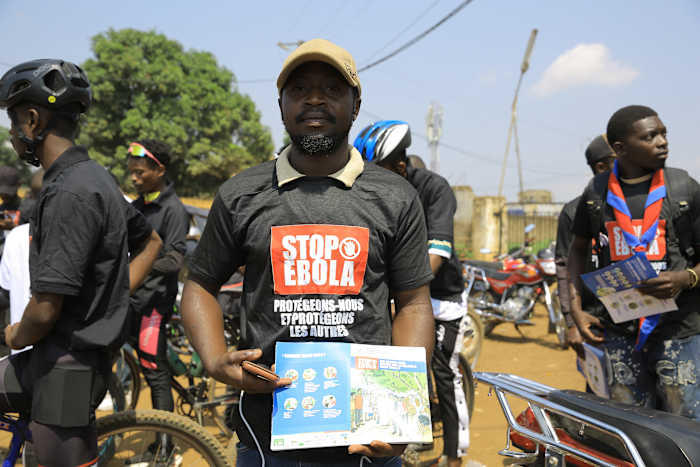
Imagine trying to track a deadly virus while mortar shells are falling around your clinic. You can't. That is exactly what is happening right now in the eastern Democratic Republic of the Congo.
The World Health Organization just dropped a chilling warning. WHO Director-General Tedros Adhanom Ghebreyesus says the region faces a catastrophic collision of disease and conflict. The current Ebola outbreak is officially outpacing containment efforts. Don't forget to check out our previous post on this related article.
If you think you have seen this movie before, you haven't. This isn't just another routine health crisis in a volatile area. The specifics of this crisis make it uniquely dangerous, and the global response is falling behind fast.
The Nightmare Strain with No Cure
When people hear Ebola, they usually think of the Zaire strain. That was the culprit behind the massive West Africa epidemic years ago and several past outbreaks in Congo. For the Zaire strain, we developed highly effective tools. We have a proven vaccine. We have monoclonal antibody treatments that save lives if given early. To read more about the background here, Medical News Today offers an in-depth breakdown.
This outbreak is different.
The culprit in Ituri province is the Bundibugyo strain. This specific variant was first identified in Uganda back in 2007. Here is the terrifying truth about the Bundibugyo strain: there is no approved vaccine for it. None. There is also no approved therapeutic treatment.
Healthcare workers cannot rely on the pharmaceutical armor that helped them break the back of previous epidemics. They are stuck using basic supportive care. Fluids. Oxygen. Fever management. They are fighting an ultra-aggressive hemorrhagic virus with their hands tied behind their backs.
Guns Bombs and Burning Isolation Tents
A medical response relies entirely on trust, stability, and access. Eastern Congo has none of those things. The region has been plagued by complex fighting for three decades involving a maze of armed groups, including the M23 rebel group, CODECO militias, and the Allied Democratic Forces.
The violence destroys any chance of standard public health tracing. To stop Ebola, you must track down every single person an infected patient touched. You can't do that when a village empties out overnight because an armed militia is marching toward it.
The conflict is forcing mass displacement. Nearly one million people are displaced in Ituri province alone. Terrified families are fleeing into overcrowded, unsanitary camps. These camps are perfect tinderboxes for viral transmission.
Even worse, medical infrastructure is under direct attack. In the town of Mongbwalu, unidentified attackers targeted a general referral hospital. They burned down the isolation tents set up by Médecins Sans Frontières.
During the chaos, 18 Ebola patients fled into the surrounding community. The next day, more patients escaped, and one suspected case died of severe hemorrhaging right on the hospital grounds while trying to run.
Why would anyone attack a hospital during an epidemic? It boils down to a tragic clash of cultures and deep-rooted community mistrust.
Ebola victims are highly contagious after death. Their bodily fluids carry massive viral loads. To stop the spread, medical teams must perform safe, dignified burials. This means wrapping bodies in biohazard bags and preventing family members from touching them.
But traditional local customs require family members to wash, dress, and touch the deceased before burial. When authorities refuse to hand over bodies, grief turns into rage. Communities accuse foreign aid groups and government workers of stealing bodies or fabricating the virus. The result is violence against the very doctors trying to save them.
The Cross Border Threat is Already Real
This is no longer contained within Congo. The virus is moving along major trade and transport routes.
Uganda has already confirmed seven cases of Ebola linked to this outbreak, including infections in two healthcare workers. All seven of these cases were reported right in the capital city of Kampala.
The virus traveled across the border through standard human transit. In one instance, a Congolese woman crossed into Uganda specifically to seek medical care. In another case, a driver caught the virus after transporting an infected individual.
The response from neighboring countries has been swift, but it highlights the desperation of the situation. Uganda closed its border to regular traffic, allowing only authorized cargo, food transport, and medical teams through. Anyone entering must undergo a mandatory 21-day self-isolation period.
The WHO actually advises against hard border closures. Why? Because shutting down official checkpoints does not stop desperate people from moving. It just pushes them into informal, unmonitored border crossings through the bush. When people cross through the forest, health workers cannot screen them, take their temperatures, or track their history. It makes the spread even harder to contain.
The Africa Centres for Disease Control and Prevention has placed ten neighboring nations on high alert. Rwanda, South Sudan, Kenya, Tanzania, and Burundi are all scrambling to prepare for potential cases.
Hunger and Disease are Old Companions
You cannot look at this virus in isolation. It is colliding with a massive, slow-motion starvation crisis.
According to the UN-backed global food security monitor, nearly 10 million people across eastern Congo are currently facing acute hunger. Nationwide, that number balloons to over 26 million people.
Malnutrition ruins the human immune system. When a child is severely malnourished, their body lacks the energy and cellular infrastructure to fight off an infection. A virus like Ebola, which causes massive internal bleeding and organ failure, tears through a malnourished population with devastating efficiency.
Compounding this is a severe economic bottleneck. Rural Ituri has terrible roads. International aid cuts have reduced the budgets of major humanitarian organizations.
In places like Rwampara, an epicentre of the outbreak, there are no ambulances. Sick, bleeding patients are brought to clinics on the back of ordinary motorbikes, squeezed tightly between the driver and a relative. The drivers wear basic surgical masks, completely exposed to the bodily fluids of the passenger. The health workers have to rush out with jugs of chlorine to spray down the motorbikes after they arrive.
What Must Happen Now
This crisis will not be solved by sending more medical textbooks or issuing passive statements from Geneva. The current trajectory points toward a regional catastrophe. To blunt the impact of the Bundibugyo strain, international partners and local authorities must pivot immediately.
First, an immediate localized humanitarian ceasefire is required. The WHO is begging all warring factions to halt hostilities around key health corridors. If medical teams cannot safely enter Ituri and North Kivu to track contacts and isolate the sick, the virus will continue to outpace the response. Pressure must be placed on regional actors to enforce a pause in fighting.
Second, the international community must rapidly deploy experimental vaccine protocols. While there is no approved vaccine for the Bundibugyo strain, candidate vaccines exist in research pipelines. Regulatory bodies must expedite emergency clinical trial frameworks to get these candidate shots into the field, similar to how experimental tools were deployed in past Zaire strain outbreaks.
Finally, the containment strategy must adapt to community realities. Pouring armed security into hospitals to protect health workers often backfires by increasing local paranoia. Instead, response teams must work through trusted local elders, religious leaders, and traditional healers to co-create burial practices that respect both cultural grief and biosecurity.