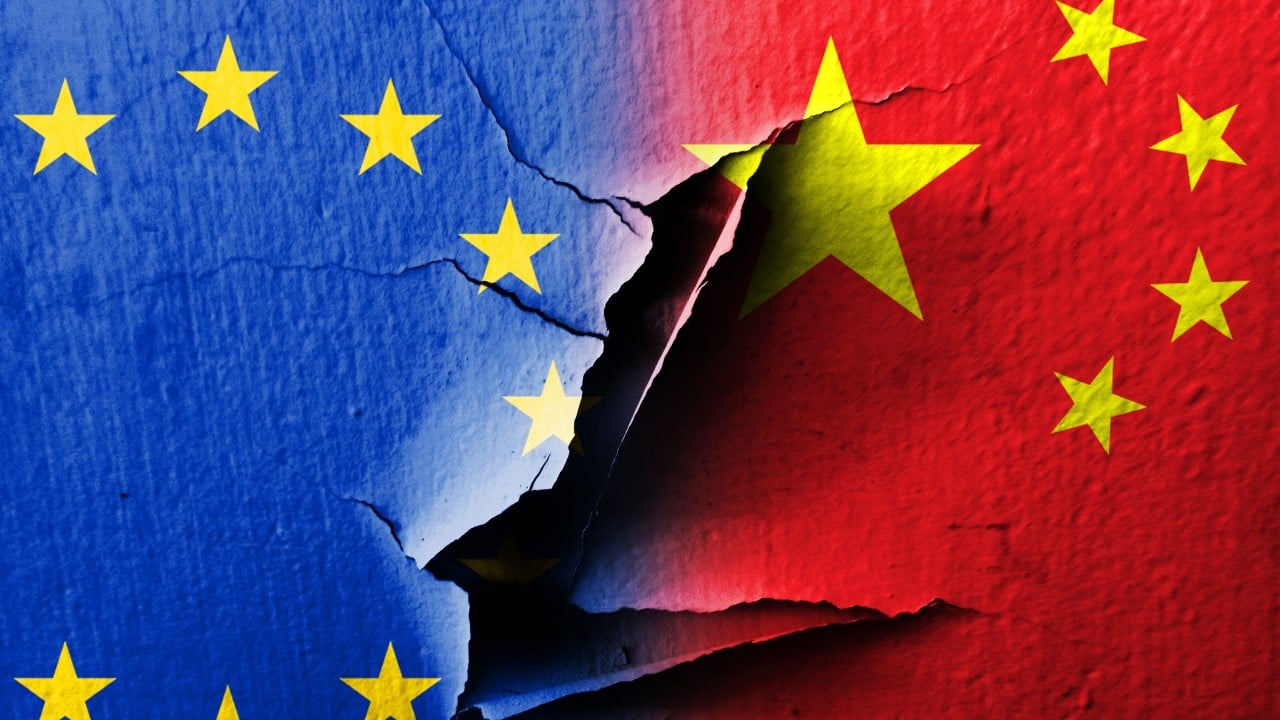
For years, Brussels played a delicate game of diplomatic hopscotch with Beijing. European leaders tried to separate business from politics, treating China as a trade partner on Mondays and a "systemic rival" on Tuesdays.
That era is officially over.
In a stark new strategy paper, the EU accuses China of actively working to reshape global order to suit its own authoritarian ends. This is not the usual diplomatic wrist-slap. It is a loud, urgent alarm. The document, circulating under the radar in Brussels, lays out a chilling picture of how Beijing uses its massive industrial scale and technological dominance to squeeze Europe.
The timing is not accidental. As Western capitals struggle with internal political shifts, trade tensions, and security worries, China has been quietly building a parallel network of international influence. This new strategy paper shows that Europe is finally waking up to the scale of the challenge.
What the EU Accuses China of Doing Behind Closed Doors
The core of the European Union's warning is simple: Beijing is no longer just participating in the international system. It wants to write the rules.
In the leaked document, EU officials argue that China is combining its industrial muscle, tech ambitions, and global diplomatic reach to carve out spheres of influence. The document explicitly points to a growing axis between Beijing and Moscow, labeling China a key enabler of Russia’s actions in Ukraine.
For a long time, European policy was built on a hope. The hope was that integrating China into global trade would make it a "responsible stakeholder." That hope has disintegrated.
Instead of adopting liberal values, Beijing has spent the last decade building its own. It has created new forums, pushed its own standards in international bodies, and used its economic power to quiet critics.
The Double Playbook of Reform and Replacement
To understand how China is seeking to reshape global order, you have to look at its two-track strategy.
- Infiltrating existing bodies: Inside the United Nations, Chinese diplomats have worked hard to secure leadership roles in standard-setting agencies. They use these positions to redefine basic concepts like human rights and sovereignty, shifting the focus from individual liberties to state-led economic development.
- Building parallel structures: When existing institutions do not serve Beijing's needs, it builds new ones. From the expansion of the BRICS block to the creation of regional development banks, China has established a financial and diplomatic safety net that operates outside Western oversight.
By running these two strategies at the same time, Beijing ensures it wins either way. If the UN remains strong, China has the votes to block Western initiatives. If the UN weakens, China’s parallel network is ready to take its place.
The Economic Trap of Asymmetric Trade
You cannot separate Beijing's political ambitions from its trade policy. The new EU strategy paper highlights how China exploits its "asymmetric advantages" to create dependencies that it can later use as political tools.
Consider the sheer scale of the trade imbalance. In the first half of 2026, China's trade surplus expanded by nearly 25 percent, sparking frantic talks in Brussels about emergency import curbs. European ports are literally clogged with Chinese goods, while European firms find it harder than ever to access the Chinese domestic market.
EU-China Trade Balance Dynamics (2026 Trend)
--------------------------------------------------
Chinese Export Growth to EU: Up 27%
EU Import Restrictions: Under Emergency Review
Key Areas of Reliance: Solar, EV Batteries, Rare Earths
--------------------------------------------------
This is not a natural market outcome. It is the result of massive, state-directed subsidies. By flooding global markets with cheap electric vehicles, wind turbines, and solar panels, Beijing has wiped out European competitors.
The strategy paper warns that this creates a dangerous vulnerability. If Europe relies entirely on China for the green transition, Brussels loses its ability to challenge Beijing on human rights, territorial aggression, or cyber security. The moment a European country steps out of line, Beijing can simply threaten to cut off the supply of critical raw materials or battery components.
We saw this happen to Lithuania when it opened a Taiwanese representative office. We saw it when China restricted exports of gallium and germanium. It will happen again, on a much larger scale, if Europe does not act.
Why the Global South is Choosing Beijing
Western commentators love to talk about the "rules-based international order." But to many developing countries, those rules look like a Western club designed to keep them down.
Beijing has masterfully exploited this resentment.
In its own diplomacy, China presents itself as a fellow developing nation and a natural champion of the Global South. It offers infrastructure loans without the annoying lectures on corruption, human rights, or democratic reforms that usually come with Western funding.
The strategy paper admits that Europe is losing this soft-power battle. While EU leaders focus on complex regulatory frameworks, China is building roads, ports, and telecommunications networks. It does not matter if these projects sometimes lead to debt traps. In the short term, they deliver tangible results that local politicians can show to their voters.
When the EU accuses China of undermining international law, many leaders in Africa, Latin America, and Southeast Asia simply shrug. They see a hypocritical West that invokes international rules only when it serves its own interests. If Europe wants to counter China's influence, it has to offer a better, faster, and more practical alternative.
What This Means for European Businesses
If you run a business in Europe, you cannot ignore this geopolitical shift. The era of frictionless global supply chains is dead.
The strategy paper signals a massive push toward "de-risking." This means Brussels will increasingly pressure companies to diversify their supply chains away from China, especially in sensitive sectors like semiconductors, pharmaceuticals, and green technology.
This is going to be incredibly painful.
Many European companies are deeply reliant on Chinese factories and consumers. Cutting ties, even partially, means higher costs, longer lead times, and lower margins. But the alternative is worse. Staying over-exposed to China means risking total ruin if a conflict breaks out over Taiwan or if trade wars escalate into full-blown embargoes.
The New Corporate Checklist
If your business relies on international trade, you need to adapt immediately.
- Map your sub-suppliers: Do not just look at your direct partners. Find out where your suppliers get their raw materials. If those materials come from Xinjiang or rely on Chinese state-owned firms, you need to find alternatives now.
- Build local redundancy: Having a single factory in Shenzhen is a liability. You need to adopt a "China plus one" strategy, setting up parallel production facilities in India, Vietnam, or Eastern Europe.
- Audit your data security: Chinese national security laws require companies operating there to hand over data to the government on demand. If your R&D or customer data is stored on servers in China, assume it is already compromised.
Realism Over Rhetoric
The EU's new strategy paper is a welcome dose of realism. It shows that European officials are finally abandoning the wishful thinking that defined their policy for decades.
But a strategy paper is just words on page.
The real test will be whether the 27 member states of the EU can actually stay united. Beijing is incredibly skilled at playing European capitals against each other, offering lucrative business deals to countries like Hungary or Germany to break the common front.
If Europe wants to protect its security and its values, it has to stand firm. It means accepting higher prices for consumer goods. It means investing heavily in domestic industries. And it means playing the same tough, realist game that Beijing has been playing for years.
The struggle to define the global order has begun. Europe cannot afford to lose.