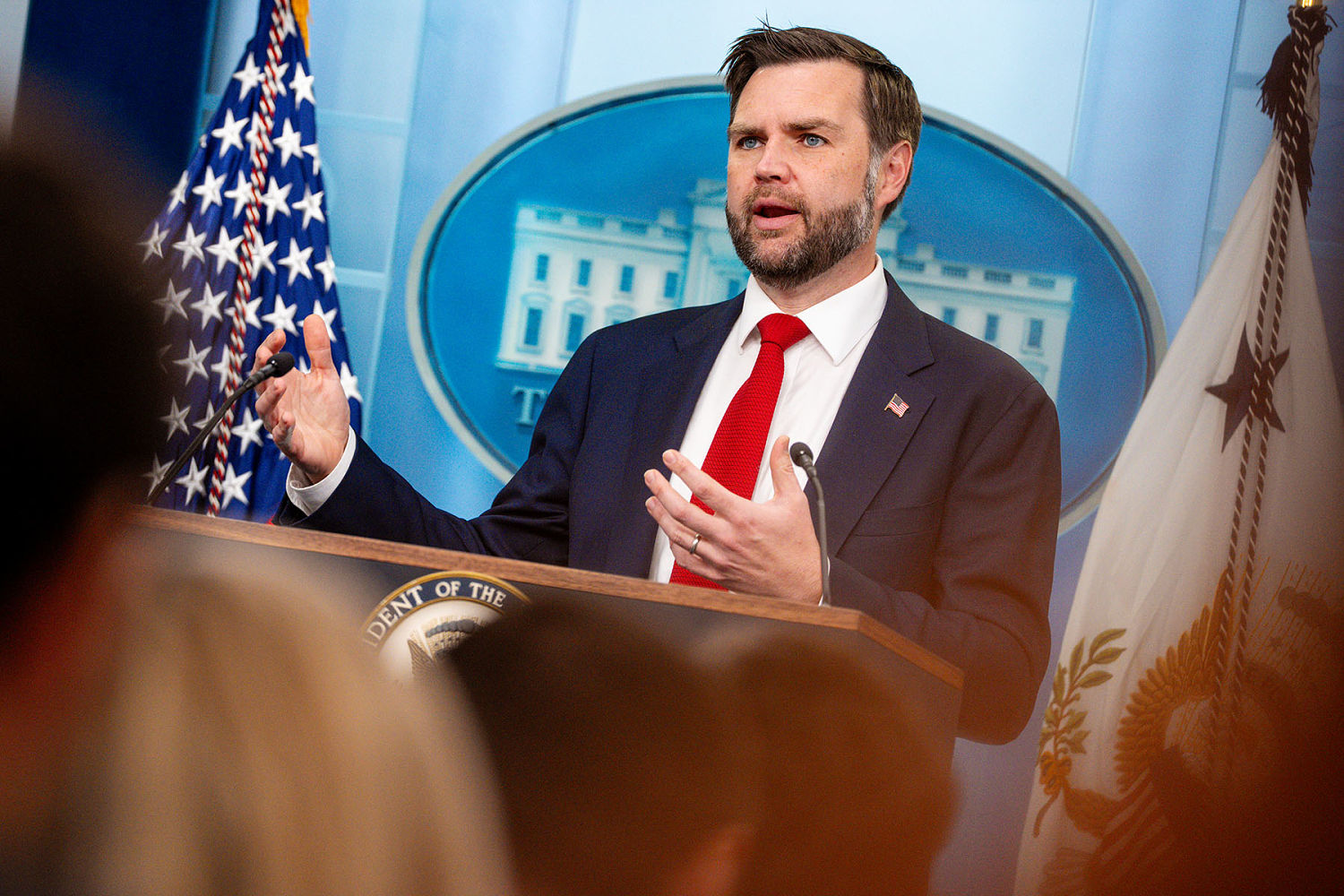
JD Vance is riding high, but he's walking straight into a political minefield. Over the last week, the Vice President has been pulling double duty, hitting everything from The View to The Megyn Kelly Show. He's out there pitching his new book, Communion, while simultaneously acting as the chief salesman for the Trump administration's dramatic memorandum of understanding (MOU) to wind down the war with Iran.
On paper, Vance has reason to feel good. The U.S. Navy just lifted its blockade, allowing more than a dozen ships through to Iranian ports. On a single Wednesday night, over 12.5 million barrels of oil flowed through the crucial Strait of Hormuz chokepoint. For an administration desperate to ease domestic energy costs and prove it can close out foreign conflicts, those numbers look like a win.
But don't look past the glaring political reality. Donald Trump has already joked that if this peace deal goes sideways, Vance takes the fall. By putting his face on an agreement that heavily mimics the structure of past diplomatic deals, Vance is taking ownership of the most volatile foreign policy issue on earth. It's a high-stakes play for the front-runner of the 2028 Republican nomination.
Selling Peace on a Book Tour
The timing of this diplomatic breakthrough isn't a coincidence, but it has completely upended Vance’s public relations strategy. He planned a standard media blitz to talk about his personal journey to Catholicism. Instead, every interview turns into a defense of foreign policy.
Vance, alongside Jared Kushner and Special Envoy Steve Witkoff, spearheaded these final tense negotiations. Now that the initial framework is signed, Secretary of State Marco Rubio is remarkably quiet, leaving Vance to take the heat from both sides of the aisle.
The primary defense from Vanceland is simple: the military campaign pummeled Iran’s conventional forces, and now it’s time to secure the peace. Vance points to the immediate economic relief of unblocking global shipping lanes. Two Iranian tankers loaded with 3.8 million barrels of crude oil have already passed the old military blockade line. To the average voter tired of inflation, a drop in oil prices is a tangible benefit.
The Fury on the Right
The problem for Vance isn't the political left; it's his own party. Hawks within the GOP are furious, openly labeling the MOU an outright American surrender. Prominent voices like Senator Ted Cruz have publicly suggested that the president is getting terrible advice, pointing the finger squarely at the Vice President.
Critics argue the agreement offers major upfront concessions—like lifting the naval blockade—while extracting very little in return. The core objective of the entire military campaign was to permanently eliminate Iran's nuclear capability. Yet, the current text merely states that Iran's highly enriched uranium stockpile must be diluted under international supervision.
Even worse for Vance's conservative credentials, his rhetorical defense of the deal sounds shockingly familiar. Some commentators are already mocking him as "Hillbilly Obama," noting that his strategy relies on the same logic used to defend the 2015 Iran nuclear deal. Vance argued on CNN that senior leaders within the Iranian system are finally realizing that their old way of doing business with the U.S. was a mistake. That reliance on Iranian goodwill is exactly what conservatives spent a decade campaigning against.
Fire at Jerusalem
The diplomatic friction isn't contained to Washington. Members of the Israeli government have broken ranks to aggressively criticize the deal, leading to an incredibly blunt warning from Vance. During a White House press briefing, the Vice President warned Israeli critics against attacking the only powerful ally they have left in the world.
"Donald J. Trump is the only head of state in the entire world who is sympathetic to the nation of Israel at this moment in time." — Vice President JD Vance
That kind of direct language shows just how much pressure the administration is under to hold this fragile agreement together. Israel remains under direct threat from Tehran's regional proxies, and the idea of a deal that leaves the regime intact is a non-starter for Jerusalem.
The Sixty Day Countdown
This entire geopolitical gamble now rests on a strict 60-day window. The signed MOU isn't a final treaty; it's a clock. Over the next two months, the U.S. and Iranian delegations have to hash out the highly technical specifics of the nuclear program and permanent sanctions relief.
Vance is scheduled to fly to Switzerland to lead the next phase of these talks. The administration is bypassing Congress entirely, using Justice Department guidance to temporarily lift sanctions without a legislative vote. Senator Lindsey Graham has already demanded that Vance appear before Congress to defend the final product, setting up a brutal legislative showdown later this summer.
If the negotiations succeed, Iran dilutes its uranium, the Middle East stabilizes, and Vance looks like a master strategist who delivered peace and cheaper energy. But if Iran stalls, restarts its enrichment, or uses the billions in freed-up oil revenue to fund its proxies, the blame lands entirely on Vance's shoulders. He bought the ownership of this war, and the next sixty days will determine if it pays off or breaks his political future.