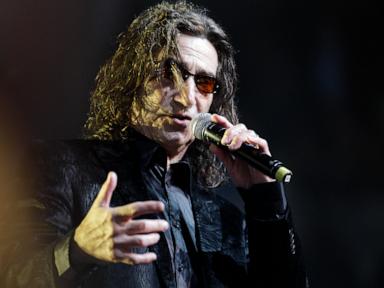
Everyone is reading the latest headlines about six more women accusing Russell Brand of misconduct and treating it like another routine celebrity scandal. They are wrong.
The lazy consensus in entertainment journalism right now is simple. Publish the tally. Update the count. Treat waves of historical allegations against a high-profile comedian as an isolated story about one man's fall from grace. Legacy outlets copy-paste the timeline, quote a few anonymous sources, mention his pivot to alternative media, and move on to the next news cycle.
That framing misses the entire structural collapse happening behind the scenes. We are not just watching a crisis PR meltdown or a standard legal investigation. We are witnessing the collision of two completely incompatible systems: traditional broadcast gatekeeping that spent decades monetizing transgression, and a decentralized creator economy that profits directly from institutional exile.
The Architecture of Complicity
To understand why six new allegations surface years after the alleged incidents, you have to stop asking why victims waited and start asking how the machinery operated at the time.
In the mid-2000s, British television and radio networks did not merely tolerate reckless behavior from their top talent. They built entire programming blocks around it. Executives commissioned shows specifically because a presenter was unpredictable, hyper-sexualized, and constantly testing broadcast standards. When a network builds a brand on boundary-pushing chaos, internal compliance departments do not act as shields for junior staff. They act as shock absorbers for talent.
I have sat in media crisis rooms where executives spent millions burying behavioral red flags because the ratings justified the risk. In entertainment, institutional insulation—the systemic protection of revenue-generating talent from standard workplace accountability—is never an accident. It is a line item in the production budget. When HR complaints threaten a primetime slot, complaints get routed to legal teams trained in containment rather than resolution.
Media reports covering the latest wave of accusations treat the timeline as a simple moral failure on Brand's part. That lets the networks, production companies, and talent agencies off the hook. A performer does not operate in a vacuum for fifteen years without layers of management, producers, and legal counsel clearing the runway.
The Exile Economy Changes the Math
Traditional celebrity crisis management relies on a predictable sequence:
- Containment: Issue a carefully worded denial through a reputation-management firm.
- Contraction: Step back from public appearances while advertisers quietly pause contracts.
- Rehabilitation: Return months or years later via a sympathetic sit-down interview and a charity pivot.
That playbook is dead.
When major broadcasters and talent agencies cut ties with Russell Brand following the initial joint investigation by The Times, The Sunday Times, and Channel 4 Dispatches, industry analysts predicted total career erasure. Instead, Brand leaned directly into an audience that views mainstream media consensus as proof of innocence.
This is the core nuance competitor articles completely miss. In the legacy media era, public allegations destroyed a performer's distribution network. Today, distribution belongs to independent platforms and direct-to-consumer subscriptions. When legacy outlets publish a fresh round of accusations from six more women, the immediate impact is bifurcated:
- In the institutional sphere: Any remaining doors in Hollywood, traditional publishing, or mainstream comedy circuits weld shut permanently.
- In the independent sphere: Every mainstream headline reinforces the narrative of a coordinated establishment smear campaign, driving engagement, subscriptions, and algorithmic reach.
You cannot apply 2010 reputation-management metrics to a 2026 decentralized media ecosystem. Outrage from legacy newsrooms no longer functions as a kill switch. For creators operating outside traditional corporate sponsorships, institutional condemnation acts as free customer acquisition.
Dismantling the Wrong Questions
When news like this breaks, public search behavior and media commentary immediately fixate on the wrong questions. Let's look at the flawed premises dominating the conversation.
"Why didn't these women come forward earlier?"
This question assumes that reporting misconduct in the entertainment industry works like reporting a theft at a local police station. It does not.
In freelance-heavy sectors like television production, radio, and live touring, employment is entirely relational. There is no permanent HR department protecting a runner, a junior producer, or an audience coordinator. Your next three-month contract depends entirely on the recommendation of the showrunner or talent manager you worked for last week. Filing a formal complaint against a marquee name in 2008 meant immediate blacklisting across an entire industry. People did not stay silent because they lacked resolve; they stayed silent because the economic penalty for speaking was total career suicide.
"Does more accusers automatically mean criminal conviction?"
No. And conflating journalistic reporting with criminal prosecution is where public discourse routinely goes off the rails.
Investigative journalism and criminal law operate on entirely different standards of proof:
- Journalistic verification relies on corroboration—contemporaneous text messages, medical records, diary entries, and multiple independent witnesses confirming a pattern of behavior on the balance of probabilities.
- Criminal prosecution requires proof beyond a reasonable doubt, adhering to strict rules of evidence where decades-old allegations face massive hurdles regarding physical evidence, witness memory, and jurisdictional statutes.
When six additional women come forward in a press report, it establishes a broader pattern in the court of public opinion and increases pressure on law enforcement inquiries. It does not guarantee a guilty verdict in a courtroom. Pretending the two are interchangeable sets the public up for inevitable whiplash when legal timelines drag on for years without immediate convictions.
"Can a celebrity survive this level of public scrutiny?"
Stop asking whether they survive. Ask where they survive and who pays the bills.
Survival no longer requires an agent at WME or a development deal with the BBC. It requires a camera, an internet connection, and a few hundred thousand paying subscribers who distrust traditional institutions. The barrier to survival has dropped to zero, provided the accused is willing to abandon mainstream prestige entirely.
The Mechanics of Investigative Pile-Ons
Why do accusations tend to arrive in clusters rather than single drops? Critics of the media often point to coordinated waves as evidence of a conspiracy. In reality, it is basic investigative mechanics.
When a major newsroom publishes an initial blockbuster investigation, they establish a secure, vetted channel for sources. Before that first publication, an individual woman sitting on a traumatic memory from fifteen years ago assumes she is alone. She assumes nobody will believe her word against a famous multi-millionaire with elite legal representation.
Once the first report drops, two things happen immediately:
- Validation of pattern: Individuals realize their experience was not an isolated anomaly, which lowers the psychological barrier to contacting reporters.
- Editorial infrastructure: Journalists now have an active, legally vetted dossier, making it far easier to cross-reference dates, tour schedules, production call sheets, and overlapping witnesses.
Imagine a scenario where six separate witnesses in different cities hold fragments of the same timeline—a backstage pass from a 2007 comedy tour, a hotel receipt from a 2011 film shoot, an email sent to a friend the morning after an incident. Individually, each fragment looks fragile against aggressive defamation lawyers. Together, they lock into an undeniable chronological grid.
The Downside of the Contrarian View
Pointing out the structural complicity of legacy broadcasters and the economic incentives of the exile economy does not absolve anyone of personal accountability. That is the trap many contrarian commentators fall into—they get so focused on exposing media hypocrisy that they start treating serious allegations of sexual misconduct and abuse as mere culture-war theater.
Let's be clear about the risk here. Focusing heavily on institutional failure can inadvertently minimize the human cost experienced by the individuals making the allegations. Whether a network enabled bad behavior or an alternative platform monetizes the backlash, the core factual question remains strictly binary: did the alleged misconduct happen, or did it not?
Media cynicism is not a substitute for due process. You can recognize that legacy outlets are desperate for clicks while simultaneously acknowledging that corroborating six new accounts of misconduct requires rigorous legal vetting under strict UK defamation laws—laws that place the burden of proof squarely on the publisher, not the plaintiff. In Britain, newspapers do not publish names and specific allegations without ironclad documentary backing, because losing a libel suit in London costs millions.
What Actually Needs to Change in Media Accountability
If newsrooms and industry leaders want to stop repeating this exact cycle every six months, they need to abandon performative outrage and fix the structural incentives.
- Audit the gatekeepers, not just the talent: Whenever a major broadcast personality is accused of historical workplace misconduct, independent inquiries must examine the commissioning editors, executive producers, and talent agents who profited from that person's output during the exact same window. Accountability stops being selective the moment executives face clawbacks and career consequences for ignoring HR warnings.
- Separate criminal reporting from moral grandstanding: Journalists should report verified facts, legal developments, and institutional failures with cold precision. Dropping the moralizing tone removes the fuel that alternative media creators use to frame journalism as an ideological attack.
- Reform freelance industry protections: Until television, film, and live entertainment replace informal word-of-mouth hiring with binding, third-party reporting mechanisms that shield whistleblowers from blacklisting, misconduct will continue to surface fifteen years late in newspaper exposés instead of being stopped in real time.
The headlines will keep counting the accusers, the comment sections will keep fighting a proxy war over mainstream media credibility, and the alternative platforms will keep cashing the subscription checks. Stop watching the performer on the stage and start auditing the people who built the theater.