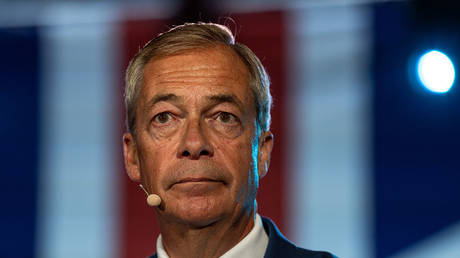
Nigel Farage is doubling down on immigration, and this time he's calling for a complete shutdown of the UK asylum network. At a press conference in Kent, the Reform UK leader declared that a future government under his party would freeze all new asylum claims, halt resettlement programs, and suspend humanitarian protection for up to five years. He labeled the current framework an "asylum scam" and a "racket," arguing that Britain has completely lost control over who enters its borders.
It’s a bold pitch aimed straight at voters frustrated by years of backlogged tribunals, expensive hotel accommodations for arrivals, and repeated policy failures from both major parties. But can a modern Western democracy actually freeze its asylum pipeline without breaking domestic law, severing international treaties, or triggering massive diplomatic fallout?
Here is what Farage is actually proposing, how his plan would operate on the ground, and why critics across the political spectrum argue it’s completely unworkable.
The Five-Year Asylum Freeze Explained
The core of Reform UK's immigration strategy rests on a total freeze. Under Farage’s proposal, no new asylum claims would be processed, no refugee status would be granted, and existing legal resettlement routes would be shuttered for half a decade.
Farage argues that years of heavy migration have stretched public services past their breaking point and created serious national security blind spots. Over 200,000 people have crossed the English Channel in small boats over the last eight years, and the Home Office recorded over 93,000 asylum claims in the year ending March 2026 alone. Farage's argument is straightforward: you can't fix a leaking roof while the storm is still raging inside.
The policy isn't just about stopping future claims; it's also aimed at clearing out existing ones. Under the proposal, the UK asylum tribunal system would be dismantled entirely, and cases currently pending appeal—roughly 90,000 individuals—would face immediate processing for removal. Reform UK also intends to review cases where refugee status was granted over the past five years to determine whether those grants were accurate.
International Treaties and the Legal Obstacles
Stopping asylum claims sounds simple on a campaign flyer, but actually executing it requires dismantling decades of binding constitutional and international law. Seeking protection from persecution is a legal entitlement enshrined in the United Nations 1951 Refugee Convention and the Universal Declaration of Human Rights.
To bypass these obstacles, Farage has laid out a legal overhaul:
- Leaving the European Convention on Human Rights (ECHR): Withdrawing from the ECHR so British courts can no longer block deportation orders based on rights to family life or protection against torture.
- Repealing the Human Rights Act 1998: Removing the domestic legislation that embeds European human rights standards into UK law.
- Disapplying the 1951 Refugee Convention: Temporarily setting aside key provisions of the UN Refugee Convention until international agreements are updated.
- Passing Mass Deportation Legislation: Enacting new laws that make illegal entry an automatic bar to staying in the country, effectively removing judicial review options.
Legal experts point out that exiting the ECHR isn't a simple administrative task. It carries massive implications for the Good Friday Agreement in Northern Ireland, which directly relies on the ECHR framework to guarantee human rights protections. Disregarding global treaties also risks turning the UK into a international legal outlier among G7 nations.
Diplomatic Pressure, Flight Bans, and Sanctions
The biggest challenge with deporting people isn't rounding them up—it's getting another country to take them back. Dozens of origin nations routinely refuse to issue travel documents or accept return flights for their deported citizens.
To break this deadlock, Farage and Reform UK Home Affairs spokesperson Zia Yusuf outlined an aggressive diplomatic playbook aimed at uncooperative foreign governments:
- Visa Bans: Stripping visa access for citizens, diplomats, and elites from countries that refuse return flights.
- Asset Seizures and Restrictions: Target offshore assets and investments held in London by foreign nationals whose home governments block deportations.
- Flight and Travel Bans: Suspending direct commercial flights from non-compliant nations.
- Trade Tariffs: Imposing economic tariffs on imports from countries that fail to honor deportation agreements.
This heavy-handed approach targets countries like Pakistan, where historical deportation negotiations have dragged on for years. While economic leverage can work in specific cases, applying it blanket-style carries serious risks. Banning visas or freezing assets can strain critical trade ties, damage intelligence-sharing partnerships, and spark retaliatory sanctions against British citizens and businesses operating abroad.
Channel Interceptions and Enforcement on the Ground
Beyond legal freezes and diplomatic threats, the proposal heavily targets the actual Channel transit route. Under a strategy dubbed "Operation Fortress," a Reform UK government plans to deploy the Royal Navy to intercept small boats in the English Channel and escort them back to French or Belgian waters.
Farage claims this approach complies with international maritime rules, including the UN Convention on the Law of the Sea (UNCLOS). However, French authorities have repeatedly rejected pushback tactics, maintaining that forcing vessels back into French territorial waters without coastal state consent violates maritime sovereignty and puts lives at risk. Without French cooperation, turning boats around at sea remains practically impossible under current maritime protocols.
On the home front, Reform UK wants to multiply domestic enforcement capacity. The plan calls for establishing a unified "UK Deportation Command," building temporary detention facilities, and passing strict employer-focused laws—like making company executives criminally liable for hiring undocumented workers. By combining routine business compliance visits with migration checks, Reform estimates it could scale up enforcement operations dramatically without waiting for years of new recruitment.
Political Friction and What Comes Next
Farage's proposal has drawn sharp condemnation from both Labour and Conservative figures, who brand the plan desperate, unworkable, and fundamentally un-British. Human rights groups warning against the freeze point out that closing legal avenues doesn't stop people fleeing conflict; it simply pushes them deeper into underground networks and black markets.
Yet political analysts acknowledge why Farage is pushing this message so hard. Public frustration over net migration, public sector strain, and hotel costs remains high across former industrial heartlands and coastal towns. By offering stark, uncompromising answers where mainstream politicians offer incremental reforms, Reform UK keeps pressure mounted on both major parties.
Whether a five-year asylum freeze could ever clear Parliament—let alone survive legal challenges—remains highly doubtful. But by raising the stakes, Farage has pushed hardline deportation enforcement and treaty withdrawal right into the center of the national immigration debate.
If you want to understand the full context of Farage's policy announcement and hear his arguments directly, you can watch the Farage Dover speech on the asylum system.
This video provides direct footage of the Reform UK leadership setting out their controversial immigration strategy during their press conference in Kent.