The glow of a smartphone screen at 2:00 AM does strange things to the human face. It accentuates the shadows under the eyes, sharpens the worry lines around the mouth, and reflects a pale, cold light that feels entirely unnatural.
For months, this was the nightly ritual for a small group of policy advisors, security analysts, and anxious citizens watching the rapid evolution of artificial intelligence. They weren't looking at sci-fi tropes or killer robots. They were looking at code. Specifically, code that could rewrite itself, mimic human voices with terrifying precision, and infiltrate critical infrastructure before anyone realized a breach had occurred.
Fear is a quiet thing before it becomes a loud thing.
For the longest time, the debate over artificial intelligence was confined to Silicon Valley boardrooms and academic journals. It was an intellectual exercise. But recently, that debate spilled out of the laboratories and into the living rooms of ordinary people, particularly those who form the bedrock of the current political administration. The anxiety didn't stem from a dislike of progress. It came from a deep, instinctual desire to protect what is ours: our jobs, our national sovereignty, and our collective sense of truth.
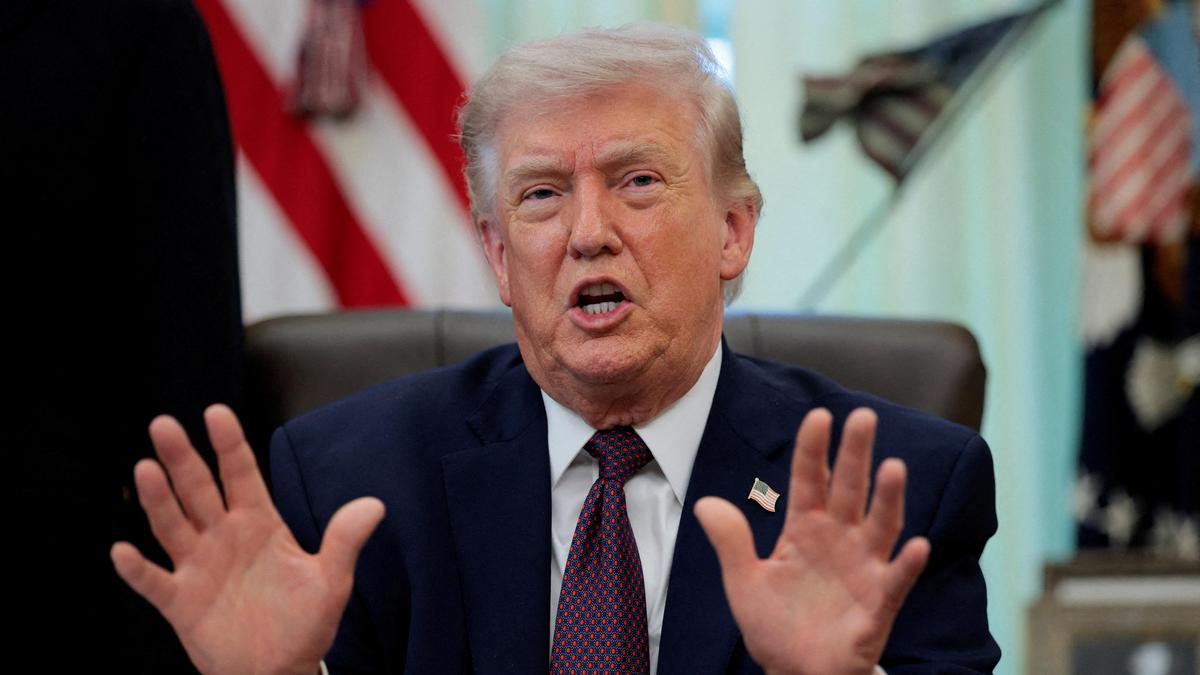
When U.S. President Donald Trump announced an upcoming executive order aimed at imposing strict oversight on AI development, it wasn't just a bureaucratic maneuver. It was a direct response to a rising tide of unease from his most loyal supporters.
The Fracture in the Blueprint
Consider a hypothetical contractor named Thomas. He lives in Ohio, runs a mid-sized machining business, and has voted conservative his entire adult life. Thomas believes in deregulation. He believes the government should mostly get out of the way of American ingenuity.
But three months ago, Thomas saw a demonstration of a generative AI tool that could optimize supply chains, design mechanical parts, and automate the precise work his engineers pride themselves on. Suddenly, the free market felt less like an opportunity and more like a threat. If a server farm in a foreign country—or even in California—can duplicate his lifetime of expertise in four seconds, what happens to the factory floor?
Multiply Thomas by millions.
That is the political reality that landed on the president's desk. The very voters who champion American exceptionalism began to realize that unregulated AI could become the ultimate equalizer, stripping away the competitive advantage of human labor and domestic industry.
Security fears began to mount, not from the traditional left-leaning critics who worry about algorithmic bias, but from the right, where the focus shifted heavily toward national security and foreign espionage. The nightmare scenario isn't just that an AI takes a job. The nightmare scenario is that a foreign adversary uses an unmonitored American AI model to cripple the power grid, flood the internet with untraceable disinformation, or automate cyberattacks at a scale human defenders cannot block.
The machinery of Washington is notoriously slow, but the speed of machine learning forced an unprecedented acceleration.
The Ghost in the Server Room
To understand why this executive order matters, we have to look at how AI actually works right now, stripped of the marketing buzzwords.
Think of a modern large language model like a massive, collective human subconscious. It has ingested billions of pages of our history, our technical manuals, our arguments, and our cultural quirks. When you ask it a question, it doesn't "think" in the way a human does. It predicts the next word. It is an incredibly sophisticated statistics engine.
Now, imagine that engine is given access to proprietary military blueprints or the source code for the nation's financial systems.
If the model is open-source—meaning anyone can download the weights and underlying code—it becomes a tool available to anyone, anywhere. A group operating out of a basement halfway across the globe could theoretically alter the model to remove its safety guardrails. They could turn a helpful coding assistant into a weapon designed to find zero-day vulnerabilities in American infrastructure.
This isn't theoretical. Security agencies have already flagged instances where malicious actors attempted to use automated scripts to probe federal networks for weaknesses. The fear among the administration's base is that by the time we realize an AI system has been compromised or turned against us, the damage will already be absolute.
The upcoming executive order seeks to place a digital fence around these capabilities. It mandates that companies developing the most powerful AI models must notify the federal government and share the results of all safety tests. It invokes the Defense Production Act, a relic of the Cold War era designed to ensure the government can control industrial production during times of national emergency.
Using a wartime footing for a software update tells you everything you need to know about how high the stakes have become.
The Friction of Liberty and Control
The irony is thick enough to choke on. An administration that built its identity on cutting red tape is now preparing to implement one of the most comprehensive regulatory frameworks for a new technology in American history.
But the real problem lies elsewhere. It rests in the delicate balance between safety and innovation.
If the government puts too many restrictions on domestic tech companies, the development pipeline slows down. If America slows down, rivals like Beijing will not follow suit. They will run faster. A heavy-handed regulatory approach could inadvertently hand the keys to the future to the very adversaries the order seeks to protect against.
Silicon Valley executives have been making this point behind closed doors for months. They argue that the best defense against a bad AI is a better American AI. They want freedom to build.
But for the voters watching this play out, that argument feels hollow. They look at the tech giants and see concentrations of wealth and power that rival nation-states. They see platforms that can shape public opinion with the tweak of an algorithm. The security fears aren't just about foreign hackers; they are about an elite class of technologists holding the strings to the economy without any accountability to the public.
So, the executive order serves two masters. It is a shield against external threats, and it is a leash on internal corporate power.
The Cost of the Human Monopolon
We often view history as a series of grand events—wars, treaties, elections. But history is more frequently shaped by the tools we invent and our subsequent scramble to survive them.
When the printing press was created, it didn't just distribute bibles; it triggered a century of religious warfare across Europe because information suddenly escaped the control of the institutions. The steam engine didn't just pull trains; it emptied the countryside and created the modern industrial city, rewriting human psychology in the process.
AI is doing both at once, at ten times the speed.
The administration’s shift toward strict oversight represents a profound psychological turning point. It is an admission that some technologies are too potent to be left to the whims of quarterly earnings reports or venture capital funding.
The text of the order focuses heavily on "red-teaming"—a process where independent experts try to break an AI system or force it to do something dangerous before it is released to the public. It is a digital bomb-disposal squad. They look for ways the model might assist in creating biological threats, executing mass cyber warfare, or generating deepfakes that could destabilize an election cycle.
For the average citizen, this level of scrutiny provides a fragile sense of reassurance. It suggests that someone is finally watching the watchers.
Yet, a lingering doubt remains. Can a government bureaucrat, bound by paperwork and protocol, truly keep pace with an industry where breakthroughs happen on a weekly basis?
The Final Chord
The sun comes up over the machining shop in Ohio. Thomas opens his doors, hears the familiar hum of his traditional equipment, and checks his phone. The headlines are full of the impending signing ceremony, political commentary, and debates over the boundaries of federal overreach.
The world feels smaller now, more fragile, tightly bound by invisible lines of code that span oceans and continents.
We have entered an era where our greatest vulnerability is no longer just physical terrain or military might, but the integrity of our information and the autonomy of our minds. The executive order is a line drawn in the sand, a desperate attempt to assert human sovereignty over an intelligence we created but are still struggling to comprehend.
The pen will hit the paper, the cameras will flash, and the policy will become law. But out in the dark, the servers will keep humming, processing data, learning, and waiting for the next command.