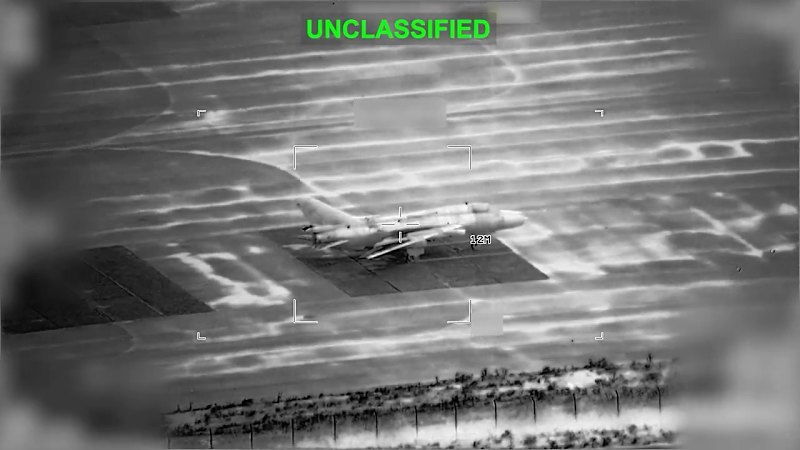
The coffee in the plastic cup is cold, but Sergeant Miller doesn’t notice. He is staring at a green-tinted monitor in a small, reinforced room somewhere in eastern Syria. Outside, the wind howls through the chain-link fences of a remote outpost—a place that technically shouldn’t be a target, yet feels like the center of a bulls-eye. Miller isn't thinking about grand strategy or the "war of wills." He is thinking about the sound a drone makes when it cuts through the silence of 2:00 AM.
It is a low, lawnmower-like buzz. It is the sound of a five-thousand-dollar piece of Styrofoam and electronics challenging a billion-dollar defense grid.
For decades, we viewed conflict through the lens of the "Big War"—massive carrier groups, stealth bombers, and lightning-fast invasions. But the reality unfolding across the Middle East right now is something far more intimate and exhausting. It is a slow-motion collision. Iran is not looking for a cinematic finale. They are playing a game of persistent, itchy irritation. They are waiting for the American giant to blink, not from a knockout blow, but from the sheer fatigue of swatting away flies.
The Calculus of the Nuisance
War is usually defined by territory gained or lost. This is different. This is about the psychological tax of being hunted. When an Iranian-backed militia launches a rocket at a base in Iraq or a drone at a tanker in the Red Sea, they aren't trying to sink the U.S. Navy. They are trying to prove that the U.S. Navy, for all its might, cannot guarantee a quiet night's sleep.
Consider the math of the "war of attrition." A kinetic interceptor—the kind of missile the U.S. uses to shoot down a cheap drone—can cost upwards of two million dollars. The drone it is chasing might cost twenty thousand.
Imagine you are at home, and every night, someone throws a pebble at your window. You have to buy a new, reinforced window every single time. The person throwing the pebble has a bag full of them. Eventually, you don’t care about the pebbles anymore; you just want the person to stop. You start wondering if living in that house is even worth it. That is the Iranian strategy in its purest form. They aren't trying to break the window; they are trying to break your patience.
Shadows and Proxies
To understand why this is happening, you have to look at the "Gray Zone." This is the space between peace and all-out war. In this space, identity is a suggestion.
Tehran rarely pulls the trigger directly. Instead, they provide the blueprints, the parts, and the "consultants" to groups like Kata'ib Hezbollah in Iraq or the Houthis in Yemen. This provides what diplomats call "plausible deniability," though everyone knows exactly whose signature is on the check. It creates a paralyzing dilemma for American leadership.
If a drone kills a soldier, do you bomb Tehran? If you do, you risk a Third World War. If you don’t, you look weak. Iran knows this tightrope walk perfectly. They have spent forty years practicing it. They push just far enough to draw blood, but not far enough to justify a scorched-earth response. It is a masterclass in calibrated violence.
The Human Cost of the "Itch"
Back in that reinforced room, Miller watches a blip. It might be a bird. It might be a sensor malfunction. Or it might be a "one-way attack munition" carrying ten pounds of high explosives.
This is the hidden cost that doesn't make it into the Pentagon briefings: the erosion of the human spirit. Soldiers at these outposts live in a state of perpetual "yellow alert." It’s not the terror of a massive battle; it’s the grinding stress of never being truly safe. You eat dinner with one ear open. You shower with your boots within reach.
This stress ripples outward. It affects the families back home who read headlines about "minor skirmishes" and "assets targeted." There is nothing minor about a piece of shrapnel. There is nothing abstract about a "regional asset" when that asset is your son or daughter.
The Logistics of Hope
We often talk about the "will to fight." In this scenario, it is more like the "will to stay." Iran’s goal is to make the cost of staying—both in blood and in gold—higher than the benefit of being there.
They are betting on the American political cycle. They know that every few years, the American public asks, "Why are we still in the desert?" By maintaining a constant, low-level hum of violence, Iran ensures that question stays at the forefront of the national conversation. They don't need to win a battle; they just need to win the argument that the U.S. presence is a headache that won't go away.
The Technology of the Underdog
There is a terrifying democratization of technology happening in the sands of the Middle East. Twenty years ago, if you wanted to strike a target a hundred miles away with precision, you needed a nation-state's budget. Today, you need a 3D printer and an internet connection.
The "Forward Operating Base" used to be a fortress. Now, the sky itself is a vulnerability. The U.S. is currently racing to develop lasers and high-powered microwaves to counter these threats. We are trying to find a high-tech solution to a low-tech problem.
But technology isn't the silver bullet. You can have the best laser in the world, but if the operator is exhausted from sixteen straight days of alerts, the system is only as good as the person behind the glass. The "war of wills" is ultimately a contest between a regime that has nowhere else to go and a superpower that has a thousand other places it would rather be.
The Invisible Stakes
If the U.S. pulls back under this pressure, the vacuum won't be filled by peace. It will be filled by the very forces that created the pressure in the first place. The stakes aren't just about a few bases in the desert. They are about the rules of the road.
If "attrition via proxy" becomes the gold standard for defeating a superior power, then no border is safe, and no shipping lane is secure. We are watching a live test of whether a modern democracy can handle a "forever itch" without losing its mind or its resolve.
The screen in Miller's room flickers. The blip disappears. Was it a drone that crashed in the dunes, or a ghost in the machine? He doesn't know. He just pours another cup of cold coffee and waits for the sun to rise, knowing that tomorrow night, the lawnmowers will return.
The desert is never truly quiet anymore. It just holds its breath, waiting for the next pebble to hit the glass.