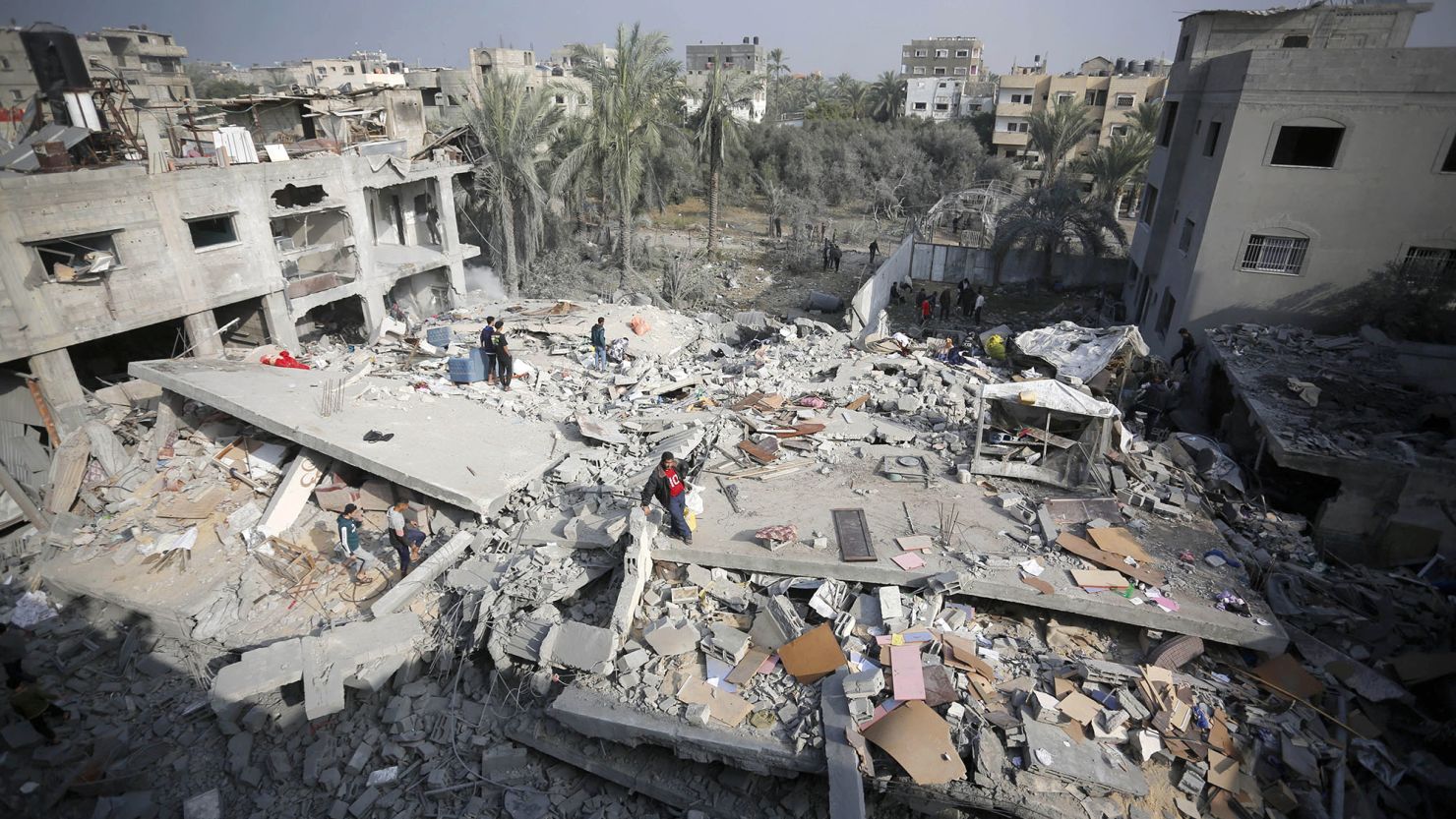
The air in the Gulf doesn’t just sit; it weighs. It is a thick, saline blanket that clings to the skin, smelling of salt spray and the faint, omnipresent ghost of crude oil. For the men working the night shift at the Kharg Island terminal, that scent is the smell of home, of a paycheck, and of a global machine that never sleeps. But at 3:14 AM, the rhythm of the pumps and the low thrum of tankers anchoring in the black water didn't just stop. It shattered.
First came the sound—a physical blow that punched the oxygen out of the lungs. Then, the light. It wasn’t the flickering yellow of a localized fire. It was a searing, artificial noon that bleached the desert sand white for miles.
When the news tickers in New York and London began to scroll with the headline "U.S. Bombs Iranian Oil Hub," the world saw a geopolitical chess move. They saw a "strategic degradation of enemy infrastructure." They saw a line on a graph of Brent Crude prices spiking toward the ceiling. But on the ground, the reality of high-precision kinetic warfare isn't a line on a graph. It is the sound of a thousand whistling kettles as high-pressure steam lines burst, and the sight of the horizon turning a bruised, violent copper.
The Anatomy of a Pressure Cooker
To understand why a few steel piers in the Persian Gulf matter to a commuter in Ohio or a factory owner in Shenzhen, you have to look at the circulatory system of the modern world. We like to think of our economy as digital, a cloud-based ethereal thing made of ones and zeros. It isn't. It is made of heavy piping. It is made of 300,000-ton vessels that move with the agonizing slowness of glaciers.
Iran’s oil infrastructure is the jugular vein of its embattled economy. Kharg Island, a coral teardrop in the sea, handles roughly 90% of the country’s crude exports. When American munitions—likely GPS-guided Joint Direct Attack Munitions (JDAMs) or stealthy cruise missiles—find their mark there, they aren't just hitting tanks. They are hitting the bank accounts of every citizen from Tehran to Tabriz.
The physics of the strike is a masterpiece of terrifying efficiency. Modern "bunker buster" technology doesn't just explode on impact. It waits. It feels for the resistance of reinforced concrete, bores through it with a hardened tungsten nose, and then detonates in the heart of the machinery. This isn't the carpet bombing of the 1940s. This is surgery performed with a sledgehammer.
Consider the hypothetical case of a technician named Reza. In the seconds before the impact, he might have been checking a pressure gauge, a small brass instrument that had survived three decades of sanctions and patched-together repairs. When the terminal is hit, Reza isn't just a casualty of war; he is a witness to the sudden evaporation of a lifetime of maintenance. The "invisible stakes" here are the decades of engineering knowledge and localized pride that go up in smoke in a millisecond.
The Ghost in the Global Machine
Why now? The geopolitical "why" is often a tangled mess of proxy wars and nuclear posturing, but the mechanical "why" is simpler. Energy is the ultimate leverage. By removing the ability to export, the U.S. didn't just "send a message." They cut the power to the adversary's house while the winter is coming.
But there is a secondary effect that rarely makes the evening news: the environmental silence. When an oil hub of this magnitude is compromised, the sea begins to choke. We talk about "surgical strikes," but there is no such thing as a surgical oil spill. As the storage tanks lose integrity, the black sludge creeps into the Gulf, coating the mangroves and silencing the local fishing industry. It is a slow-motion catastrophe that outlives the news cycle by generations.
The markets react with a predictable, frantic dance. Traders in fleece vests in Chicago scream into headsets, and suddenly, the cost of a gallon of milk in a rural village half a world away goes up by five cents. Why? Because the truck that delivered that milk runs on diesel, and the price of that diesel is tied to the fire currently raging on Kharg Island. We are all tethered to that burning pier by a thousand invisible threads.
The Technical Toll of Silence
When the smoke clears, the true damage isn't the rubble. It's the "spare parts" problem. Because of long-standing trade restrictions, Iran’s oil sector is a Frankenstein’s monster of aging Western tech and newer Chinese components. You cannot simply go to a hardware store and buy a high-capacity centrifugal pump for a scorched terminal.
Replacing this infrastructure is a task of years, not months. The sophisticated cooling systems and the delicate electronics that manage the flow of volatile liquids are gone. The site becomes a graveyard of scorched metal that is too hot to touch and too complex to fix. This is the "logic of deprivation." You don't have to occupy a country if you can simply break its ability to function as a modern state.
The narrative we are told is one of "deterrence." We are told that by hitting these hubs, we prevent larger conflicts. It is a seductive logic. It suggests that war can be managed like a thermostat—turn the heat up here, and the behavior will change over there. But history suggests that when you take away a person's livelihood and a nation's primary source of heat and light, you don't get submission. You get a cold, simmering resentment that waits for its own moment of ignition.
The Weight of the Aftermath
Imagine the morning after. The sun rises through a thick, oily haze that turns the light a sickly, filtered orange. There is no sound from the terminal. No hum. No vibration in the ground. Just the crackle of cooling metal and the distant sirens.
For the international community, the "event" is over. The headlines move on to the next crisis, the next election, the next celebrity scandal. The analysts go back to their spreadsheets to calculate the "projected recovery time." But for the people living in the shadow of the hub, the event is just beginning. It’s the beginning of the lines at the gas station. It’s the beginning of the rolling blackouts as the power plants lose their feed. It’s the beginning of the realization that the world’s superpowers can reach out from the sky and delete your economy while you are sleeping.
The strike is a testament to the terrifying precision of 21st-century weaponry, yes. But it is also a reminder of how fragile our interconnected existence has become. We have built a world where a spark in the Persian Gulf can cause a chill in a London flat. We have created a system so efficient that it has no margin for error, and no room for the human cost of a "strategic" decision.
There is a specific kind of silence that follows a massive explosion. It is a ringing, hollow quiet that fills the ears and makes the heart race. It is the sound of a vacuum being created—not just in the air, but in the future of a region. As the fires eventually die down to a smolder, the copper horizon fades back into black. The tankers wait. The world holds its breath. And somewhere, a technician looks at a shattered brass gauge and realizes that the world he knew yesterday has been burned away, leaving nothing but the heavy, salt-choked heat of the Gulf and the long, dark road ahead.
The fire is out, but the warmth is gone.