The greasepaint doesn't just sit on the skin. It sinks into the pores, a thick, waxy mask of titanium white and crimson that transforms a struggling father into a vessel of joy. For decades, in the thin, oxygen-deprived air of La Paz, this ritual has been a lifeline.
Pedro—not his real name, but a composite of the men standing on the cobblestones this week—wakes up at 5:00 AM. He isn't reaching for a briefcase. He is reaching for a sponge. He carefully draws a bulbous red nose and exaggerated eyebrows, shielding his weary eyes behind a facade of permanent surprise. To the world, he is "Papelito." To the Bolivian government, he is increasingly becoming a ghost.
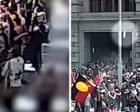
The streets of Bolivia’s administrative capital recently traded their usual gray bustle for a sea of polka dots and oversized shoes. But the oversized shoes weren't dancing. They were marching. Hundreds of professional clowns, performers who have spent their lives making children forget the harsh realities of Andean poverty, took to the pavement in a protest that felt like a fever dream. Their faces were painted in smiles, but their eyes were wet with genuine tears.
The Paper Wall
The conflict centers on a legislative shift that sounds mundane on paper but feels like an executioner’s blade in practice. New municipal decrees and national regulations are tightening the noose around informal labor. In an effort to "professionalize" and "regulate" public spectacles, the government is introducing a battery of permits, taxes, and bureaucratic hurdles that the average street performer cannot clear.
Imagine you are a freelance artist in a country where the minimum wage is a suggestion and the safety net is made of cobwebs. Suddenly, you are told that to blow a balloon animal at a child’s birthday party, you need a litany of certifications. You need to register as a formal business entity. You need to pay upfront fees that exceed your weekly earnings.
This isn't just about paperwork. It is about the systematic erasure of a cultural institution. In Bolivia, the clown is more than a party favor. They are the masters of ceremonies for the working class. They are the ones who turn a dusty lot into a theater and a piece of bread into a prop for a miracle. When you tax the clown, you aren't just taxing a worker; you are taxing the laughter of the poor.
The Invisible Stakes
The government argues these measures are for public safety and tax equity. They want to ensure that events are "safe" and that everyone "contributes their fair share." It sounds reasonable in a boardroom. It sounds like progress if you are looking at a spreadsheet.
But look at the hands of the marchers. They are calloused. They are stained with the cheap pigments they buy in the local markets. These performers don't have human resources departments. They don't have dental plans. They have a suitcase, a squeaky horn, and the hope that the crowd at the end of the day will drop enough bolivianos into the hat to buy milk for their own children.
Consider the ripple effect. If a family in El Alto wants to celebrate a daughter’s sixth birthday, they can’t afford a high-end venue. They hire a local clown. Under the new decree, that clown has to raise his prices to cover the cost of his new legal "compliance." The family can no longer afford him. The clown loses his dinner; the child loses a memory.
The stakes are invisible because joy is hard to quantify. You cannot put "wonder" into a GDP calculation, yet it is the very thing that keeps a society from fracturing under the weight of political instability and economic hardship. By treating these performers like corporate entities, the state is effectively outlawing the low-income celebration.
The Death of the Street
The march through La Paz was a surrealist masterpiece of desperation. Clowns in full regalia held signs that read "Our work is not a crime" and "Don't kill our smiles." There is something uniquely haunting about seeing a man in a neon wig screaming for his right to exist. It shatters the Fourth Wall of society. We expect the clown to stay in his lane—to stay funny, to stay silent on matters of policy, to be a decoration.
When the decoration starts to bleed, we are forced to look at the structure it was covering.
The move toward heavy regulation is part of a broader global trend where the "informal economy" is being squeezed. Governments everywhere are hungry for data and revenue. They want to track every transaction, map every soul, and categorize every service. But the soul of the street performer lives in the cracks of the system. It thrives in the spontaneity of the moment.
If every joke must be licensed and every performance must be logged, the art form dies. It becomes a sterile, corporate version of itself, accessible only to those who can afford the "official" price of admission.
A Heritage Under Siege
This isn't just a job for these people. It is an identity. Many of the protesters are second or third-generation performers. They learned the "gags" from their fathers on the same street corners where they now face police lines. There is a sacred lineage in the slapstick.
The decree treats the clowns as a nuisance to be managed rather than a heritage to be protected. There is no talk of subsidies, no offer of training, no grace period for those who have spent forty years outside the formal banking system. There is only the demand: comply or disappear.
The irony is thick. Bolivia often prides itself on its protection of "the people" and its resistance to cold, Western-style neoliberalism. Yet here, it is using the most clinical tools of bureaucracy to dismantle a grassroots tradition. It is a clash between the "Legitimate State" and the "Lived Reality."
The Final Act
As the sun set over the jagged peaks surrounding La Paz, the protest began to thin out. The vibrant reds and yellows of the costumes faded into the twilight. The clowns went home, but they didn't take off the makeup immediately. Many of them can't afford the makeup remover that actually works, so they scrub their faces with harsh soap until their skin is raw and pink.
The paint comes off, but the fear remains.
The next time you see a performer on a street corner, don't just see a character. See a person navigating a world that is trying to turn their vocation into a violation. See the man behind the mask who is wondering if tomorrow his very presence will be a legal liability.
The silence that follows the disappearance of the clowns won't be a peaceful one. It will be the heavy, stifling silence of a city that has lost its heartbeat. It will be the sound of a government that finally succeeded in making everything "orderly," only to realize they accidentally killed the magic in the process.
A society that makes it impossible for its jesters to survive is a society that has forgotten how to breathe.
The makeup is cracking. The oversized shoes are heavy. The music is stopping. And nobody is laughing anymore.