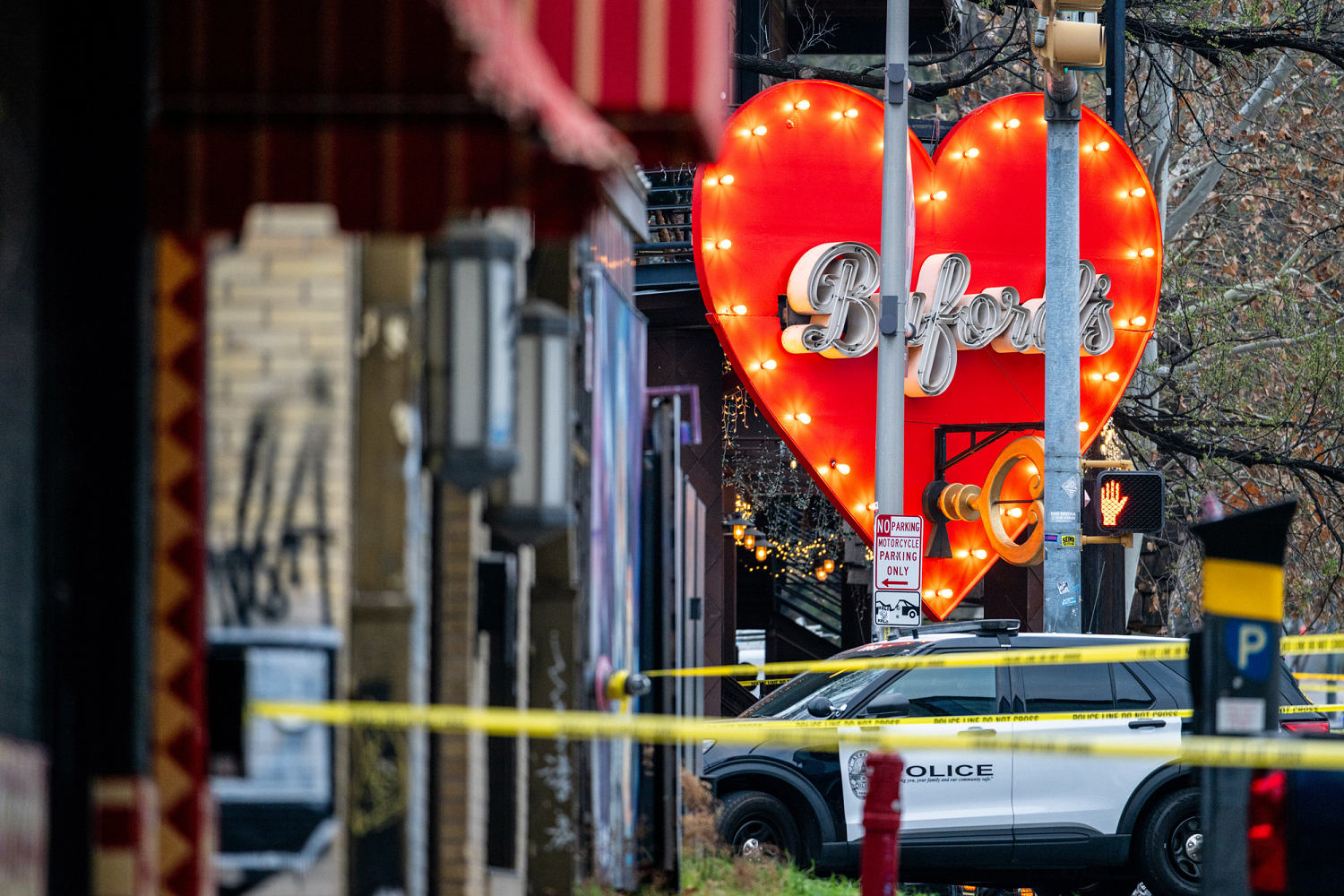
The air in Austin usually tastes like cedar and expensive brisket, a humid mix that sticks to your skin and reminds you that you’re alive. On a Sunday morning, just after the clocks strike two, that air typically carries the muffled thump of a bassline from a basement bar or the rhythmic clatter of food truck shutters closing for the night. It is a city that prides itself on being a playground for the young and the restless.
But the rhythm broke.
It didn't break with a cinematic explosion. It broke with a series of sharp, metallic pops that sounded, for a fleeting second, like leftover fireworks from a celebration nobody invited you to. Then came the screaming. Then the heavy, suffocating silence of a street held in collective cardiac arrest.
By the time the sun crawled over the Texas Hill Country, the tally was etched into the digital record: three dead, fourteen wounded. Seventeen lives intercepted by lead in a space meant for cheap beer and bad dancing.
The Geography of a Nightmare
The University of Texas is a city within a city. It is a sprawling ecosystem of burnt orange pride and frantic midterms. When a shooting happens "near" campus, it doesn't just happen on a map. It happens in the psyche of twenty thousand students who walk those blocks every day to get a taco or find a quiet corner to study.
East 6th Street is the artery. It’s where the pressure of a 4.0 GPA goes to die on the weekends. But when the barricades go up and the yellow tape starts fluttering in the wind, that artery becomes a crime scene.
We talk about shootings in the language of logistics. We count the "injured" as a monolith. But "fourteen injured" is not a statistic. It is fourteen separate stories of physical therapy, medical debt, and the sudden, jagged fear of loud noises. It is a student who may never walk across a graduation stage without a limp. It is a bartender who can no longer stand behind a slab of wood without looking at the door, calculating the nearest exit.
The Physics of the First Ten Minutes
When the first shot rang out, the instinct isn't to run. Not at first. The human brain is a stubborn machine; it tries to categorize the unknown into the familiar. You think it's a car backfiring. You think it's a prank. You think anything other than the truth because the truth is too heavy to carry while you're holding a drink.
Then the crowd moves. It’s a fluid, terrifying motion. A wave of bodies pushing against bodies, shoes losing their grip on the pavement, the smell of gunpowder cutting through the scent of rain and perfume.
In the aftermath, the police reports are clinical. They speak of "multiple shooters" and "disturbances." They use words like "suspect" and "custody." But these words are bandages on a gaping wound. They don't capture the weight of a cell phone vibrating on the asphalt, a frantic mother’s name flashing on a screen that will never be swiped open.
Consider the paramedics. They arrive to a chaotic tableau where the "Golden Hour"—that critical window where a life is either tethered to this world or lost to the next—is ticking away. They aren't just treating wounds; they are navigating a sea of panicked strangers, trying to find the pulse of a city that has just had its heart shocked.
The Invisible Stakes of a Night Out
We live in a culture that has begun to accept the "mass" in mass shooting as a recurring character in our national story. We have developed a callus. We see the headline, we see the numbers, and we check to see if anyone we know was in the area. If the answer is no, we exhale and scroll down.
But the cost of this particular night near the University of Texas isn't just the loss of life, though that is the ultimate tragedy. It is the theft of safety.
When a bar—a "third place" intended for community and relaxation—becomes a kill zone, the architecture of the city changes. Suddenly, every entrance is a vulnerability. Every crowded room is a trap. For the students at UT, the campus boundaries shifted that night. The "safe zones" shrank.
The authorities later recovered various weapons. They pieced together a timeline of a dispute that spiraled out of control. It is a story as old as time: a bruised ego, a moment of heated words, and the terrifyingly easy access to a tool designed to end an argument permanently.
Yet, the "why" often pales in comparison to the "what." What is left behind is a community trying to reconcile the Austin they love—the "Keep Austin Weird" Austin—with the Austin that requires a heavy police presence on a Tuesday night.
The Long Walk Home
The recovery for the fourteen injured isn't a straight line. It’s a jagged, uphill climb. Modern medicine can patch a lung or set a bone, but it struggles with the shrapnel left in the mind.
Imagine being nineteen years old. You went out to celebrate a finished exam. You ended up on a cold floor, the sound of sirens screaming in your ears, wondering if this was the end of your story. That memory doesn't wash off with the morning shower. It stays in the marrow.
The families of the three who didn't go home are now navigating a different landscape. They are dealing with the "firsts." The first morning without a text. The first birthday with an empty chair. The first time they hear a news report about another shooting and feel the wound rip open all over again.
We often look for a "game-changer" in the legislation or a "pivotal" moment in the aftermath. We want a clean ending to a messy tragedy. But there is no clean ending. There is only the slow, quiet work of picking up the pieces.
The Echo in the Alley
The police eventually cleared the scene. The yellow tape was rolled up and tossed into a bin. The street sweepers came through, washing away the physical evidence of the struggle. By Monday, cars were driving over the same patches of asphalt where people had bled.
But if you stand on that corner long enough, when the wind blows just right, you can still feel the vibration of that night. It’s a reminder that our social fabric is thinner than we like to admit. It’s a reminder that the distance between a night of celebration and a night of mourning is only as wide as a trigger pull.
The lights of Sixth Street still flicker. The neon signs for "Live Music" and "Cold Beer" still buzz with a frantic, electric energy. People still line up. They still laugh. They still dance. But they do it with a new, unspoken awareness.
They look for the exits now. They keep their backs to the wall. They understand, in a way they didn't before, that the city they call home has a shadow, and that shadow is long, dark, and occasionally, it bites.
The sun sets again over the Tower, casting a long, orange shadow across the campus. The bells chime the hour, a steady, rhythmic tolling that marks the passage of time for those who are still here to hear it.


