The air in a Texas roadhouse on a Friday night usually smells of stale Miller Lite, cedar chips, and the peculiar, metallic scent of a jukebox that hasn't been unplugged since 1994. It is a predictable sensory map. You know exactly where the pool cues clack, where the laughter hits a certain jagged frequency, and where the shadows pool in the corner booths. People go to these places because they are static. They are the fixed points in a world that moves too fast.
Then the rhythm breaks.
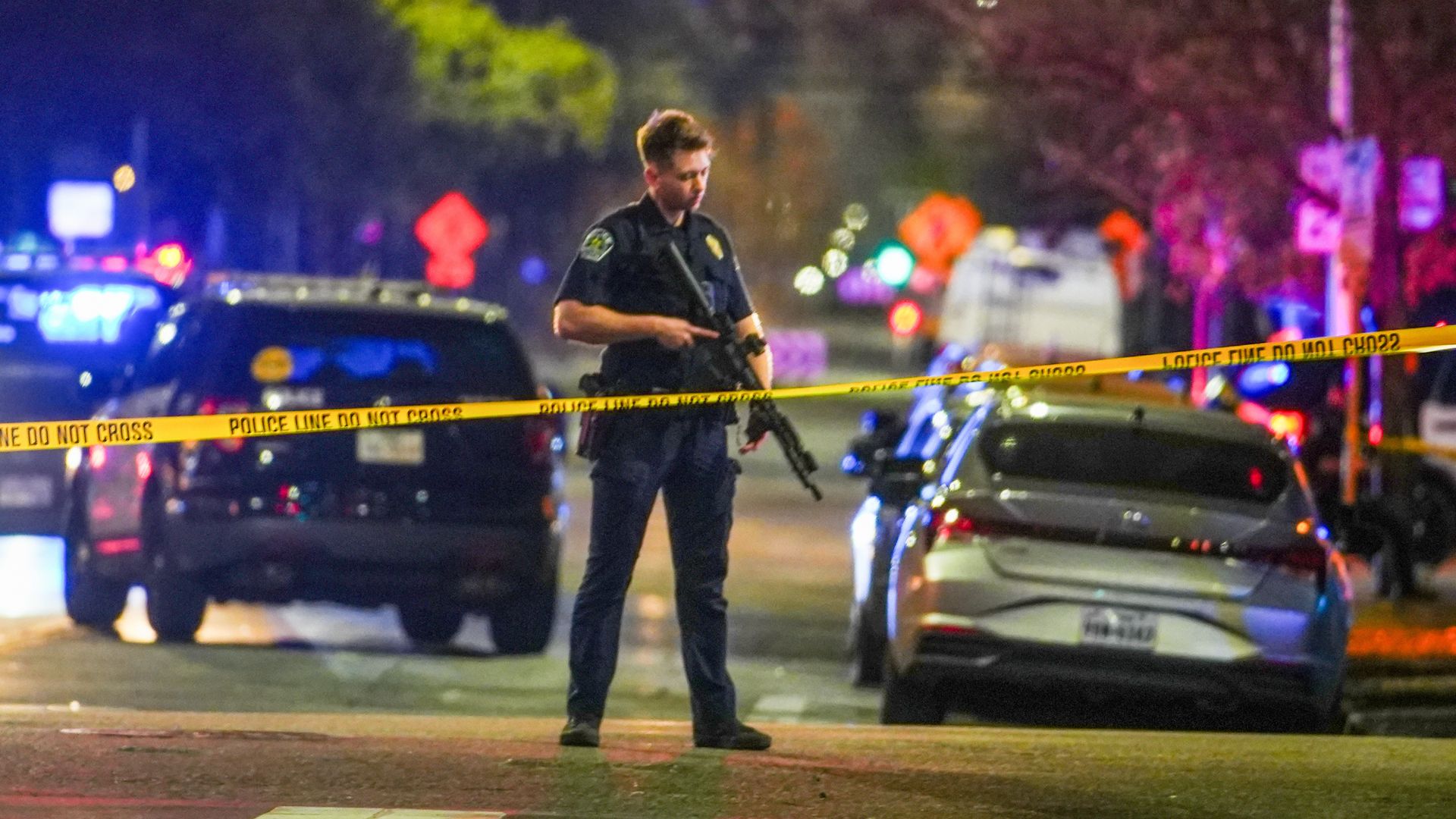
It doesn't start with a cinematic explosion. It starts with a sound that doesn't belong—a rhythmic, mechanical intrusion that tears through "Copperhead Road" like a jagged blade through silk. In a matter of seconds, the geography of a local hangout in the heart of Texas was permanently rewritten. When the dust settled and the red-and-blue strobe lights of the emergency units replaced the warm amber of the bar lamps, the tally was a grim ledger: three souls gone, fourteen others shattered by lead and adrenaline.
Numbers are cold. They are the language of coroners and insurance adjusters. But a "potential terror link" isn't a statistic; it’s a phantom that sits at the dinner table of every family involved. It transforms a local tragedy into a national tremor. It suggests that the violence wasn’t just a flash of personal rage, but a calculated message sent from a dark, ideological distance.
The Anatomy of a Second
Consider a man we will call Elias. He isn’t a real person listed in the police report, but he represents the fourteen who walked out of that bar with holes in their skin and their psyches. Elias was leaning against the laminate bar top, debating whether to order a final round or head home to catch the early shift. That hesitation—that three-second window of human indecision—is the difference between a scar on the shoulder and a name etched into a headstone.
When the first round entered the room, the collective brain of the crowd didn't register "terrorist" or "active shooter." The human mind is a stubborn optimist. It tries to categorize the horrific as the mundane. A transformer blew. Someone dropped a keg. It’s just fireworks. Then the smell hit.
Cordite. It’s a sharp, acrid odor that occupies the back of the throat. It is the smell of a vacuum being filled by violence. In those seconds, the "invisible stakes" our society discusses in abstract policy debates became tangible. The Second Amendment, foreign policy, domestic radicalization—none of those words existed in that room. There was only the floor. The cold, sticky floor, and the desperate hope that the person next to you wasn't bleeding as badly as they looked.
The Shadow of the Link
As the investigation pivoted from a "shooting" to a "potential terror link," the atmosphere changed. A shooting is a tragedy; a terror link is a siege. When federal agencies begin sifting through digital footprints and encrypted chat logs, they aren't just looking for a motive. They are looking for a blueprint.
The terror link is what turns a singular act of evil into a recurring nightmare. It suggests that the person holding the weapon was merely the terminal point of a long, invisible fuse lit somewhere else—perhaps in a basement three states over, or a server room halfway across the globe. This is where the emotional core of the story shifts from grief to a profound, unsettling vulnerability.
If the violence is random, we can call it bad luck. If the violence is ideological, we are all targets.
Federal investigators don't look at the blood; they look at the "why." They look for the intersection where personal grievance meets a larger, more toxic narrative. In Texas, a state that wears its independence like a badge of honor, the intrusion of such a link feels like a violation of the soil itself. The bar wasn't just a business; it was a sanctuary of the local culture. To strike there is to strike at the very idea of a "safe" Friday night.
The Fourteen and the Three
We often focus on the three who didn't make it. We should. Their absence is a permanent hole in the fabric of their community. But the fourteen survivors carry a different kind of weight. In the medical world, we talk about "triage," a word derived from the French trier, meaning to sort.
The sorting that happened that night was brutal.
Some of the fourteen will recover physically within weeks. The lead will be removed, the skin will knit back together, and the bruises will fade to a sickly yellow before vanishing. But the "invisible stakes" mentioned earlier refer to the long-term neurological remodeling that occurs after such an event. Every time a car backfires, or a balloon pops at a birthday party, or a heavy door slams in a quiet hallway, their nervous systems will scream.
They are the living monuments to a moment of madness.
The community, too, is in triage. In the aftermath of a "terror-linked" event, the first casualty is usually trust. You look at the person at the gas pump differently. You wonder about the quiet neighbor with the darkened windows. The social contract, which usually allows us to move through the world assuming that most people don't want to kill us, begins to fray at the edges.
Beyond the Yellow Tape
The news cycle moves with a predatory speed. By next week, the "Texas bar shooting" will be replaced by a political scandal, a hurricane, or a celebrity divorce. But for the families in that town, the story is only in its first chapter.
The investigators will eventually release a report. It will be several hundred pages of dry, technical prose detailing the caliber of the weapon, the timeline of the first responders, and the suspected affiliations of the perpetrator. It will attempt to "demystify" the horror by wrapping it in the clinical language of law enforcement.
But you cannot "solve" the grief of a mother who lost her son because he decided to go out for a beer on a Friday night. You cannot "leverage" a tragedy to fix the underlying rot of radicalization without first acknowledging how deeply that rot has penetrated our digital lives.
We live in an era where the distance between a hateful thought and a lethal action has been compressed to almost zero. The internet acts as a global accelerant, taking the sparks of lonely, angry men and blowing them into a firestorm before anyone even smells the smoke. When we talk about "terror links," we are really talking about the failure of our social immune system to identify these infections before they become systemic.
The Last Note
The jukebox is silent now. The bar is likely behind a curtain of yellow police tape, its interior a frozen tableau of an interrupted life. Half-eaten burgers. A single shoe left near the pool table. A cell phone that won't stop buzzing with "Where are you?" texts that will never be answered.
This is the reality of the headline. It isn't a "game-changer" for policy or a "pivotal moment" for the 24-hour news cycle. It is a quiet, devastating shift in the gravity of a small town.
The real story isn't the shooter. The shooter is a void—a black hole that consumes light and leaves nothing behind. The story is the light that was there before. The story is the mundane, beautiful, boring safety of a Friday night that we all took for granted until the moment it was gone.
As the sun rises over the Texas scrubland, the neon sign of the bar remains dark. It serves as a reminder that while we can count the dead and map the injuries, we have yet to find a way to measure the weight of the silence that follows.
The neon might eventually flicker back to life, but the light it casts will never look quite the same.


