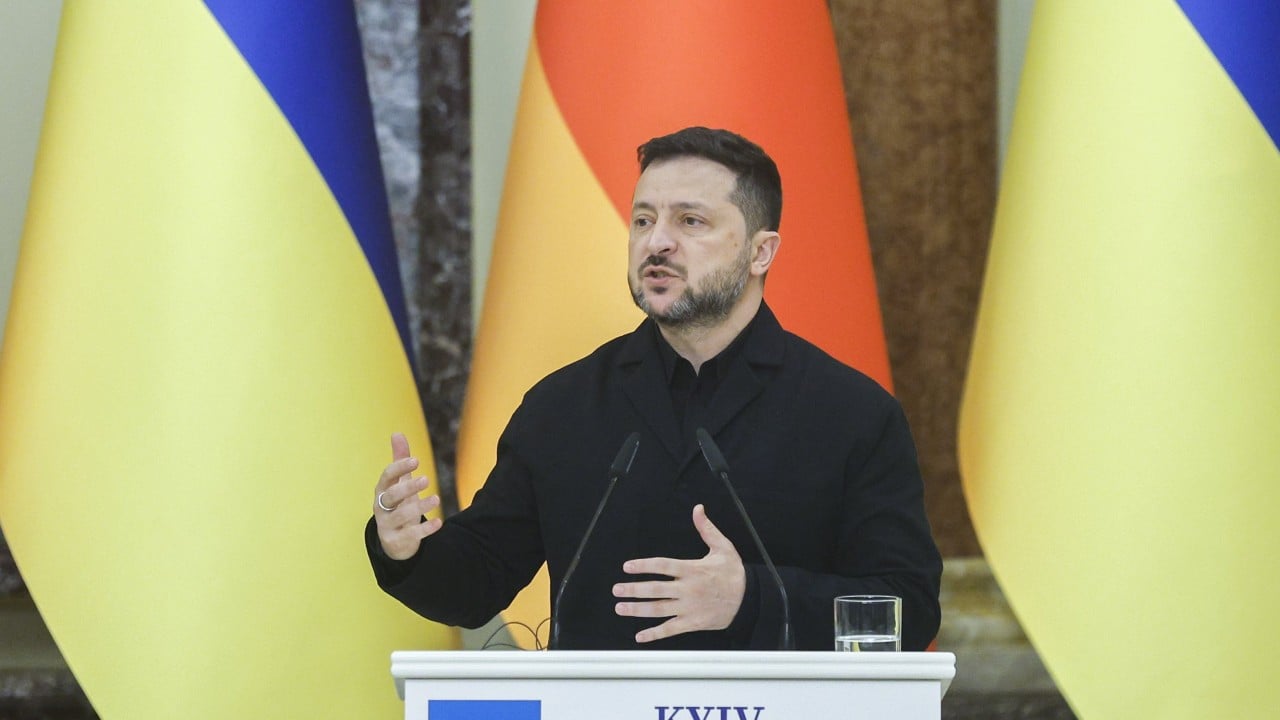
We love a clean narrative in modern defense reporting. Kyiv points a finger at Moscow. Moscow trades rocket secrets for ammunition and cheap artillery shells with Pyongyang. The headlines write themselves. President Zelensky stands before the press, drops the bombshell that Russia shared advanced jet-drone technology with North Korea, and the international security establishment nods in unison. It fits the tidy box of the new Axis of Convenience.
Except the premise is wrong.
North Korea did not need a Russian technological charity case to build jet-powered loitering munitions or fast target drones. Assuming that Pyongyang sat waiting with cupped hands for Moscow to hand over blueprints ignores the grim reality of North Korea's indigenous engineering capabilities. For decades, Western intelligence agencies have made the foundational mistake of treating North Korea as a technological backwater run by starving caricatures. That arrogance creates blind spots.
Pyongyang did not buy its way into the jet-drone era. It engineered its way there using the oldest trick in the illicit military playbook: vertical integration of scavenged commercial parts, decades of missile guidance experience, and a brutal domestic priority that funnels every scarce kilowatt of power into state-sponsored weapons laboratories.
Let us dismantle the lazy consensus.
The Myth of Russian Technological Dependency
When analysts look at North Korea’s recent displays of suicide drones and fast-moving aerial targets, they point straight to the Shahed-136 lineage or assume direct Russian design bureaus drafted the schematics. This is lazy analysis.
Russia’s own drone development program relied heavily on Iranian imports and commercial off-the-shelf microelectronics. If Moscow was struggling to source Western-manufactured guidance chips and reliable small turbojet engines due to sanctions, how exactly were they supposed to export cutting-edge propulsion systems to Pyongyang? You cannot export what you are currently smuggling yourself through third-party intermediaries in Central Asia and the Caucasus.
North Korea’s defense industrial base operates on a different axis entirely. They have spent fifty years perfecting reverse engineering. They started with Soviet Scud missiles in the 1970s, moved on to indigenous solid-fuel ballistic designs, mastered precision CNC machining under brutal trade embargoes, and built a domestic electronics sector specifically designed to bypass international controls.
When you have spent half a century building ballistic missiles that require advanced guidance computers, telemetry systems, and aerodynamic stabilization, scaling down to a subsonic jet-powered suicide drone is not a quantum leap. It is a weekend project.
The Propulsion Reality Check
The core of the recent friction is the emergence of jet-propelled UAVs in the North Korean inventory. The conventional wisdom states that small, efficient turbojet engines are too complex for North Korean metallurgy and turbine-blade casting techniques.
This argument falls apart the moment you examine North Korea's cruise missile programs. Long before the war in Ukraine heated up, Pyongyang was testing long-range cruise missiles powered by small turbofan and turbojet engines. They did not develop these engines yesterday. They have been iterating on domestic cruise missile propulsion since the early 2000s, often adapting designs derived from old Soviet R-15 or Kh-55 components acquired through various grey-market channels over decades.
To suggest that Russia suddenly unlocked jet propulsion for North Korea is to ignore the Hwasal-1 and Hwasal-2 strategic cruise missiles. Those systems were flying hundreds of kilometers over the Sea of Japan long before a single Russian soldier crossed the border into Ukraine.
Pyongyang’s scientists did not need a USB drive from a Russian general to figure out how to strap a small turbojet to an airframe. They had already solved the hard physics of fuel consumption, vibration dampening, and thrust-to-weight ratios years ago.
What Washington and Kyiv Miss
The strategic messaging coming out of Kyiv is understandable. Framing North Korea's military advancement as a direct consequence of Russian desperation ties the two conflicts together, creating a unified theater of geopolitical crisis. It gives Western capitals a clean rationale for maintaining and expanding joint sanctions packages across both fronts.
But misdiagnosing the adversary's capabilities creates dangerous operational blind spots.
If North Korea's drone advancements are viewed merely as borrowed Russian tech, defense planners expect borrowed limitations. They expect supply chain bottlenecks tied to Moscow's export controls. They expect that if Russia's aerospace sector falters, North Korea's drone program stalls.
That is a dangerous fantasy.
North Korean factories do not care about Western semiconductor bans because they long ago established secure, clandestine pipelines for industrial automation equipment, specialized alloys, and dual-use sensors. They build their own circuit boards. They cast their own composite airframes. They have achieved a level of autarkic military production that makes Western sanctions look like polite suggestions.
The Uncomfortable Truth About Proliferation
The real story here is not that Russia is transferring advanced technology to North Korea. The real story is the reverse: North Korea is emerging as a primary hardware supplier for cash-strapped authoritarian states, trading its massive conventional manufacturing capacity for hard currency, raw materials, and operational testing data.
North Korea has millions of artillery shells, decades of experience in underground tunnel warfare, and a mobilized industrial economy built entirely around perpetual state defense. Russia is buying, not learning. Pyongyang is cashing in on its industrial scale, using the Ukrainian battlefield as a live-fire testing range to validate the reliability of its munitions, guidance systems, and unmanned platforms.
When a North Korean engineer watches telemetry data from a conflict zone thousands of miles away, they are gathering combat data that no amount of domestic testing can replicate. They are refining their guidance algorithms using real-world electronic warfare interference patterns. They are learning how their hardware performs against modern NATO-supplied air defense systems.
That is not technology transfer. That is combat optimization.
Stop Preparing for the Wrong War
If military strategists continue to treat North Korea as a second-tier client state that relies entirely on borrowed technology, they will be utterly unprepared for the speed at which Pyongyang is modernizing its autonomous warfare capabilities.
The proliferation threat we face is not a leaky pipeline of Russian blueprints. It is the emergence of an industrialized, sanctions-proof military-industrial complex in East Asia that can churn out low-cost precision munitions at scale, completely decoupled from Western financial systems.
Stop looking for Russian fingerprints on every North Korean drone. Look instead at the silent, brutal efficiency of a state that spent seventy years preparing for total isolation, and turned that isolation into an unassailable manufacturing advantage.
The drones flying today were built by Pyongyang, for Pyongyang, using lessons learned over decades. Pretending otherwise is comforting, but it will get people killed.