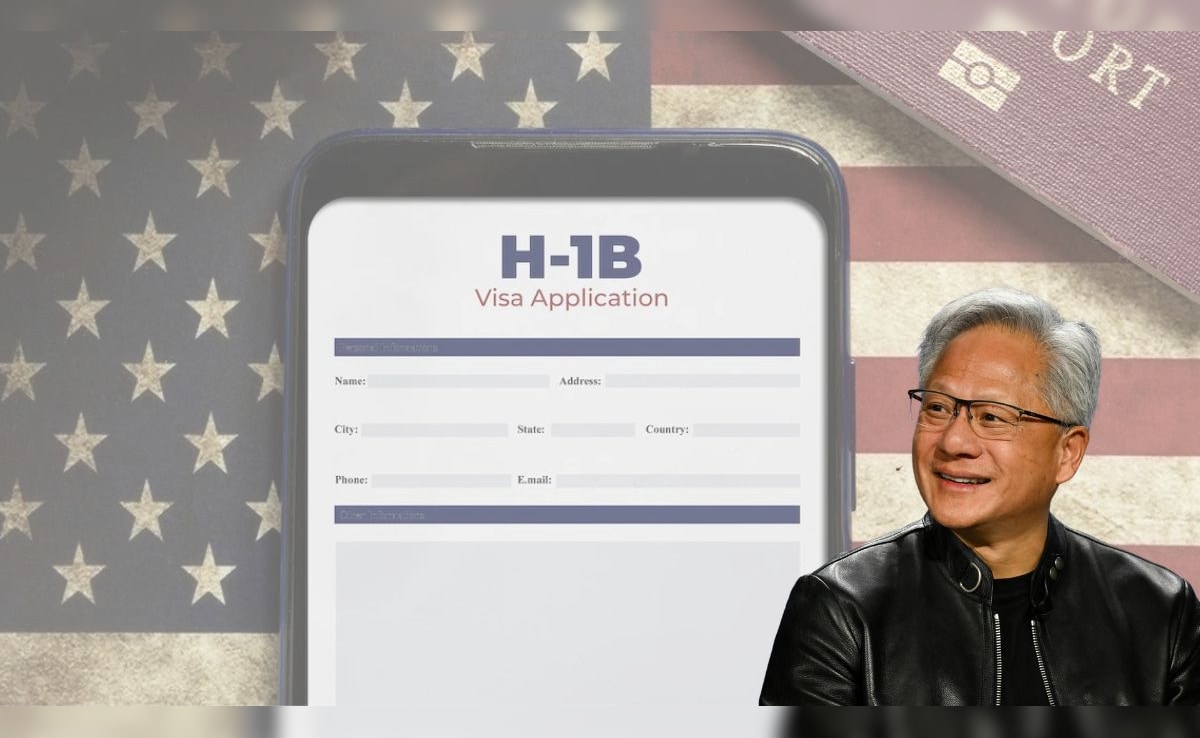
You are looking at a brutal landscape if you are an foreign tech professional in the United States right now. The old playbook is broken. For years, landing a job at Google or Meta meant an automatic ticket to immigration stability. Not anymore.
Recent federal immigration data shows a massive pullback from the traditional tech giants. Google slashed its certified H1B positions from 5,100 down to 2,200 year-over-year. Amazon dipped from 6,100 to 4,300. Between policy shifts, a strict administration crackdown, and a crushing $100,000 corporate fee on certain new H1B sponsorships, most of Silicon Valley is playing defense.
Except for Nvidia.
While everyone else retreats, Nvidia is aggressively expanding its international talent pool. The artificial intelligence juggernaut secured certification for roughly 1,200 H1B positions in the first half of fiscal 2026, up from 1,000 during the same window last year.
It is a fascinating defiance of market trends, and honestly, it is the biggest silver lining for skilled Indian techies who feel trapped by backlogs and shifting political winds.
The Core Defiance of Jensen Huang
To understand why this is happening, you have to look at the top. Nvidia CEO Jensen Huang has been incredibly vocal about this stance. He is an immigrant himself, born in Taiwan, and he views the U.S. immigration system not as a compliance hurdle, but as the literal foundation of his company.
When the administration introduced the eye-watering $100,000 fee for new H1B applications, panic rippled through the industry. Tata Consultancy Services (TCS) openly stated plans to pivot away from H1B hiring in favor of local recruitment.
Huang did the exact opposite. He sent a note to his workforce making it clear that Nvidia would continue to sponsor visas and absorb every single penny of the regulatory costs.
He told his team that the miracle of Nvidia would not be possible without immigration. He is backing that sentiment up with massive corporate spending. While other boards see a $100,000 fee as a reason to cut a candidate, Nvidia sees it as the cost of securing the best AI minds on the planet.
What Nvidia Pays Its H1B Workforce
Vague promises don't pay bills or solve visa anxieties. Nvidia is winning the talent war because their base salaries are absurdly high, which plays perfectly into the changing U.S. visa system.
The U.S. Citizenship and Immigration Services (USCIS) implemented a wage-weighted lottery system. This means individuals in higher salary bands have a drastically better shot at getting selected. Level IV high-wage roles face a 61% selection rate, compared to a miserable 15% for entry-level positions.
Nvidia’s base pay scales effectively guarantee that their H1B applicants sit comfortably at the top of the selection food chain. Here is what the actual federal data reveals about their annual base salaries, excluding stock options or performance bonuses:
- Architecture Directors: Up to $488,750
- Distinguished AI Algorithms Engineers: Up to $471,500
- Principal Systems Software Engineers: Up to $431,250
- Software Engineers: Up to $391,000
- Product Managers: Up to $379,500
- Hardware Engineering Managers: Up to $368,000
- Research Scientists: $104,000 to $356,500
When your base salary clears $300,000, you are not just getting a great paycheck. You are positioning yourself to crush the wage-based lottery criteria that are currently sinking applicants at smaller firms or lower-paying consultancies.
The Reality of the Golden Handcuffs
It is easy to look at these numbers and think Nvidia is paradise. For many, it is. But if you talk to people on the inside, there is an underlying tension that every H1B holder needs to understand.
Nvidia relies heavily on Restricted Stock Units (RSUs) that vest over a traditional four-year period with a one-year cliff. Because Nvidia’s stock has experienced historic growth, earlier hires have achieved staggering wealth. Newer hires, however, are coming in at a much higher valuation peak. They are working just as hard but facing a vastly different equity upside.
More importantly, the H1B visa leaves you incredibly exposed if things go wrong. If you lose your job, you have a strict 60-day grace period to find another sponsor or leave the country. When your compensation is tied up in unvested RSUs, a sudden layoff means you don't just lose your legal status; you leave millions of dollars on the table.
Indian nationals bear the brunt of this anxiety because of the per-country green card caps. Even with Nvidia fully backing your permanent residency track, the wait times stretch out for a decade or more. You are effectively locked into a state of perpetual dependency on a single employer.
How to Position Yourself for an Nvidia Sponsorship
If you want to capitalize on Nvidia's hiring surge, you cannot just send a generic resume into the job portal. They are looking for hyper-specific technical talent to fuel the semiconductor and AI boom.
Target GPU architecture, chip design (ASIC engineers are in massive demand), deep learning research, and software engineering for CUDA frameworks. These are the departments where Nvidia concentrates its immigration budget.
Ensure your formal degree exactly matches the job description. The most common reason high-tech visa petitions face federal scrutiny or Rejection For Evidence (RFEs) is a mismatch between a candidate's university degree and their actual day-to-day role. If you are applying for an AI hardware role, your electrical or computer engineering credentials need to be spotless.
Act early. While Nvidia hires throughout the calendar year, positions tied directly to the H1B cap fill up months before the registration window opens.
If you are currently on an F-1 visa utilizing OPT or STEM OPT, you are a prime target. Companies love OPT candidates right now because they offer certain supplemental fee exemptions under the new tax laws, making you a cheaper upfront bet before they transition you to a full H1B.
Stop waiting for traditional Big Tech to fix their immigration pipelines. The balance of power has shifted. If you have the specialized technical skills, target the companies that are actively fighting the system to bring you on board, rather than those trying to figure out how to phase you out.