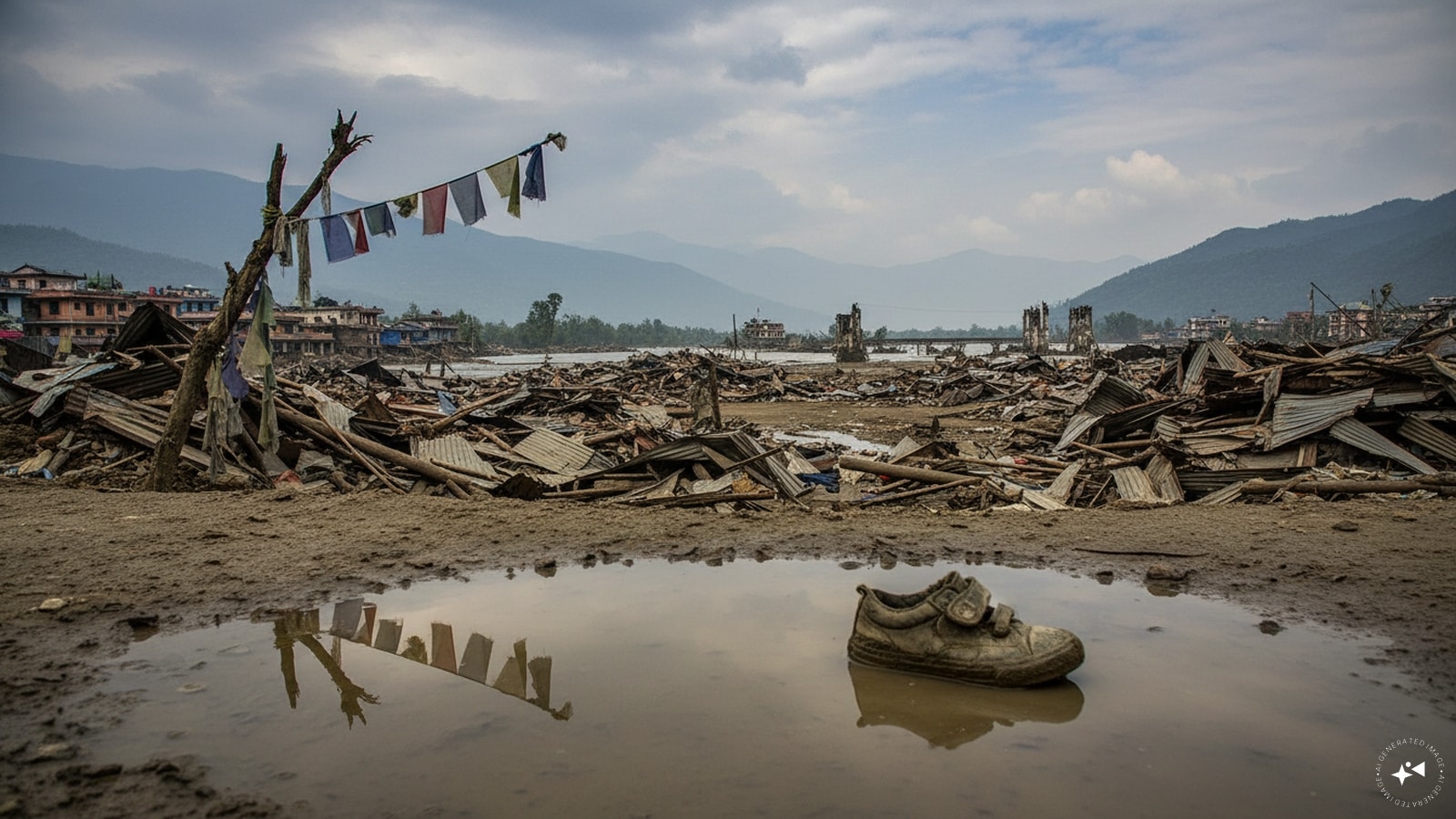
When a massive rock-ice avalanche sheared off the Lirung massif near the Nepal-Tibet border, it didn't just trigger flash floods; it erased entire landscapes in minutes. Months after the disaster, the statistics are staggering. At least 1,453 people lost their lives, and nearly 5,300 remain unaccounted for. But numbers on a screen fail to capture the raw, ongoing agony of families searching through millions of tonnes of debris for loved ones who may never be found.
If you look past the headlines, you'll find a community grappling with a completely altered reality. The sheer scale of destruction across districts like Rasuwa, Nuwakot, and Dhading presents a harsh lesson on how fragile high-altitude infrastructure is when faced with climate-accelerated disasters.
Why This Disaster Was Different
Most people assume seasonal monsoon rains are to blame for Himalayan flooding. This catastrophe was different. Scientists point to a catastrophic glacier collapse that dropped massive amounts of ice and rock onto a lake below, sending a wall of water surging down the Trishuli and Bhotekoshi rivers.
Water levels spiked so violently that floodwaters reached settlements up to 80 meters above normal river channels. Bridges vanished, hydropower plants were crushed, and entire commercial hubs like Gyirong Port were torn apart. Entire valleys were choked with roughly 2.2 million tonnes of sediment and building debris. A journey that used to take minutes across a local footbridge now requires hours of grueling detours because over 100 bridges were swept away.
The Agony of the Missing
The hardest part of this tragedy isn't just the initial impact—it's the endless limbo. With thousands still missing, identification has become an agonizing hurdle. The Nepal Police have urged first-degree relatives to submit DNA samples just to put names to recovered remains.
Families are trapped in a cruel administrative and emotional trap. Without a body or a formal death certificate, obtaining insurance payouts, accessing financial relief, or settling estate matters becomes nearly impossible. Some families have chosen to hold symbolic funerals just to find a shred of closure, even while official search operations scale back.
Foreign nationals were also caught in the devastation, including workers on hydropower projects and travelers visiting sacred regional sites. That global footprint brought international attention, but local villagers bear the heaviest long-term burden.
The Tragic Economic Toll
Rebuilding isn't just about fixing a few roads. Experts estimate that the total recovery and reconstruction cost sits around $4.78 billion, which accounts for a staggering chunk of Nepal's gross domestic product. Schools, health facilities, and hundreds of small businesses were wiped out.
International aid pledges have fallen short of what is immediately required. While global leaders talk about climate resilience, communities on the ground are simply trying to clear the mud out of where their living rooms used to be.
Stop expecting quick fixes for complex geographical scars. Supporting long-term recovery means keeping pressure on international donors to fulfill relief promises and helping displaced families rebuild away from high-risk flood zones before the next melt cycle begins.
Why Nepal Floods Devastated the Region
This video provides an in-depth look at the geological factors and regional impacts behind the catastrophic flash floods.