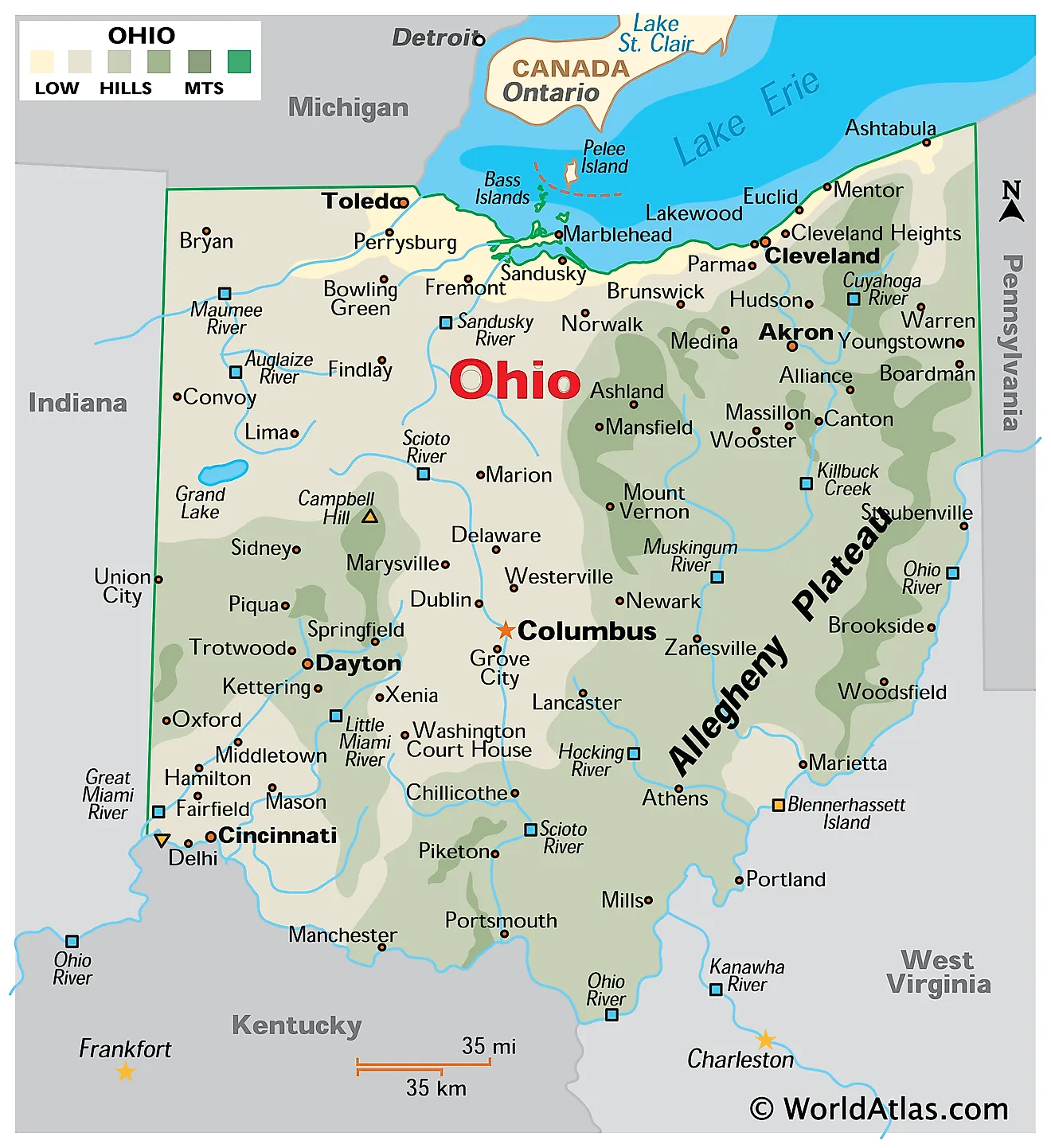
Ohio is officially the best state in America for business, capturing the top spot in CNBC’s annual corporate competitiveness rankings for the first time. The achievement caps a remarkable two-decade climb from 30th place in 2007, driven by aggressive industrial site preparation, low real estate costs, and a massive surge in data center and semiconductor investments.
But the victory lap inside the statehouse masks a widening structural vulnerability. Underneath the state's top-tier infrastructure and favorable tax environment lies a stagnant labor market. Ohio secured its crown despite its workforce ranking falling to a troubling 35th in the nation, plagued by low higher-education attainment and an inability to retain specialized talent. If the state cannot fix its human capital pipeline, the multi-billion-dollar factories currently rising from the Midwestern soil risk becoming exceptionally expensive monuments to a labor pool that never arrived.
The Infrastructure Trap
State economic development officials have spent years building the ultimate physical playground for heavy industry. Through initiatives like the All Ohio Future Fund, the state poured over $1 billion into cleaning up contaminated industrial sites, demolishing blighted properties, and pre-certifying large tracts of land with massive water and electrical power access.
This strategy worked flawlessly for an era defined by supply chain repatriation. When Intel looked for a place to build a $20 billion semiconductor hub, or when defense tech darling Anduril Industries needed space for a massive military manufacturing facility, Ohio had the shovel-ready land and the cheap industrial power grid to close the deal. Industrial and office rents remain among the lowest in the country, shielding corporations from the real estate premium of the East and West coasts.
Yet, physical infrastructure is the easiest variable for a government to manipulate. You can buy land, lay concrete, and subsidize electric substations with enough tax revenue. You cannot buy a highly educated workforce overnight.
The Talent Stagnation
The true bottleneck for Ohio's economic future is human capital. According to the data underlying the state's rise, only about 19% of Ohio adults hold a bachelor’s degree or higher, placing the state far behind traditional economic powerhouses.
Corporate site selectors are increasingly expressing private concern that the state’s educational pipeline is misaligned with its new high-tech ambitions. Intel requires thousands of chemical, electrical, and materials engineers to run its Licking County fabrication plants. Defense startups require advanced software engineers and automated systems specialists. Ohio's current workforce remains heavily skewed toward traditional precision manufacturing and logistics—skills vital to the 20th century, but insufficient to sustain an ecosystem of advanced computing and automation.
The state is caught in a classic brain drain dilemma. While top-tier institutions like Ohio State University and Case Western Reserve produce elite technical graduates, a significant portion of that talent leaves the state upon graduation. They head to cities with higher density, better public transit, and more vibrant cultural ecosystems.
The Data Center Backlash
Ohio's cheap energy and vast open spaces have also turned it into the data center capital of the Midwest, attracting hyper-scalers rushing to build infrastructure for artificial intelligence. A massive new data facility planned for Pike County highlights this gold rush.
However, this specific form of economic growth is hitting a wall of local resistance. Municipalities across the state are actively moving to restrict or ban new data center developments. The tension is easy to understand. Data centers consume immense amounts of water and electricity, straining local utilities and offering virtually no employment in return. A facility covering hundreds of thousands of square feet might require fewer than fifty permanent staff members once construction concludes.
For local communities, the trade-off is becoming unpalatable: they bear the burden of increased utility strain and scarred landscapes, while the corporate tax revenues rarely trickle down into noticeable improvements for the average resident.
Competition at the Gates
Ohio’s position at the top is precarious. North Carolina, which dominated the rankings for years, finished a mere nine points behind in second place. Unlike Ohio, North Carolina boasts an economic engine explicitly anchored by a world-class higher education network and a deeply entrenched technology and life sciences sector.
Virginia and Texas follow closely, both possessing vastly superior talent attraction dynamics and deep pools of venture capital. Ohio won this year because it optimized its cost environment and physical footprint at a moment when companies were desperate to avoid high inflation and expensive coastal real estate. But cost advantages are easily eroded by inflation, changing state tax policies, or an aggressive subsidy war from a neighboring state.
Rewriting the Midwestern Playbook
To convert this temporary ranking victory into sustained economic dominance, state leadership must pivot from building sites to building people.
The current economic model relies on importing massive corporations through heavy subsidies, hoping the workforce adapts organically. A more sustainable approach requires a radical overhaul of the state's retention strategy. This means shifting state incentives away from pure corporate tax credits and toward direct investments in public higher education, specialized technical certification programs, and urban quality-of-life initiatives that make midwestern cities attractive to twenty-somethings.
If a state boasts the best roads, the cheapest land, and the most abundant power in America, but lacks the specialized minds required to operate the machinery of the future, global capital will eventually pack up and move to where the talent lives.