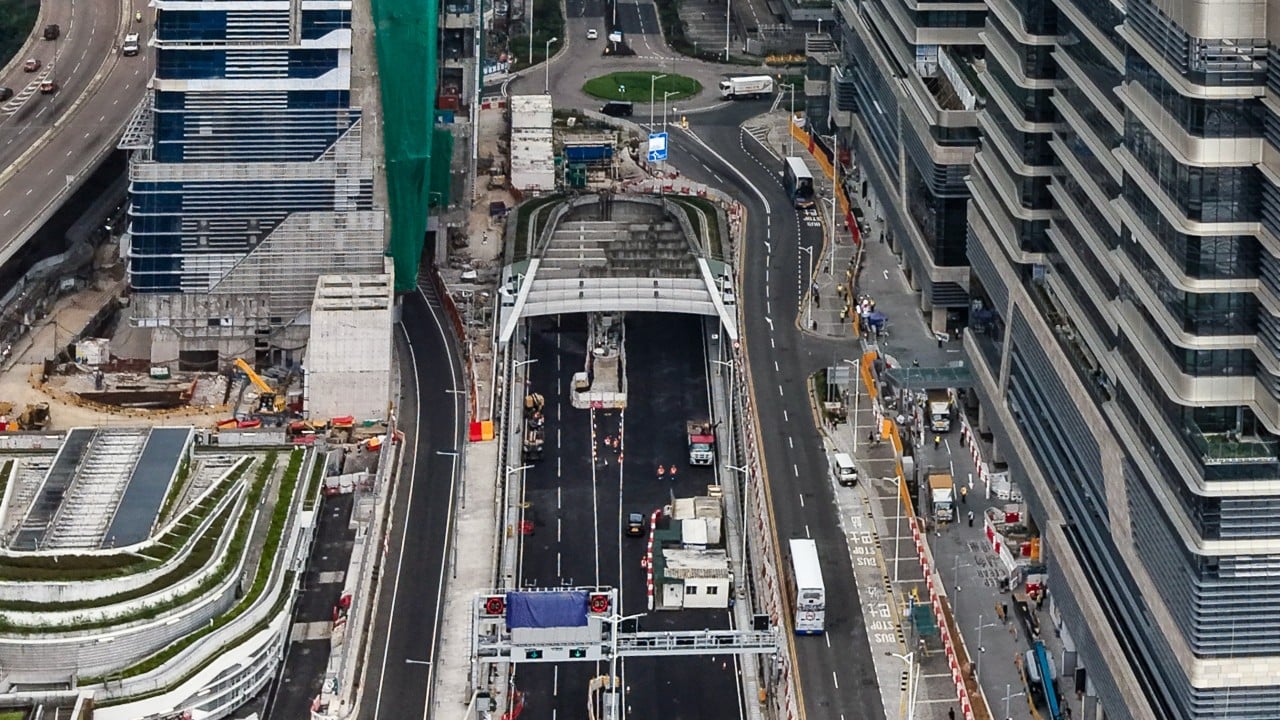
Everyone is popping champagne over the impending full opening of the Central Kowloon Route and its connecting arteries linking Yau Ma Tei and Tseung Kwan O. Commuters rejoice. Property agents saliven over housing values in the east. Transport planners pat themselves on the back for another engineering triumph beneath the dense concrete of the city.
It is a complete delusion.
Let us stop pretending that pouring more asphalt and tunneling through granite solves urban congestion. Anyone who has spent more than five minutes studying modern urban economics knows the dirty little secret of civil engineering. Build road capacity, and traffic simply expands to fill it. Induced demand is not a debated theory; it is an economic law as rigid as gravity.
The Fallacy of the Commuter Miracle
The narrative pushed by planners is simple. Cut down travel times between West Kowloon and Tseung Kwan O, and mobility improves. Cut out the surface-level bottlenecks, route vehicles underground, and watch the efficiency soar.
The reality on the ground operates differently.
When you make a journey faster and cheaper in terms of time cost, you trigger a behavioral shift. People who previously took the MTR because driving was an exercise in self-harm will now get behind the wheel. People who lived further out will accept jobs in core districts because the commute looks manageable on paper. Within six months of ribbon-cutting ceremonies, the new tunnels will hit saturation.
You have not solved congestion. You have merely subsidized more driving.
Look at the geography involved. Yau Ma Tei is already a pressure cooker of pedestrian density, commercial activity, and legacy infrastructure. Pumping thousands of additional vehicles directly out of a high-capacity subterranean conduit into an existing street grid is like opening a firehose into a kitchen sink. The bottleneck does not disappear; it just moves downstream.
Why Urban Planners Keep Repeating the Same Mistake
The obsession with high-speed cross-district connectivity stems from an outdated mid-century mindset. The playbook assumes that the primary metric of a successful city is the velocity of private motor vehicles.
It ignores the opportunity cost. Every dollar spent boring massive subterranean highway systems through urban rock is a dollar not spent upgrading high-capacity rail lines, expanding intelligent traffic management, or redesigning surface streets for active transport.
Ask anyone living near the exit portals in Tseung Kwan O what they think of the impending opening. They will get a nice shiny bypass, sure. They will also get localized air pollution spikes at ventilation shafts and a fresh wave of vehicular noise that property brochures conveniently omit.
Furthermore, the financial mechanics are rarely scrutinized with honesty. Mega-projects of this scale routinely run over budget, burdened by unforeseen geological hurdles in Hong Kong’s notoriously complex sub-surface environment. The public absorbs the capital cost, while a fraction of motorists capture the time-saving benefits. It is a regressive wealth transfer disguised as public infrastructure.
The Counter-Intuitive Playbook
If we actually wanted to fix cross-harbor and cross-district transit, the playbook looks entirely different.
First, we need to embrace congestion pricing. If driving through prime urban corridors carried a dynamic toll that reflected its true societal cost, people would think twice about unnecessary trips. Instead, we build multi-billion-dollar escape valves that encourage the exact behavior causing the gridlock in the first place.
Second, we must prioritize mass transit redundancy over road capacity. The MTR network is the backbone of this city for a reason. It moves density efficiently. Every private car removed from the road replaces square meters of wasted space with moving people. Every private car added via a new highway eats up exponentially more urban footprint.
The upcoming December launch will be celebrated with official speeches and ribbon cuttings. Politicians will smile for the cameras.
Drive through it on day one if you want. Enjoy the brief, fleeting illusion of a clear run. Because by the time the next quarter rolls around, you will be sitting in the exact same traffic jam, wondering why a multi-billion-dollar tunnel felt like a downgrade.