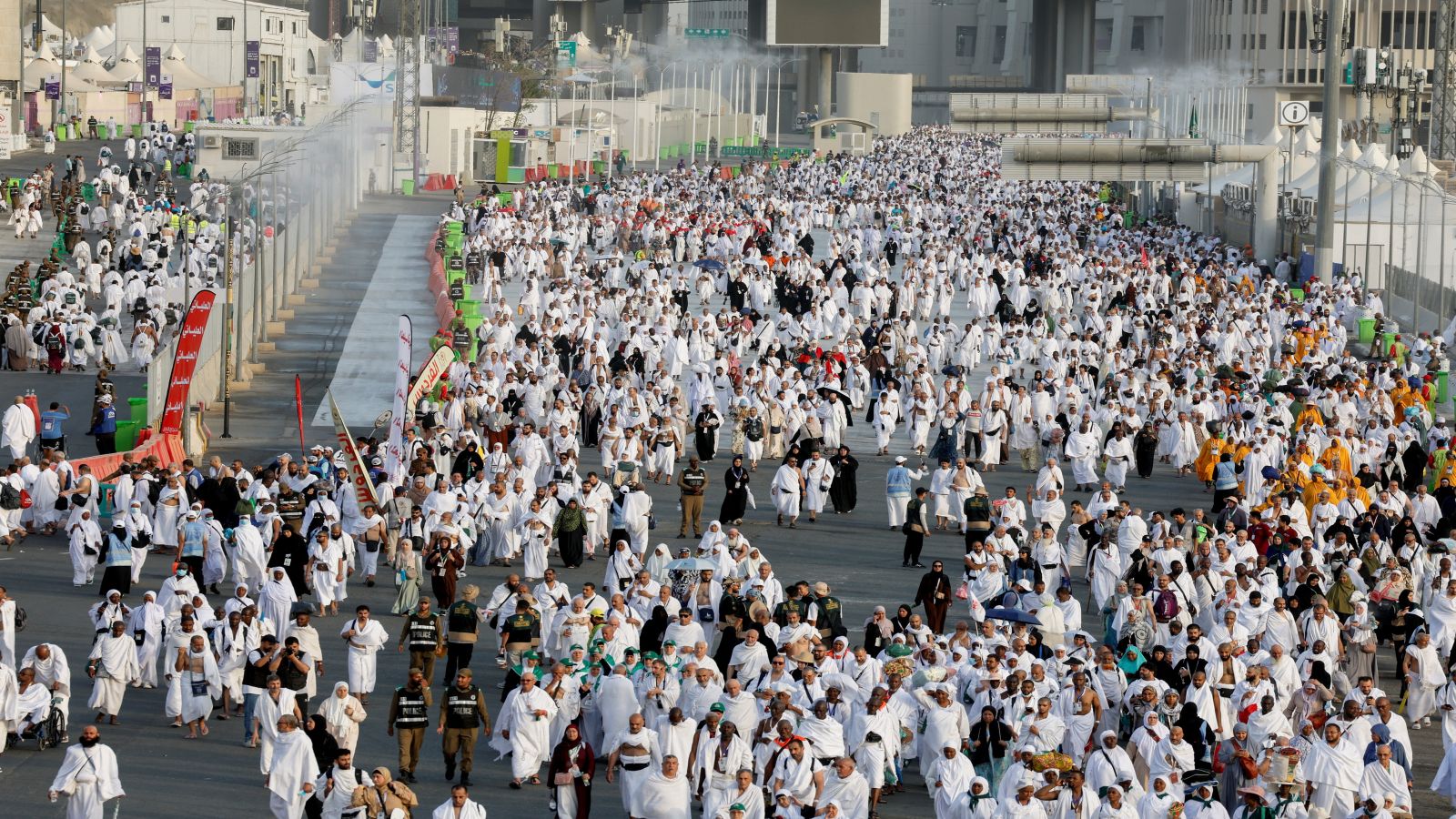
The Hajj pilgrimage represents one of the most complex recurring logistical and human-management challenges in the modern world. Annually, it requires the temporary orchestration of millions of individuals within a highly constrained geographic and temporal window. Understanding Hajj requires moving past surface-level descriptions of religious piety and examining the structural mechanics that govern the pilgrimage. The entire event operates as a tightly coupled socio-technical system driven by specific theological mandates, precise spatial-temporal bottlenecks, and massive resource allocation frameworks.
To analyze Hajj effectively, one must evaluate it through three core dimensions: the structural timeline of the core rituals, the logistical constraints of the spatial environment, and the macroeconomic ecosystem that sustains the influx of pilgrims.
The Spatial-Temporal Matrix: Mapping the Core Ritual Sequencing
The mechanics of Hajj are dictated by the Islamic lunar calendar, specifically occurring from the 8th to the 13th day of the month of Dhu al-Hijjah. This fixed temporal constraint creates an inflexible demand curve; the millions of participants cannot distribute their attendance over time. They must occupy the exact same geographic nodes simultaneously.
Phase 1: State Alteration and Boundary Entry (Ihram)
The operational sequence begins before a pilgrim enters the sacred precinct of Mecca. Pilgrims must pass through designated geographic boundary points known as Miqat. At these points, individuals transition into Ihram, a formal state of consecration signaled by specific behavioral restrictions and standardized attire—two seamless pieces of white cloth for men.
From a systems perspective, this standardization serves an egalitarian function, stripping away socioeconomic indicators to establish a uniform collective identity.
Phase 2: The Core Spatial Iterations (Tawaf and Sa'i)
Upon entering the Masjid al-Haram in Mecca, pilgrims execute Tawaf, which requires circling the Kaaba seven times counterclockwise. The Kaaba serves as the physical axis mundi of Islamic worship.
Following Tawaf, pilgrims perform Sa'i, walking seven times between the hills of Safa and Marwa. This ritual covers a total distance of roughly 3.15 kilometers within a closed architectural corridor. Sa'i commemorates the historical search for water by Hagar, mother of Ishmael, translating a narrative of survival into a highly structured physical movement.
Phase 3: The High-Density Mass Migrations (Mina, Arafat, and Muzdalifah)
On the 8th of Dhu al-Hijjah, the population shifts entirely to Mina, a valley situated roughly 8 kilometers east of Mecca, which converts into a massive, grid-aligned tent city.
The logistical peak occurs on the 9th day during the ascension to Mount Arafat. The presence at Arafat between noon and sunset is the defining jurisprudential pillar of Hajj; if a pilgrim fails to be present within this spatial boundary during this specific timeframe, their pilgrimage is legally invalid under Islamic law.
At sunset, a rapid mass evacuation occurs as the entire population moves simultaneously to Muzdalifah, an open plain where they camp under the sky and collect pebbles for subsequent rituals.
Phase 4: Risk Mitigation and De-escalation (Ramy al-Jamarat and Eid)
On the 10th day, pilgrims return to Mina for Ramy al-Jamarat, the symbolic stoning of the devil. Pilgrims cast pebbles at three massive concrete pillars (now walls). Historically, this specific node represented the highest-risk bottleneck for crowd-crush disasters.
Following the initial stoning, male pilgrims undergo Halq (shaving the head) or Taqsir (trimming the hair), marking a partial exit from the state of Ihram. This coincides with Eid al-Adha, the festival of sacrifice, requiring the slaughter of a livestock animal to commemorate Abraham's willingness to sacrifice his son. The process is now managed via global institutional supply chains to handle millions of animal sacrifices within hours.
The pilgrimage concludes with a final return to Mecca for a valedictory circumambulation (Tawaf al-Wadaa), systematically winding down the spatial density.
Logistical Vulnerabilities and Crowd Dynamics Engineering
The primary operational challenge of Hajj is crowd density management. When millions of individuals move through a fixed sequence of physical spaces, fluid dynamics models apply. Human crowds at high densities ($>4 \text{ people per square meter}$) behave similarly to compressible fluids, where shockwaves can propagate through the mass, leading to systemic failures known as crowd collapses.
The Mina Valley Bottleneck
Mina acts as a high-density residential zone for nearly a week. The physical constraints of the valley mean expansion can only occur vertically or via optimized spatial planning. The modern infrastructure leverages fireproof, air-conditioned Teflon-coated tents organized into strict sectors based on geographic origin. This sectoring prevents random cross-flows and allows authorities to manage the macro-movement of crowds along predetermined pathways.
The Jamarat Bridge Engineering Overhaul
The Jamarat ritual historically generated lethal crowd pressures due to bidirectional traffic and localized stagnation at the stoning points. To mitigate this systemic bottleneck, the infrastructure underwent a massive multi-level architectural redesign. The current Jamarat Bridge is a multi-tiered structure that operates on a strict one-way fluid flow model.
- Sub-level separation: Dedicated ingress and egress routes ensure that incoming pilgrims never collide with those exiting.
- Elliptical barriers: The original circular pillars were replaced with long, elliptical concrete walls. This shape maximizes the perimeter area available for pilgrims to cast stones, accelerating throughput and preventing localized pooling of people.
- Real-time telemetry: Automated tracking systems and overhead cameras feed density data into command centers, allowing security forces to dynamically meter the release of pilgrims from Mina's tent zones.
The Macroeconomics of the Pilgrimage Ecosystem
Hajj is not merely a religious or logistical event; it is a profound macroeconomic engine for the Hijaz region and the wider Kingdom of Saudi Arabia. The economic framework can be divided into infrastructure investment, consumption expenditure, and international supply chain dependencies.
Capital Expenditures and Sovereign Revenue
The state infrastructure supporting Hajj requires multi-billion dollar capital allocations. The expansion projects for the Holy Mosque in Mecca, the construction of the Al Mashaaer Al Mugaddassah Metro line (a high-capacity shuttle train linking the holy sites), and complex water desalination networks represent long-term state investments.
While these projects require intensive capital expenditure, the economic returns are realized through diversified non-oil revenues. Pilgrims generate significant inflows for the hospitality, aviation, and retail sectors.
The Micro-Economy of the Pilgrim Lifecycle
A pilgrim’s cost function scales based on geographic origin, visa class, and accommodation tier. The financial outlays include:
- Logistics and Transport: International flights, high-speed rail access (Haramain High-Speed Railway), and local coach transport.
- Hospitality: High-density budget housing in Mina versus luxury high-rise hotels overlooking the Kaaba in Mecca.
- The Sacrificial Economy: The automated procurement of sacrificial animals through institutions like the Islamic Development Bank (IDB). This system allows pilgrims to purchase vouchers digitally. The IDB then processes, freezes, and distributes the meat to impoverished populations globally, solving what was once a massive public health and waste management dilemma.
Risk Profiles and Structural Limitations
Despite advanced engineering, the Hajj system faces ongoing constraints and inherent vulnerabilities that limit absolute risk elimination.
Epidemiological Vulnerabilities
The gathering of individuals from over 180 countries creates a highly potent incubator for infectious disease transmission. Respiratory tracts infections (such as influenza and coronaviruses) and meningococcal diseases are historically prevalent. The density of communal living in Mina accelerates secondary transmission rates.
To counteract this, strict health protocols are enforced, including mandatory immunization visas for specific vectors (yellow fever, meningitis, polio) and real-time syndromic surveillance at entry ports.
Climate Scale Pressures
The Islamic lunar calendar causes the timing of Hajj to cycle through all four seasons over a roughly 33-year loop. When the pilgrimage falls during peak summer months, ambient temperatures in Mecca routinely exceed $45^\circ\text{C}$ ($113^\circ\text{F}$).
This creates a severe physiological load on pilgrims, many of whom are elderly or suffer from pre-existing comorbidities. Heat stroke and severe dehydration represent constant threats to life. The infrastructure counters this via vast misting fan networks, shaded walkways, and distributed mobile medical units, yet the underlying climate risk remains an unalterable environmental baseline.
Strategic Operational Forecast
The management of Hajj must pivot toward complete digital twinning and predictive behavioral modeling. To scale capacity toward future state targets without compromising safety, operations must transition from reactive crowd control to proactive spatial scheduling.
- Dynamic Algorithmic Metering: The issuance of Hajj slots must be integrated directly into a centralized cloud-based scheduling platform. Pilgrims should receive real-time, personalized transit windows pushed via mobile applications, converting the entire mass migration into a deterministic, scheduled transportation network rather than a stochastic crowd event.
- Autonomous Last-Mile Transit: To reduce reliance on high-emission diesel bus fleets that choke the narrow valley corridors, deployment should focus on high-capacity electric autonomous pods operating on dedicated subterranean or elevated lanes between Mecca, Mina, and Arafat.
- Biometric Flow Analysis: Implementing privacy-compliant, edge-computed facial and biometric telemetry at scale will allow security infrastructure to identify micro-variations in crowd velocity before a bottleneck reaches critical density, triggering automated path-diversions.
The survival and efficiency of the Hajj infrastructure depend entirely on treating the pilgrimage not as a series of disparate ritual acts, but as an integrated, data-driven logistical ecosystem where structural engineering and theological mandates operate in absolute alignment.


