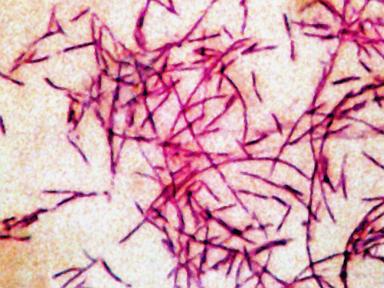
The evacuation of a hantavirus patient from Tristan da Cunha—the most remote inhabited archipelago on Earth—represents a rare intersection of extreme geographic isolation, high-pathogenicity viral threats, and the physical limits of long-range medical extraction. When a British citizen presented with symptoms of Orthohantavirus on an island situated 1,500 miles from the nearest mainland (South Africa) and lacking an airstrip, the response shifted from a standard medical emergency to a complex logistical theater. Success in such environments depends on three critical variables: the window of viral incubation, the fuel-to-payload ratio of specialized aircraft, and the rigid protocols of biocontainment during transit.
The Viral Profile: Orthohantavirus Pathophysiology and Isolation Risks
Hantaviruses are enveloped RNA viruses primarily transmitted via the aerosolization of rodent excreta. In the context of Tristan da Cunha, the introduction or mutation of such a pathogen creates a high-stakes epidemiological bottleneck. Unlike urban outbreaks where contact tracing is a matter of scale, island outbreaks are matters of total containment. For an alternative perspective, read: this related article.
The Two-Fold Clinical Threat
- Hantavirus Pulmonary Syndrome (HPS): Characterized by rapid-onset respiratory failure and myocardial depression. The primary mechanism of death is non-cardiogenic pulmonary edema, where the vascular system leaks fluid into the lungs.
- Hemorrhagic Fever with Renal Syndrome (HFRS): Results in vascular leakage and acute kidney injury.
Tristan da Cunha’s medical infrastructure consists of the Camogli Hospital, which, while capable of basic emergency care, lacks the Intensive Care Unit (ICU) depth required for advanced life support or continuous renal replacement therapy. The decision to evacuate is driven by the Acuity-Distance Gradient: the point where the patient’s projected physiological decline outpaces the island's ability to provide supportive care.
Logistics of the "Inaccessible" Extraction
Tristan da Cunha’s geography dictates the operational parameters of any rescue. The island is a volcanic peak with no flat terrain suitable for a conventional runway. All heavy logistics must occur via sea or specialized rotorcraft. Similar coverage on this matter has been provided by Medical News Today.
The Barrier of the Roaring Forties
The island sits in the South Atlantic’s "Roaring Forties," a region known for gale-force winds and volatile sea states. These conditions eliminate standard civilian helicopter range and safety margins. The British military response utilized a combination of long-range maritime patrol assets and heavy-lift capabilities to bridge the 1,700-mile gap from the nearest British Overseas Territory or the 1,500-mile gap from Cape Town.
The Aerial Refueling Requirement
To execute a non-stop extraction, the mission likely required an Airbus A400M Atlas or a similar strategic airlifter capable of dropping supplies or staging paratroopers. Because no aircraft can land on the island, the "parachute-in" component mentioned in reports likely refers to the deployment of a specialized Medical Emergency Response Team (MERT) and life-support equipment via Tactical Air Land Operation (TALO) or paradrop.
The logistical sequence follows a rigid four-phase execution:
- Phase I: Stabilization Drop. Parachuting advanced medical kits and specialized clinicians to stabilize the patient in situ.
- Phase II: Maritime Intersection. Coordinating a vessel with a helipad to move within range of the island’s small harbor (Calshot Harbour).
- Phase III: Ship-to-Shore Transfer. Using the island's barges or a ship-borne helicopter to move the patient from the island to a stabilized platform.
- Phase IV: Long-Haul Extraction. Final transport to a tertiary care facility in Cape Town or the United Kingdom.
Biocontainment Constraints in Transit
Transporting a hantavirus patient introduces significant risks to the flight crew and the airframe. The "Aerosolization Variable" is the primary concern. In the confined space of an aircraft, the patient must be housed in a Portable Iso-Vaccum (PIV) or an Air Transit Isocov (ATI).
The Physics of Negative Pressure
These units maintain a negative pressure environment, ensuring that air flows into the chamber but is only exhausted through High-Efficiency Particulate Air (HEPA) filters. This prevents the viral particles from entering the aircraft's environmental control system. The technical challenge arises from pressure changes during ascent and descent; the unit must automatically adjust its internal pressure to match the cabin altitude while maintaining the negative pressure differential required for biocontainment.
The Economic and Strategic Cost Function
The mobilization of military assets for a single patient is often scrutinized through the lens of resource allocation. However, the cost of this operation is better understood as a "Stress Test of Sovereign Obligation." The British Government, as the administering power of Tristan da Cunha, uses such events to validate its "Global Reach" doctrine.
The Cost Equation (C):
$$C = (F_h \times S_c) + (M_o) + (E_r)$$
Where:
- $F_h$: Flight hours of strategic airlifters and support craft.
- $S_c$: Specialized crew compensation and hazard pay.
- $M_o$: Opportunity cost of diverted military assets.
- $E_r$: Consumables and medical extraction hardware.
Beyond the immediate financial outlay, the operation provides data on long-range medical retrieval in "denied" or "austere" environments. These metrics are invaluable for future public health crises or military operations where traditional casualty evacuation (CASEVAC) chains are broken.
Epidemiological Implications for Isolated Populations
The presence of Hantavirus on Tristan da Cunha raises significant questions regarding vector entry. The island has a strict biosecurity protocol, yet rodent populations—the primary reservoir for hantavirus—are notoriously difficult to eradicate in volcanic terrains.
The Vector Introduction Hypothesis
The virus likely entered the island via one of two vectors:
- Maritime Hitchhiking: Rodents surviving on deep-sea fishing vessels or supply ships (the SA Agulhas II or Edinburgh).
- Migratory Patterns: While less likely for hantavirus, the movement of avian species can occasionally transport infected ticks or parasites, though the "rodent-aerosol" path remains the primary suspect.
The isolation of the Tristan population (approximately 250 residents) creates a "founder effect" for pathogens. If a virus takes hold, the lack of prior immunological exposure could lead to a significantly higher Attack Rate (AR) than in mainland populations. This necessitates a "Ring Vaccination" or "Total Lockdown" strategy should secondary cases appear.
Critical Limitations of Current Extraction Protocols
While the parachute deployment and subsequent extraction represent a technical triumph, several vulnerabilities remain in the protocol:
- Weather Latency: A 48-hour storm window in the South Atlantic can effectively seal the island, rendering even the most advanced military response useless.
- Communication Lag: The reliance on satellite uplinks for telemedicine can be hampered by solar activity or hardware failure on the island side.
- Zero-Failure Requirement: In biocontainment missions, a single breach in the ISO unit during the ship-to-air transition could ground the entire crew and contaminate a multi-million dollar airframe.
Strategic Recommendation for Island Governance
The Tristan da Cunha incident serves as a blueprint for the evolution of remote healthcare. The reliance on "heroic" military extractions is a high-cost, high-risk model that is not infinitely scalable.
Future resilience must prioritize In-Situ Capacity Augmentation:
- Tele-Robotic Surgical Suites: Deploying modular, remote-assisted surgical units that allow mainland specialists to perform procedures via low-latency satellite links.
- Autonomous Aeromedical Drones: Developing high-payload VTOL (Vertical Take-Off and Landing) drones capable of delivering 200kg of medical supplies regardless of sea state.
- Permanent Biosecurity Monitoring: Implementing continuous genomic sequencing of the island’s rodent population to detect viral mutations before they jump to the human population.
The focus must shift from the mechanics of the "rescue" to the architecture of "containment and cure." The most effective extraction is the one that is made unnecessary by the presence of localized, high-tier medical autonomy.