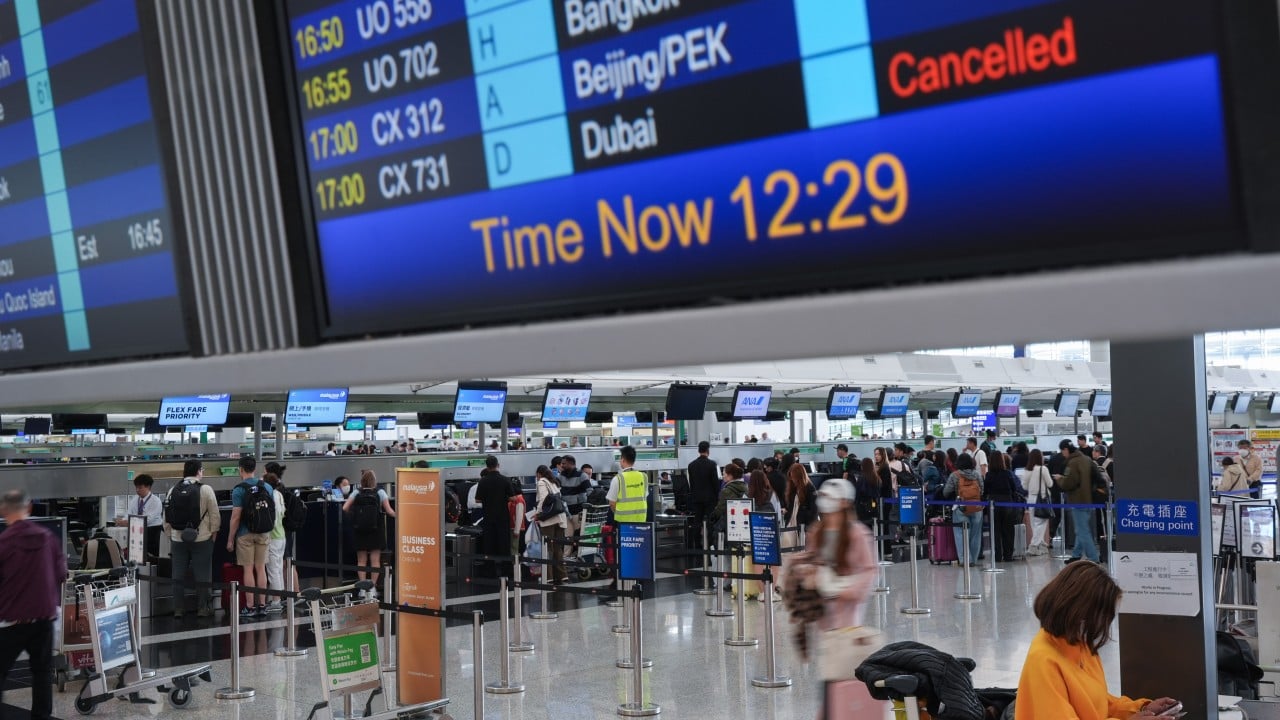
The stability of aviation infrastructure during regional conflict is not a byproduct of chance but a function of diversified network architecture and proactive risk mitigation. While headlines often focus on the binary state of "open" versus "closed" airports, the true measure of operational health lies in the sub-5% cancellation threshold. Maintaining such a low disruption rate during active Middle Eastern hostilities suggests a decoupling of local geopolitical risk from international transit utility. This analysis deconstructs the mechanisms allowing airport authorities to absorb systemic shocks and the specific variables that dictate whether a hub remains a viable node in the global supply chain.
The Triad of Operational Continuity
The ability to report cancellations below the 5% mark during a regional war rests on three distinct pillars of institutional strategy. When these pillars align, the airport transitions from a vulnerable target to a resilient corridor.
1. The Elasticity of Airspace Management
Airports do not operate in a vacuum; they are nodes within a broader Air Traffic Management (ATM) system. In conflict scenarios, the primary threat is not always the physical integrity of the runway, but the closure of surrounding corridors. A resilient authority maintains pre-negotiated contingency routes. This ensures that even if a northern corridor is restricted, the southern and eastern gates remain high-capacity. The sub-5% figure indicates that the authority successfully shifted traffic loads without exceeding the saturation point of the remaining open sectors.
2. Diversification of Carrier Exposure
A hub’s vulnerability is directly proportional to its reliance on a single flag carrier or a specific regional market. Airports that maintain a healthy mix of low-cost carriers (LCCs), international legacy airlines, and cargo-only operations can withstand the suspension of services by risk-averse operators. If a major European carrier pauses flights, the total impact on the cancellation rate is dampened by the continued operations of regional partners and local airlines that possess a higher risk tolerance or different insurance mandates.
3. Just-in-Time Security Protocols
Resilience is a logistical feat. Maintaining low cancellation rates requires a rapid escalation of security screening and ground-handling protocols that can adapt to changing threat levels without bottlenecking the terminal. The "less than 5%" metric suggests that the Airport Authority has optimized its Turnaround Time (TAT) even under heightened alert, preventing the cascading delays that typically lead to mass cancellations.
The Cost Function of Geo-Political Risk
Quantifying the impact of war on aviation requires moving beyond simple flight counts to evaluate the economic and operational burdens placed on the authority. Every flight that is not cancelled during a conflict carries a higher operational cost.
Insurance and War Risk Surcharges
The primary hurdle for airlines operating in conflict zones is the "War Risk" premium. When an airport remains active, it implies the authority has successfully communicated a "safe harbor" status to international underwriters. If the risk exceeds a specific threshold, Hull War insurance can be canceled with seven days' notice, or premiums can spike to a percentage of the aircraft's value per flight. By keeping cancellations low, the authority provides the data necessary for insurers to maintain coverage, effectively lowering the barrier to entry for cautious operators.
Revenue Displacement vs. Revenue Loss
A low cancellation rate does not always equate to high profitability. While 95% of flights may depart, the Load Factor (the percentage of available seats filled) often drops. Analysts must distinguish between:
- Tactical Resilience: The ability to move planes on and off the tarmac.
- Economic Resilience: The ability to maintain the yield per passenger.
- Strategic Displacement: When high-yield business travelers are replaced by low-yield evacuation or "necessity" travelers.
The current data indicates tactical resilience is high, but the economic cost of maintaining this posture involves increased spending on security personnel, emergency response readiness, and likely, incentives offered to airlines to prevent them from dropping the route entirely.
Logistical Bottlenecks and the 5% Margin
The 5% cancellation threshold serves as a critical signaling device. In aviation logistics, once cancellations exceed 10%, the system enters a state of "uncontrolled decay" where crew scheduling, aircraft positioning, and maintenance cycles are disrupted globally.
Crew Legality and Duty Limits
In a conflict zone, flights often face unexpected holding patterns or rerouting, which consumes the "Duty Period" of the flight crew. If a flight is delayed on the tarmac due to security checks, the crew may "time out" before they can legally take off. A sub-5% cancellation rate implies that the Airport Authority has streamlined ground operations to ensure that the bureaucratic and safety-related delays do not push crews past their legal operating limits.
Fuel Supply Chain Integrity
Jet A-1 fuel is the lifeblood of the hub. In a regional war, supply lines for fuel can be threatened. Maintaining operations means the authority has secured its fuel farm and ensured a redundant supply chain—whether by sea, rail, or pipeline. A failure here would result in an immediate spike in cancellations, regardless of the safety of the airspace.
The Mechanism of Passenger Confidence
Psychology dictates the flow of capital in the travel sector. The reporting of "low cancellations" is a strategic communication intended to prevent a network exit by major airlines. If an airline perceives that a hub is failing to manage its schedule, they will reallocate those airframes to more stable routes—a move that is often permanent for the duration of a season.
This redirection creates a "vacancy risk" for the airport. By suppressing the cancellation rate, the authority maintains its "Slot Utility." In many regulated environments, if an airline does not use 80% of its allocated slots, it risks losing them. By keeping the airport operational and efficient, the authority forces airlines to make a difficult choice: continue flying a potentially low-yield route or lose their competitive standing in that market for the long term.
Structural Vulnerabilities in the Reported Data
While the sub-5% figure is impressive, a rigorous analysis must account for the limitations of this metric. "Cancellations" only measure flights that were scheduled and then removed. It does not account for:
- Scheduled Reduction: Airlines may have proactively reduced their frequency weeks in advance. These are not "cancellations" in a technical sense, but they represent a significant contraction in capacity.
- Rerouting Delays: A flight that arrives four hours late due to a 500-mile detour around a combat zone is technically "not cancelled," but it incurs massive fuel costs and disrupts the downstream schedule.
- Cargo Volatility: Passenger flights may remain steady while high-value cargo operations—which are more sensitive to insurance spikes—may have shifted to alternative regional hubs.
The authority’s success is currently measured in volume, not velocity or value.
Strategic Play: The Path to Hardened Infrastructure
For an airport authority to transition from "surviving" a conflict to "dominating" the regional logistics space, the following strategic maneuvers are required:
- Implement an Integrated Command Center (ICC): Merge civil aviation authority data with military intelligence feeds in real-time. This reduces the "information lag" that leads to precautionary cancellations.
- Dynamic Fee Structuring: Introduce temporary "Resilience Rebates" for airlines that maintain their full schedule. This offsets the increased insurance costs for the carrier and ensures the hub remains the preferred port of entry.
- Hardened Ground Assets: Invest in rapid-repair runway technology and redundant power grids. The 5% margin is maintained by ensuring that even minor surface damage or power fluctuations do not ground the entire operation.
- Strategic Communication: Use the 5% metric as a marketing tool to lure "Displaced Traffic." When a neighboring hub closes or sees 20% cancellations, the resilient hub can capture that redirected volume, potentially exiting the conflict period with a larger market share than it had at the start.
The current stability is a testament to existing protocols, but the long-term viability of the hub depends on converting this tactical success into a permanent competitive advantage. The focus must shift from merely avoiding cancellations to optimizing the cost of continuity. The authority should now prioritize the formalization of these "conflict-state" operations into a standardized "Resilience Playbook" that can be exported or scaled, ensuring that geopolitical volatility becomes a manageable variable rather than an existential threat.