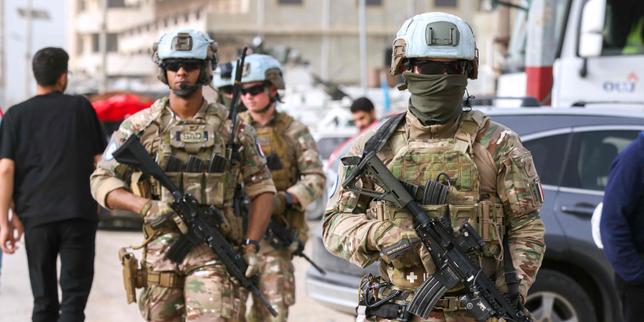
The death of Sergeant-Chef Florian Montorio during a reconnaissance mission in Southern Lebanon is not merely a tactical casualty; it is a clinical manifestation of the widening gap between peacekeeping mandates and the kinetic reality of modern asymmetric warfare. When a highly trained operative from the 13th Parachute Dragoon Regiment (13e RDP) is killed in a theater defined by high-density electronic warfare and saturated artillery, the incident exposes the structural vulnerabilities of the United Nations Interim Force in Lebanon (UNIFIL). The loss of a specialized intelligence gatherer indicates an operational environment where the traditional "buffer zone" logic has collapsed, replaced by a high-stakes friction between state actors, non-state militias, and international monitors.
The Operational Profile of the 13e RDP in Lebanon
To understand the weight of this event, one must categorize the specific utility of the 13e RDP within the French contribution to UNIFIL (Operation Daman). Unlike standard infantry units, the 13e RDP specializes in human intelligence (HUMINT) and deep reconnaissance behind lines. Their presence suggests that the mission requirements have shifted from static observation to active signature management and threat detection.
The death occurred during a period of extreme thermal and kinetic escalation. The causality chain can be broken down into three distinct operational pressures:
- The Intelligence-Action Gap: Peacekeeping forces are tasked with monitoring the cessation of hostilities without the mandate to preemptively neutralize threats. This creates a "reactive latency" where soldiers like Montorio are exposed to incoming fire while performing documentation tasks that provide no immediate defensive utility.
- Terrain Symmetrics: Southern Lebanon’s topography—characterized by limestone ridges and dense Mediterranean scrub—favors the defender. For a reconnaissance team, the "detection-to-strike" window is narrowed by the proximity of Hezbollah’s subterranean infrastructure and Israel’s persistent aerial surveillance (ISR) platforms.
- The Technical Failure of Deconfliction: In theory, UNIFIL movements are coordinated to avoid "friendly fire" or accidental targeting by the Israel Defense Forces (IDF). The death of a French soldier during an active exchange indicates a breakdown in the real-time data sharing or a deliberate disregard for the "blue" safety corridors by the combatants.
Assessing the Kinetic Environment of South Lebanon
The official narrative surrounding Montorio’s death points to an artillery strike. In the physics of modern border conflict, artillery is no longer a "dumb" area-of-effect weapon but a precision instrument guided by loitering munitions. This transition alters the risk function for ground troops.
The Artillery Probability Matrix
The danger to UNIFIL personnel is governed by the convergence of three variables:
- Target Acquisition Speed: The time between a sensor detecting movement and a battery firing.
- CEP (Circular Error Probable): The accuracy of the munitions used by both the IDF and Hezbollah.
- Signal Interference: The heavy use of GPS jamming in the region, which often causes "drift" in precision-guided shells, inadvertently expanding the lethality zone into UNIFIL positions.
When these variables align, a "standard" reconnaissance patrol becomes a high-risk gamble. Montorio was operating in a sector where the IDF has increased its "iron wall" strategy—utilizing automated turret systems and drone swarms—while Hezbollah employs "anti-access/area denial" (A2/AD) tactics. The French soldier was caught in the literal and figurative crossfire of two doctrine-heavy militaries, where the UN blue helmet provides no physical or electronic protection.
The Failure of Resolution 1701 as a Security Framework
The death of a French paratrooper highlights the obsolescence of UN Security Council Resolution 1701. This framework, established in 2006, intended to create a zone between the Blue Line and the Litani River free of any armed personnel other than the Lebanese Army and UNIFIL.
The current reality is a total inversion of this goal. The presence of specialized French intelligence assets is a direct response to the fact that the Lebanese Armed Forces (LAF) lack the capacity to enforce the resolution. This creates a secondary risk: Mission Creep. French forces are increasingly performing tasks—such as advanced surveillance and threat assessment—that exceed the original peacekeeping scope but are necessary for survival in an active war zone.
The Strategic Value of the 13e RDP operative
Losing a Sergeant-Chef from the 13e RDP is a disproportionate blow to the French military’s specialized intelligence pool. These operators undergo a multi-year pipeline focusing on:
- Long-range covert insertion.
- Signals Intelligence (SIGINT) at the tactical level.
- High-stress decision-making in non-permissive environments.
The death of such a high-value asset suggests that the threat level has surpassed the "stabilization" phase and entered the "attrition" phase.
Geopolitical Implications for the French Ministry of Defense
The Quai d'Orsay and the Ministry of the Armed Forces now face a forced recalibration of their Lebanese strategy. France has historically used its presence in UNIFIL to maintain leverage in Levantine politics. However, the "cost of influence" is rising.
The French government’s response—characterized by mourning but also a stern reaffirmation of the mission—masks a deeper internal debate regarding the viability of Operation Daman. If the IDF continues its ground incursions and Hezbollah maintains its rocket density, the safety of the 700 French soldiers becomes a domestic political liability for the Macron administration.
The Escalation Ladder
- Horizontal Escalation: Increased French diplomatic pressure on Israel to respect UNIFIL positions. This is often ignored in favor of IDF tactical objectives.
- Vertical Escalation: Arming French UNIFIL contingents with more robust defensive systems (e.g., Mistral MANPADS or enhanced counter-battery radar). This risks being perceived as a shift from peacekeeping to active belligerence.
- Withdrawal/Relocation: Pulling back from the Blue Line to the Litani River. While safer, this would signal the end of French relevance in the border conflict.
The Structural Fragility of Peacekeeping in High-Intensity Conflict
Montorio’s death serves as a case study in the "Peacekeeper’s Dilemma." In a low-intensity conflict, visibility (the blue helmet) is a shield. In a high-intensity conflict, visibility is a vulnerability.
The technical specifications of the munitions used in the sector—ranging from 155mm high-explosive shells to Spike anti-tank guided missiles (ATGMs)—do not discriminate based on the color of a beret. Furthermore, the electronic signature of UNIFIL communication equipment can be picked up by electronic support measures (ESM), making "hidden" reconnaissance missions virtually impossible against a sophisticated adversary.
The logic of the mission is currently reliant on the "rationality" of the combatants. It assumes that neither Israel nor Hezbollah wants to kill a French soldier. This assumption fails to account for the "Fog of War" and the increasing reliance on AI-driven targeting cycles which prioritize speed over identity verification.
Strategic Forecast and Necessary Adjustments
The current trajectory indicates that French forces in Lebanon will either have to undergo a total technological hardening or prepare for a staged extraction. The death of Sergeant-Chef Montorio is the first data point in what could become a trend of "accidental" attrition among international observers.
To mitigate further loss, the following tactical shifts are inevitable:
- Deprioritization of Human-Centric Reconnaissance: Transitioning intelligence tasks to UAVs and remote sensors to reduce the footprint of high-value human assets like the 13e RDP.
- Revised Rules of Engagement (ROE): Granting French commanders the authority to utilize kinetic defensive measures when artillery fire is detected within a specific "danger close" radius of UN positions, regardless of the source.
- Intelligence Sovereignty: Moving away from shared UNIFIL intelligence channels toward closed, national-only data links to prevent the leakage of patrol routes to local actors who may be compromised by Hezbollah or the IDF.
The death of Florian Montorio proves that in the current Middle Eastern landscape, there are no "observers," only participants who haven't fired yet. The French military must now decide if the strategic objective in Lebanon is worth the attrition of its elite reconnaissance tier, or if the "peacekeeping" label has become a dangerous misnomer for a mission that is now indistinguishable from a combat deployment in a saturated war zone.
France must immediately demand a "hard deconfliction" protocol from the IDF, involving real-time GPS tracking of all UNIFIL assets fed directly into the Israeli Fire Control Centers. Simultaneously, the French contingent must establish an autonomous "Electronic Bubble" around its patrols to jam local loitering munitions, accepting the diplomatic friction this may cause with Hezbollah. Without these two technical interventions, the mission moves from calculated risk to certain loss.