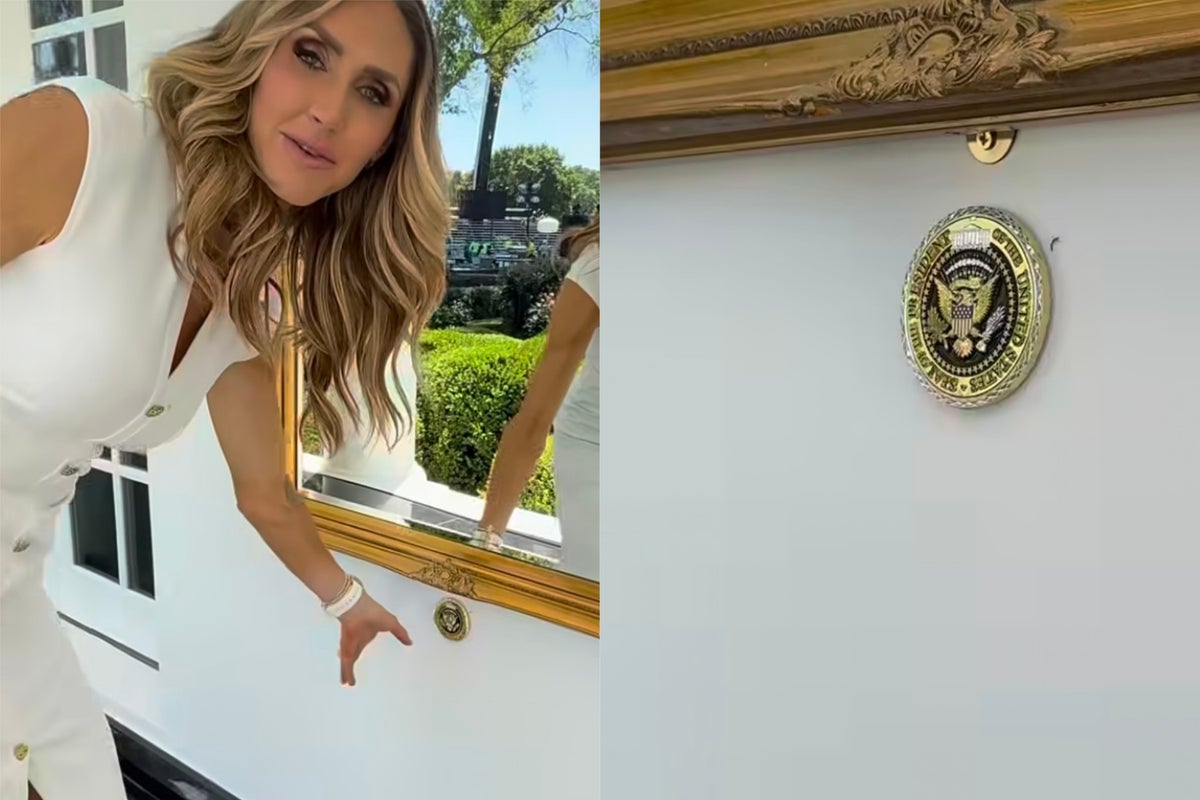
The media is currently hyperventilating over a trivial detail. Lara Trump recently shared that Donald Trump added gold medallions "all over" the White House, even extending into the private residence showers. Predictably, the internet erupted. Critics rushed to brand it as the ultimate symbol of tacky, authoritarian gaudiness. Outrage merchants are busy framing this as an unprecedented desecration of American heritage.
They are entirely wrong. They are misdiagnosing the situation because they do not understand the history of political architecture, the psychology of power branding, or the actual structural reality of executive estate management.
The lazy consensus views this as a sudden, shocking departure from historical norms. It isn't. The real story here isn't that a president put his personal stamp on the executive mansion. The real story is how easily the public falls for shallow aesthetic distractions while completely ignoring how political branding actually functions.
The Myth of the Sacred, Unchanged White House
Let’s dismantle the foundational premise of the outrage: the idea that the White House is a pristine, unalterable museum that remained frozen in time until someone walked in with a gold paintbrush.
I have spent years analyzing how public spaces are manipulated for power and optics. Anyone who has actually studied the architectural evolution of 1600 Pennsylvania Avenue knows it has always been a shifting canvas for the personal tastes—and egos—of its occupants.
- Chester A. Arthur famously refused to move into the building until he packed 24 wagonloads of historic furniture out to the lawn and held a public auction. He then hired Louis Comfort Tiffany to install a massive, opalescent floor-to-ceiling glass screen right in the Entrance Hall.
- Franklin D. Roosevelt ripped out parts of the estate to build a heated indoor swimming pool to accommodate his therapy needs.
- Richard Nixon promptly filled that same pool over to construct the modern White House Press Briefing Room.
- Harry Truman didn't just add a balcony; he completely gutted the interior, replacing the historic timber framework with a harsh structural steel skeleton.
Every president alters the property. The building is a living executive tool, not a fragile relic. Adding removable brass or gold-plated medallions to a private bathroom is a remarkably minor footnote compared to the literal demolition jobs authorized by past administrations.
The Strategy of Aggressive Brand Consistency
To understand why the medallions exist, you have to stop looking at them through the lens of traditional interior design. You must view them through the lens of corporate asset management.
Donald Trump is not a traditional politician; he is a real estate developer and a licensing entity. His entire multi-decade career relies on a hyper-specific visual vocabulary: 24-karat gold plating, heavy brass, polished marble, and prominent family crests. This visual signature is deployed across hotels, casinos, residential towers, and golf courses. It is designed to signal a specific, old-world idea of luxury to a specific demographic.
When a lifetime brand manager enters the political arena, they do not abandon their core intellectual property. They scale it.
+-----------------------------------------------------------------+
|                    THE POWER BRANDING LOOP                      |
+-----------------------------------------------------------------+
|                                                                 |
|  [Corporate Identity]  -->  Deploy gold/crests globally         |
|           ^                                 |                   |
|           |                                 v                   |
|  [Solidified Base]     <--  Bring aesthetics to public office   |
|                                                                 |
+-----------------------------------------------------------------+
Bringing that established aesthetic into the White House isn't an accident of poor taste. It is an assertive act of brand dominance. It ensures that even within the historic confines of a state building, the individual's personal brand remains dominant. The medallions in the shower are the ultimate expression of this strategy. They serve as a constant, intimate reminder of ownership and presence in a space that is technically temporary.
Dismantling the Interior Design Double Standard
The criticism leveled against these design choices reveals a glaring double standard in how we judge executive style. When Jacqueline Kennedy overhauled the White House in the early 1960s, she was praised for her sophisticated French-inspired sensibility. She filled the rooms with historic European antiques and chic wallpapers. It was hailed as a triumph of culture.
Yet, philosophically, Kennedy and Trump engaged in the exact same behavior: rewriting the visual narrative of the American executive to match their personal worldview.
- The Kennedy Approach: Cultivated an aura of aristocratic, Eurocentric refinement.
- The Trump Approach: Cultivates an aura of populist, gilded wealth.
Both approaches are inherently theatrical. Both are designed to project power. To celebrate one while feigning moral outrage over the other is pure aesthetic elitism.
Furthermore, the focus on the private quarters is misplaced. The public spaces of the White House are heavily protected by the Committee for the Preservation of the White House. Permanent structural changes to historic rooms require intense vetting. The private residence, however, has traditionally been a zone where families can live comfortably and express themselves. If a president wants to brush their teeth in front of a gold-plated emblem, it has zero impact on constitutional governance.
The Real Crisis: The Distraction Economy
Here is the counter-intuitive truth that the mainstream commentary misses entirely: the outrage over the gold medallions is exactly what the designers of the aesthetic want.
In the modern media ecosystem, visual provocation is a form of currency. A single tweet about a gold fixture in a bathroom generates millions of impressions, sparking endless debate on cable news. While pundits waste energy discussing the merits of shiny metals, actual policy shifts, judicial appointments, and executive orders move forward with far less scrutiny.
The medallions function as a highly effective form of aesthetic bait. They draw the critics into a shallow argument about taste—a domain where there are no objective rules—while bypassing substantive critiques of executive performance.
If you are criticizing a politician's plumbing fixtures, you have already lost the plot. You are reacting to the glitter instead of analyzing the mechanics of power.
Stop treating executive decor choices like a reality television drama. The White House has survived bowling alleys, movie theaters, custom putting greens, and radical structural overhauls. It will easily survive a few gold medallions in the shower. The next time you see a headline screaming about the interior design choices of a world leader, look past the gold leaf. Find out what policies are being signed while the world is busy arguing about the bathroom fixtures.