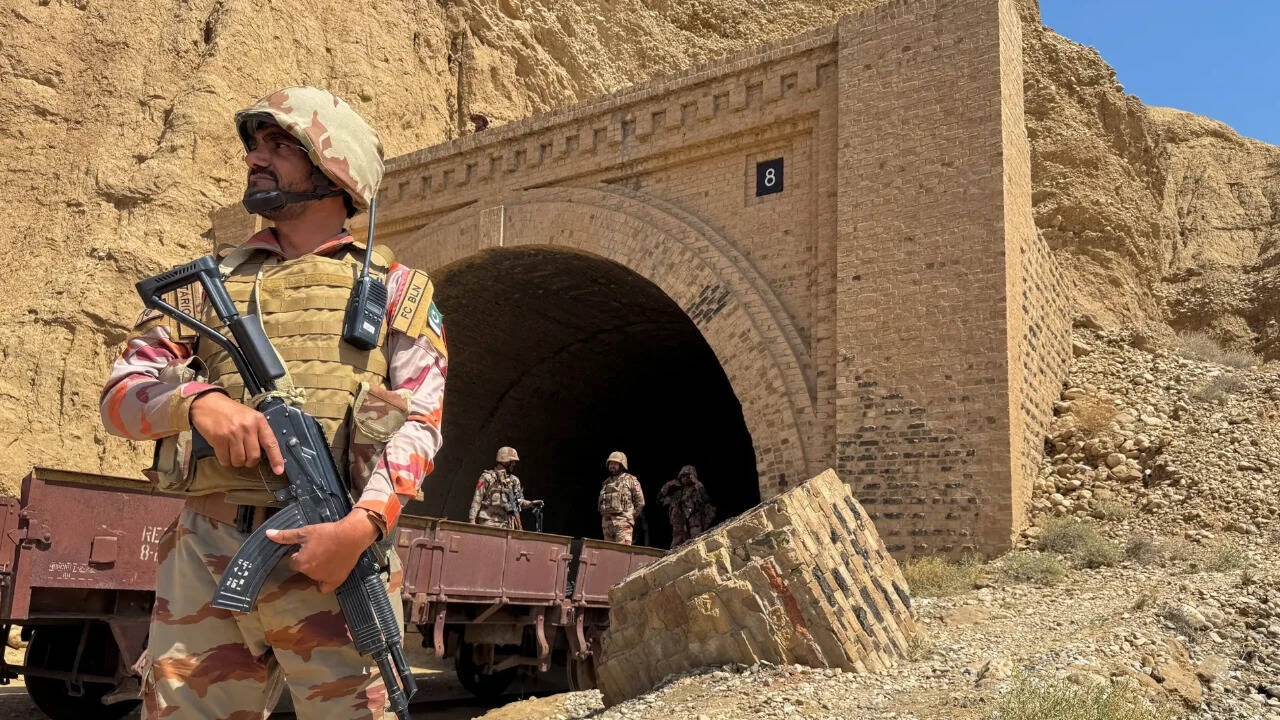
Every time five militants get clipped in a skirmish along the Durand Line, the mainstream foreign policy machinery crawls out of the woodwork to recycle the same tired narrative. Islamabad drops a press release about counter-terrorism success. Kabul responds with defensive grievance. Western think tanks publish sterile briefs about porous borders and rising regional instability.
It is all smoke, mirrors, and strategic theater.
For two decades, I have watched analysts treat the Pakistan-Afghanistan border as a simple law enforcement problem or a bilateral grudge match between two dysfunctional states. That framing is completely bankrupt. The ongoing friction involving the Tehrik-i-Taliban Pakistan is not a failure of border management. It is a manufactured equilibrium. Both capitals rely on this perpetual low-intensity bleed to justify domestic crackdowns, siphon international security aid, and deflect attention from systemic economic collapse.
If you think this is merely about five dead fighters, you are missing the entire architecture of the conflict.
The Geography of Convenience
Let us address the geographic reality of the region without the romanticism usually peddled by cable news. The Durand Line has never been recognized as a legitimate international border by any administration in Kabul since 1947. That is not an administrative oversight; it is a permanent geopolitical safety valve.
When Islamabad insists that the Afghan Taliban must dismantle TTP sanctuaries on their soil, they are playing a very old, very cynical game of political theater. The Pakistani security establishment spent decades cultivating these exact militant networks as strategic assets for regional depth. You cannot incubate a viper for thirty years and then act surprised when it bites your own ankle.
The lazy consensus in international media is that Kabul simply lacks the capacity to control its eastern frontier. That is false. They have the capacity; they lack the incentive. Why would a regime in Kabul suppress an ideological and ethnic sibling that fought shoulder-to-shoulder with them against foreign occupation just to appease a neighbor that treats them like a security buffer rather than a sovereign equal?
To understand why this violence never stops, you have to look at the economic incentives of perpetual crisis.
Follow the Blood Money
In Islamabad, the military-industrial complex thrives on existential threat inflation. Whenever civilian unrest peaks, inflation skyrockets, or political legitimacy drops to zero, the eastern border conveniently heats up. A clash with the TTP provides an immediate domestic justification for suspending civil liberties, delaying elections, and extracting financial bailouts from international partners who are terrified of a nuclear-armed state falling apart.
On the other side of the mountains, the Afghan administration uses cross-border shelling and security demands to rally nationalist fervor. When your economy is starved of global liquidity and basic human needs are unmet, nothing unifies a population faster than a foreign enemy rattling sabers at the gate.
Both sides are running a protection racket funded by crisis.
Let us be entirely honest about the numbers game. Reporting five militants killed here and twelve soldiers killed there is algorithmic churn. It generates clicks, fills column inches, and satisfies the quarterly Key Performance Indicators of diplomatic desks in Washington and London. But it has zero correlation with actual strategic resolution. It is tactical noise masking a total absence of strategic will.
Dismantling the Porous Border Myth
One of the most persistent tropes in geopolitical commentary is that sealing the border will solve the violence. Pakistan spent billions fencing the Durand Line, installing biometric surveillance, and digging trenches. The result? Smuggling continues unhindered, tribal cross-border families ignore the steel, and the TTP operatives simply walk through official checkpoints by paying standard market bribes to poorly paid border guards.
Physical walls cannot stop an insurgency that is fundamentally rooted in state failure and ideological alignment. The barrier has simply transformed a fluid tribal zone into a militarized zone of extortion.
If you want to fix the crisis, you have to stop asking how to fortify the line and start asking why the line exists in its current exploitative form. The border is not a defense mechanism; it is a toll booth. Every checkpoint, every trade restriction, and every security lockdown is a rent-extraction operation run by local commanders and state bureaucrats who profit directly from friction.
The Uncomfortable Truth About Counter-Insurgency
Every expert loves to talk about kinetic response. More drones, more intelligence sharing, more targeted raids. This is professional malpractice. When you treat a socio-political and economic rejection of state authority as a pure military target practice, you guarantee the next generation of recruits.
Every civilian displaced by operations in the borderlands becomes a permanent enemy of the state. Every arbitrary arrest radicalizes an entire extended clan. The state security apparatus in Pakistan has mastered the art of winning every tactical firefight while steadily losing the entire strategic war.
I have sat in closed-door briefings where intelligence officers casually admit that total eradication of the TTP would eliminate the primary justification for their expansive domestic footprint. Think about that for a second. The institutional survival of the security state depends on the permanent management of an insurgency, not its defeat.
The Playbook for Real Change
If anyone actually wanted to break this cycle, the playbook would look entirely different from the diplomatic platitudes we see on our screens today.
First, stop treating the Durand Line as an immutable military frontier and start treating it as an economic corridor. The borderlands survived for centuries on porous, tribal-led commerce. Militarizing the population into poverty guarantees that illicit networks—whether smuggling drugs, weapons, or militants—will remain the only viable career path.
Second, force the political elites in Islamabad to decouple national security from domestic political engineering. As long as the military uses counter-terrorism policy as a domestic cudgel against political opponents, security operations will lack credibility, public support, and internal cohesion.
Third, call the bluff of regional actors who play a double game. Stop rewarding duplicity with foreign aid packages designed to prop up failing institutions. When assistance is unconditional, it becomes an incentive for continued failure.
The Final Reckoning
The next time you read a breaking news flash about a handful of militants neutralized in a border skirmish, do not mistake it for progress. It is just another episode in a long-running soap opera designed to distract you from the fact that neither government has the courage, the vision, or the sovereignty to change the game.
The violence will not end because the violence works for the people running the show.
Stop buying the press releases. Stop pretending this is about security. It is about power, money, and institutional survival, played out on the backs of impoverished tribesmen who are treated as acceptable collateral damage in a permanent game of geopolitical poker.
The border isn't broken. It's performing exactly as intended.