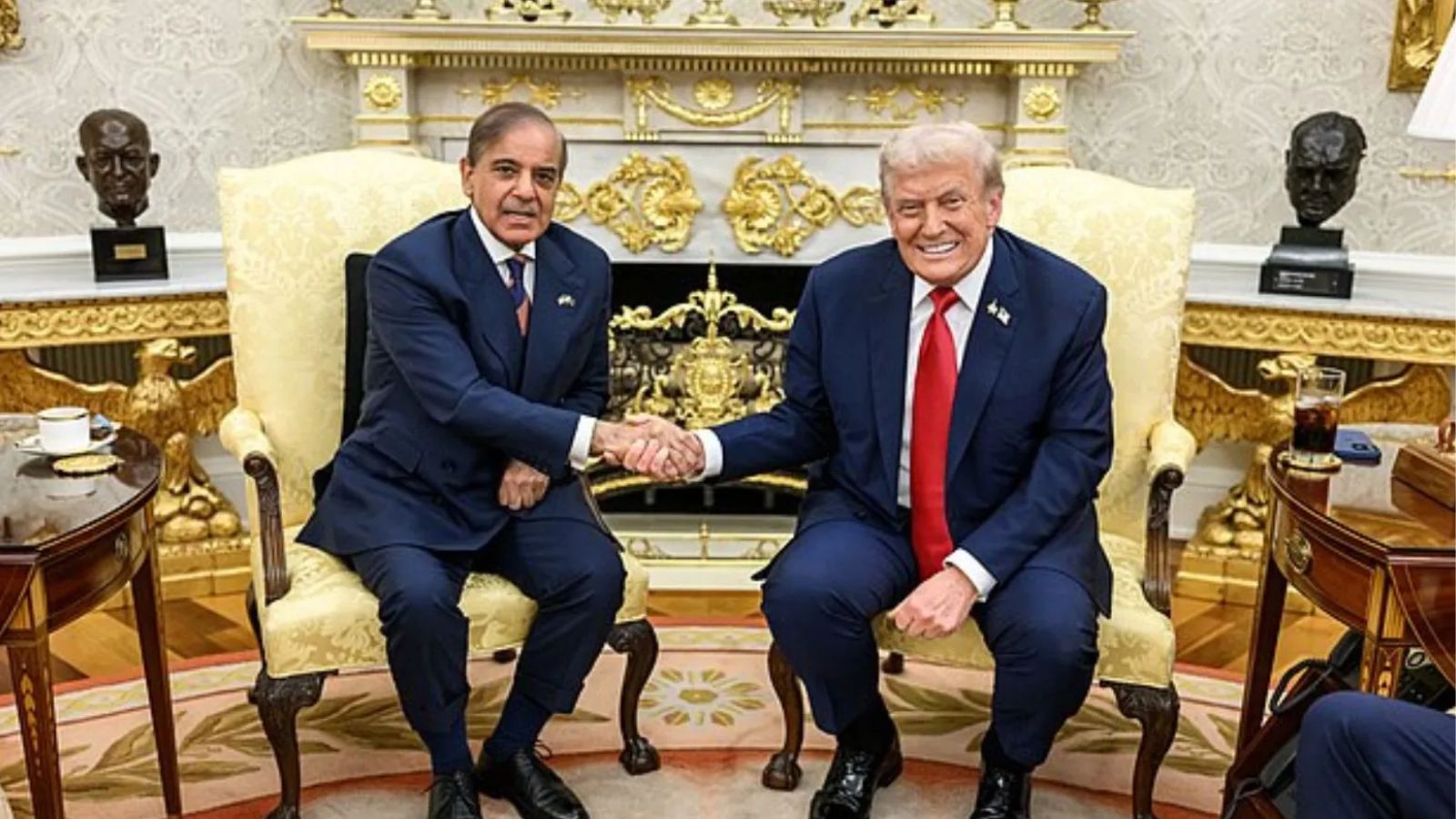
The convergence of defense procurement, political adjacency, and unmanned aerial vehicle technology creates a specific structural dynamic in modern military contracting. When institutional military buyers engage with commercial entities possessing high-visibility political branding, the underlying transaction mechanism requires rigorous structural dissection. The reported memorandum of understanding between the Pakistan Army and Powerus—a United States-based firm associated with the family of Donald Trump—represents a fascinating case study in defense market signaling, technology transfer frameworks, and geopolitical hedging.
Evaluating this development requires stripping away surface-level media narratives and examining the underlying variables: capital allocation, supply chain vulnerability, technological sovereignty, and export compliance under International Traffic in Arms Regulations and Export Administration Regulations.
The Procurement Architecture
Military modernization programs in developing or mid-tier defense economies operate under strict capital constraints. Unlike prime defense contractors with multi-billion-dollar research and development pipelines, niche drone manufacturers often rely on modular, commercial-off-the-shelf components integrated into specialized airframes.
When a state military actor enters into a preliminary agreement or memorandum of understanding with a commercial supplier, the transaction typically moves through several distinct phases:
- Technical Specification Alignment: Matching tactical requirements—such as loiter time, thermal signature reduction, encrypted data link frequencies, and payload capacity—with commercial capabilities.
- Regulatory Compliance Screening: Navigating export controls imposed by the state of origin. For United States entities exporting defense-related articles or technical data, State Department (ITAR) or Commerce Department (EAR) oversight introduces friction, approval timelines, and potential policy vetoes.
- Financial Structuring and Escrow: Establishing payment milestones that mitigate default risk for the supplier while protecting state capital against non-delivery or failure to meet performance metrics.
- Technology Transfer and Local Assembly: Negotiating the transition from finished-good imports to localized maintenance, repair, overhaul, and eventual localized manufacturing or co-production.
The Powerus agreement must be evaluated against this four-stage matrix. The involvement of politically connected principals alters the velocity of diplomatic clearance and ministerial sign-offs, but it does not bypass the underlying physics of defense manufacturing and regulatory compliance.
Geopolitical Hedging and Supply Chain Diversification
For the Pakistan Army, diversifying defense procurement sources is a mandatory risk-mitigation strategy. Historically reliant on a mix of domestic ordnance factories, Chinese state-owned defense conglomerates, and legacy Western platforms, the military apparatus continuously seeks to optimize its technological portfolio.
Procuring unmanned systems from United States-linked commercial suppliers introduces a distinct vector of strategic alignment. However, this strategy carries inherent structural trade-offs:
- Interoperability Friction: Integrating Western-derived command-and-control software with existing Eastern-bloc or indigenous communications architectures requires custom middleware and proprietary API integrations.
- Regulatory Vulnerability: Commercial agreements subject to United States jurisdiction remain vulnerable to shifting foreign policy postures, congressional oversight, and administrative changes. A sudden shift in Washington's foreign assistance or arms sales policy can freeze spare parts supply chains overnight.
- Signaling Value: Beyond tactical utility, entering into a commercial framework with a US-based entity serves as a diplomatic signal. It maintains channels of communication and commercial touchpoints with Western private-sector entities independent of direct inter-governmental foreign military sales channels.
The Economics of Niche Unmanned Systems
Unmanned aerial vehicles have transformed tactical reconnaissance and strike doctrines. However, the unit economics of drone fleets are frequently misunderstood by observers who focus solely on unit acquisition cost rather than total cost of ownership.
The economic equation comprises four primary components:
$$TCO = C_{acquisition} + C_{training} + C_{maintenance} + C_{attrition}$$
- Acquisition Cost: The initial price of the airframe, ground control station, optical payload, and encrypted datalink modules.
- Training Cost: Human capital investment required to certify operators, maintenance technicians, and intelligence analysts capable of parsing real-time telemetry and full-motion video feeds.
- Maintenance Cost: Consumables, battery degradation cycles, avionics calibration, and software patch management.
- Attrition Cost: The statistical probability of loss due to electronic warfare, kinetic interception, or operational accidents.
For a firm like Powerus entering the international defense market via an MoU with a major conventional military force, the primary financial challenge is scaling manufacturing capacity to meet military-grade ruggedization standards without losing the cost advantages inherent in commercial supply chains. Military specifications require extensive environmental testing—thermal extremes, electromagnetic interference shielding, and vibration resistance—which exponentially increases production overhead compared to commercial drone manufacturing.
Strategic Outlook and Operational Realities
The transition from a memorandum of understanding to a legally binding, executed contract with delivery milestones remains fraught with operational hurdles. State-level defense acquisition processes are notoriously protracted, subject to budgetary realignments, bureaucratic inertia, and intense scrutiny from rival domestic factions or geopolitical adversaries.
If the agreement matures into operational deployments, its primary impact will not be a sudden shift in regional military balance—given the modest scale typical of niche commercial drone suppliers—but rather the establishment of a specialized supply pipeline insulated by commercial channels. The ultimate success or failure of the initiative will be determined not by the political prominence of the firm's founders, but by rigorous adherence to delivery schedules, MTBF metrics, and seamless integration into existing tactical command structures.