You won't find it on most front pages, but a brutal geopolitical chess match is playing out right at the entrances to the Panama Canal. It's a high-stakes turf war involving billions of dollars, canceled shipping routes, targeted ship detentions, and raw superpower friction.
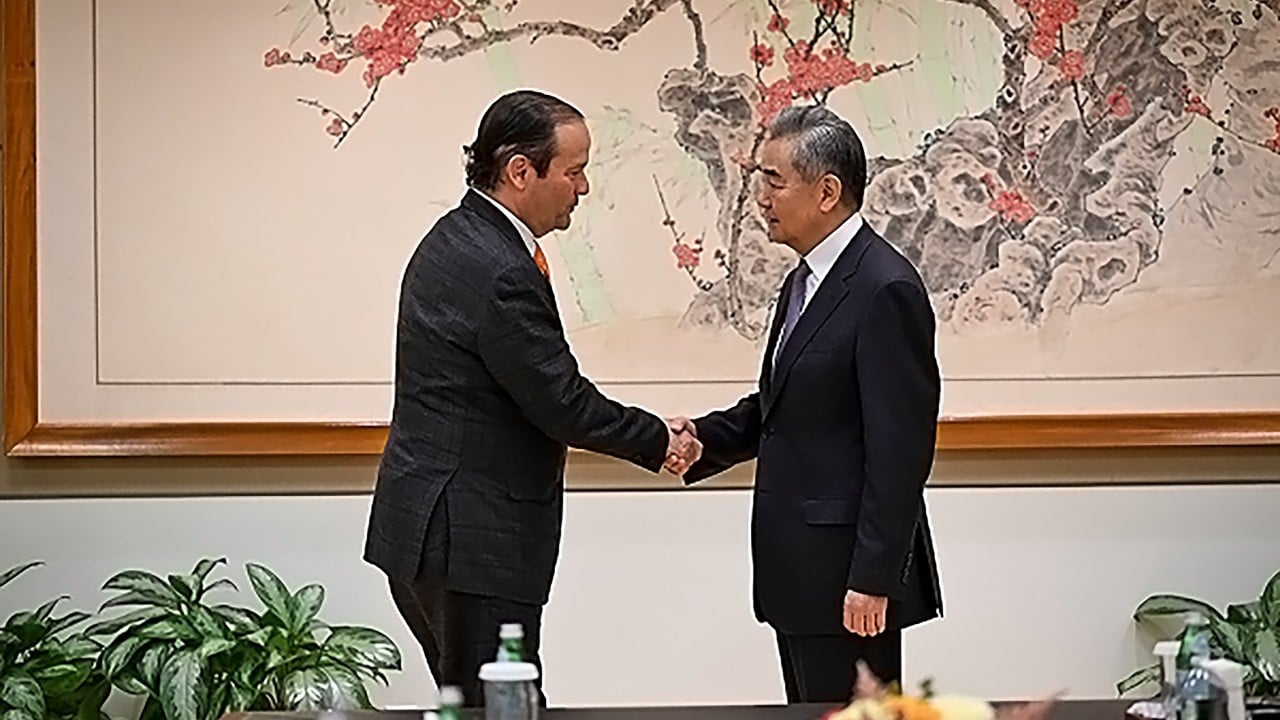
When Chinese Foreign Minister Wang Yi met Panamanian Foreign Minister Javier Martínez-Acha on the sidelines of a UN Security Council meeting in New York, the message from Beijing was blunt. China warned that its relationship with Panama shouldn't face "third-party interference."
Everyone in that room knew exactly who the third party was.
The United States has been applying intense, quiet pressure on Panama City to squeeze out Chinese business interests from the world's most critical maritime chokeholds. Now, Beijing is pushing back hard. If you think this is just a local legal squabble over dock space, you're missing the bigger picture. This is a direct struggle for control over global trade routing, and the economic fallout is already rippling outward.
The Shock Supreme Court Ruling That Sparked the Fire
To understand how we got here, we have to look back at what happened in late January. Panama's Supreme Court dropped a bombshell by declaring the legal framework underpinning the concessions for two key container terminals unconstitutional.
These aren't just any ports. We're talking about the Balboa terminal on the Pacific side and the Cristóbal terminal on the Atlantic side. Together, they sit like sentinels at both ends of the canal, handling a massive chunk of the 5% of global maritime trade that transits the waterway.
For nearly 30 years, these terminals were operated by the Panama Ports Company. That's a subsidiary of CK Hutchison, a massive conglomerate listed in Hong Kong. The court effectively nullified a 1997 concession and its 2021 extension, claiming irregularities in how the contracts were handled.
Instantly, the Panamanian government stripped CK Hutchison of its operating rights. They handed temporary control of Balboa to APM Terminals (a subsidiary of Danish shipping giant Maersk) and Cristóbal to Swiss-based Mediterranean Shipping Company (MSC).
Beijing and Hong Kong authorities didn't take the news lying down. They slammed the court decision as an "act of bad faith." CK Hutchison swiftly launched a massive international arbitration claim against Panama, demanding more than $2 billion in damages for what they call an unlawful property seizure.
Washington's Fingerprints Are All Over the Port Seizure
Let's be completely honest about the physics of this dispute. Panama didn't just wake up one day and decide to kick out one of its biggest port operators for minor administrative paperwork. This entire crisis is the direct result of a aggressive, multi-year campaign by Washington to roll back Chinese logistics infrastructure in the Western Hemisphere.
U.S. officials have openly raised the alarm about Chinese entities controlling infrastructure right next to a canal that handles billions in American cargo. The Trump administration pushed heavily for the Hong Kong-based operator to sell its interests to a U.S.-backed consortium including BlackRock Inc.
When that didn't work, the diplomatic screws tightened. Security coordination between the U.S. and Panama surged, even granting U.S. forces access to certain strategic air and naval facilities in Panama.
So when the Panamanian court finally axed the Chinese concessions, Washington celebrated it as a massive win for regional security. Beijing, however, saw it as raw economic coercion. Chinese state planner, the National Development and Reform Commission, along with the Ministry of Transport, fired back with a textbook display of asymmetric retaliation.
The Invisible Blockade and the Shipping War of 2026
If you think China is just complaining via diplomatic memos, look at what's actually happening at sea. Over the last few months, Beijing has engineered a brutal squeeze play against Panamanian interests.
First came the corporate boycott. Chinese state-owned shipping titan COSCO abruptly suspended its services at the Balboa port, dealing an immediate economic blow to the newly reorganized terminal. Then, Chinese officials summoned Maersk and MSC executives for "high-level discussions," applying immense pressure on them to halt or scale back their new operations at the disputed ports.
But the real muscle-flexing is happening through port state control. China has unleashed a massive wave of targeted safety inspections against Panamanian-flagged merchant ships entering Chinese waters.
The numbers are startling. Out of 123 ships detained for inspections by Chinese maritime authorities in a single month recently, an astonishing 91 of them were flying the Panamanian flag. In contrast, just a month prior, China had detained only 19 Panamanian ships.
It's an invisible maritime blockade disguised as routine maritime bureaucracy. By dragging out inspections and locking Panamanian-flagged vessels in port for days on end, Beijing is making it incredibly expensive for global shipping companies to use Panama's registry. It sends a chillingly clear message to the world. If a country crosses Chinese commercial interests, its entire maritime economy will pay a heavy price.
A Region Caught in the Superpower Crossfire
This aggressive retaliation has sent shockwaves well beyond the Isthmus of Panama. The U.S. Federal Maritime Commission stated it's closely monitoring the spike in ship detentions. More significantly, a coalition of Latin American and Caribbean nations—including Costa Rica, Paraguay, and Guyana—joined the U.S. in a joint statement condemning China's actions. They accused Beijing of attempting to "politicize maritime trade" and infringing on the sovereignty of nations in the hemisphere.
Yet, this unified front isn't as solid as it looks on paper. China's economic gravity in Latin America is massive, and many governments are terrified of being forced to choose sides.
Consider the recent chaos in Chile. A dispute over the "Chile-China Express"—a proposed Chinese submarine fiber-optic cable meant to connect South America directly to Asia—caused a spectacular political breakdown during the presidential transition between outgoing President Gabriel Boric and incoming leader José Antonio Kast. Boric openly revealed that the U.S. had made explicit threats against Chile if they proceeded with the Chinese cable project.
This is the reality of modern geopolitics. Whether it's digital cables in Chile or shipping berths in Panama, Latin America has become the primary battleground for U.S.-China decoupling.
Navigating the Fractured Global Trade Map
For global logistics managers, supply chain directors, and maritime investors, the old playbook of choosing a flag of convenience based purely on taxes and registration fees is officially dead. Geopolitical risk is no longer an abstract concept discussed at academic conferences. It's an operational line item that can freeze your cargo overnight.
If you are managing global supply chains or maritime assets, you need to start taking immediate, defensive steps to insulate your operations from this ongoing superpower feud.
- Audit Your Fleet's Registry Exposure: If your cargo relies heavily on Panamanian-flagged vessels, you must calculate the financial risk of sudden, extended port delays in mainland China. Diversifying your carrier mix to include hulls registered in politically neutral nations is no longer optional.
- Re-evaluate Chokehold Dependencies: The friction around Balboa and Cristóbal means the Panama Canal zone will remain volatile. Treat this transit point as an active risk zone and look into alternative, multi-modal routing across North America or alternative regional hubs that aren't trapped in a concession war.
- Monitor the International Arbitration Milestones: The $2 billion legal battle between CK Hutchison and the Panamanian government will set a massive precedent for foreign infrastructure investments globally. Follow the filings closely, because a ruling either way will trigger the next wave of state-backed economic retaliation.
The clash over the Panama Canal ports proves that global trade infrastructure is no longer neutral territory. It's being weaponized in real-time. Expecting international courts or diplomatic treaties to protect your investments or keep your cargo moving smoothly is a luxury you can no longer afford.