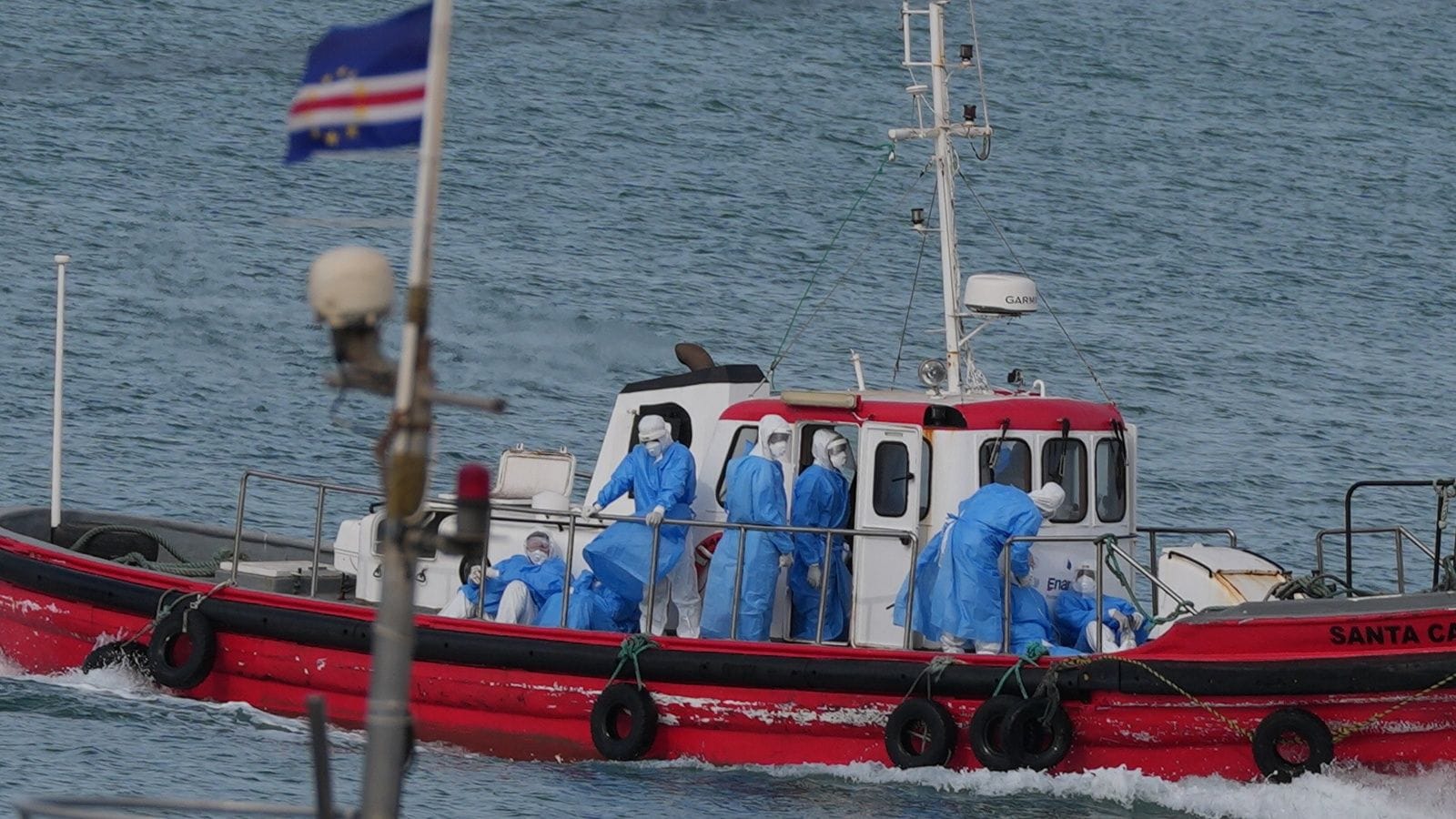
The headlines are screaming. Three people are dead on a cruise ship, and the media has rediscovered Hantavirus. They want you to believe that every luxury liner is a floating petri dish of rodent-borne doom. They want you to scrub your hands until they bleed and cancel your summer vacation.
They are wrong.
The mainstream coverage of this "outbreak" is a masterclass in biological illiteracy. By focusing on the sensational horror of a pulmonary virus, the press ignores the actual mechanics of transmission, the reality of risk management, and the fact that you are statistically more likely to die from a falling deck chair than a rodent's respiratory secretions.
The Myth of the Floating Plague
The common narrative suggests that Hantavirus is the new Norovirus. We’ve been conditioned to think that if one person gets sick on a ship, the entire vessel is compromised. This logic is fundamentally flawed because it ignores the biology of the virus itself.
Hantavirus Pulmonary Syndrome (HPS) is not contagious between humans.
Read that again. Aside from a very specific strain in South America (Andes virus), you cannot catch Hantavirus from the person coughing in the cabin next to you. It is not COVID-11. It is not the flu. It requires a very specific environmental failure: the aerosolization of waste from infected rodents.
When the media uses the word "outbreak" in the context of a cruise ship, they are implying a viral wildfire. In reality, a Hantavirus cluster isn't a sign of a "sick ship"—it’s a sign of a localized sanitation failure in the supply chain or a specific storage locker. Treating this like a communicable disease is a waste of public health resources and a distraction from the real culprit: boring, industrial-grade negligence.
Why "Awareness" is Killing Your Sanity
Every "What to Know" article follows the same tired script. They list the symptoms—fever, muscle aches, shortness of breath—and tell you to see a doctor. This is the medical equivalent of telling someone to watch out for "danger" while walking through a minefield.
These symptoms are identical to a dozen other common ailments. By telling millions of travelers to be "on high alert" for HPS symptoms, health officials trigger a tidal wave of the "worried well." They clog emergency rooms and distract staff from treating patients with actual, preventable conditions.
The Math of Fear vs. Reality
Let's look at the numbers the fear-mongers won't give you. According to the CDC, there are roughly 20 to 40 cases of Hantavirus in the United States per year. Compare that to the 30 million people who take a cruise annually.
You are worrying about a $1 \text{ in } 1,000,000$ event while ignoring the $1 \text{ in } 100$ risk of heart disease or the $1 \text{ in } 500$ risk of a slip-and-fall injury on wet pool decks. If you are genuinely concerned about dying on a cruise, put down the hand sanitizer and go to the gym.
The Supply Chain Scandal Nobody Mentions
If we want to actually solve the problem instead of just scaring people, we have to look at the "Last Mile" of maritime logistics.
Cruise ships don't breed Hantavirus. Rodents do. For a rodent to get on a modern, high-tech cruise ship, it usually hitches a ride in the one place security is often lax: the palletized food and beverage crates loaded at port.
I’ve spent years analyzing industrial risk. I have seen how "efficiency" in the shipping industry leads to pallets sitting in open-air warehouses in rural areas—prime real estate for Deer Mice and White-footed Mice. When those pallets are rushed onto a ship and tucked into a dark, poorly ventilated dry-storage room, you create a localized biohazard.
The failure isn't a medical one; it’s a procurement one. If you want to be safe, don't ask about the ship's doctor. Ask about the humidity controls and rodent-proofing protocols of the dry-goods suppliers in the port of departure.
Dismantling the "Deep Clean" Theatre
After a tragedy like this, the cruise lines always promise a "deep clean" of the entire vessel. This is pure PR theatre. It’s designed to make you feel safe, but it’s scientifically useless for Hantavirus prevention.
Hantavirus is incredibly fragile. It doesn't survive long outside a host. It’s killed by simple sunlight and standard detergents. The idea that you need to bleach every square inch of a 1,000-foot ship to stop a virus that isn't spreading person-to-person is absurd.
What they should be doing is a forensic audit of their ventilation systems in sub-deck storage areas. The virus is inhaled. If the air filtration (HEPA) isn't up to spec in the staff areas or the cargo holds, the most "deeply cleaned" room in the world won't save the person opening the next crate of bottled water.
Stop Asking the Wrong Questions
Most people are asking, "Is it safe to go on a cruise?"
That is a lazy, binary question. A better question is: "Does my cruise line prioritize logistics transparency over cheap bulk-buying?"
The "status quo" advice tells you to avoid dusty areas. That’s great if you’re cleaning out a shed in Montana. It’s useless advice for a cruise passenger. You aren't going into the "dusty areas." The staff is.
If we actually cared about the three people who died, we would be talking about the occupational hazards of maritime workers—the people who actually have to enter the confined, unventilated spaces where this virus lives. But talking about labor rights and industrial safety doesn't sell clicks as well as "Mystery Virus Stalks Vacationers."
The Brutal Truth of Modern Travel
We live in an age of hyper-connectivity. We expect zero risk in exchange for a $799 all-inclusive ticket. When the "unthinkable" happens, we demand a villain and a simple solution.
The villain isn't the virus. The virus is just doing what viruses do. The villain is a global shipping infrastructure that cuts corners on pest control to save $0.05 per crate, and a media ecosystem that would rather trigger a panic than explain a statistical outlier.
Hantavirus is a tragedy for the families involved. For the rest of the world, it is a reminder that nature is messy. But it is not a reason to change your behavior, and it is certainly not the "emerging threat" the evening news claims it to be.
Stop checking your temperature. Stop reading the breathless "outbreak" updates. If you want to be safer than 99% of the population, just wash your hands before you hit the buffet—not because of Hantavirus, but because the guy who touched the serving spoon before you definitely didn't wash his.
The ship isn't sinking, and the air isn't poison. You’re just being sold a story by people who profit from your heart rate going up.
Go back to your lounge chair. Don't worry about the mice. Worry about the second helping of cheesecake—it’s the only thing on that ship actually trying to kill you.