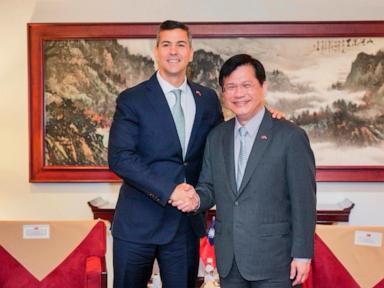
Paraguay exists as the final South American bastion of recognition for the Republic of China (Taiwan), a diplomatic anomaly that functions as a high-stakes stress test for the competing gravitational pulls of ideological alignment and raw economic pragmatism. While the visit of President Santiago Peña to Taipei is framed in the media as a gesture of solidarity, a cold-eyed analysis reveals it is a calculated maneuver within a triangular diplomatic architecture. This architecture is defined by Paraguay’s need to maximize "sovereignty rents" from Taiwan while simultaneously hedging against the opportunity costs of being excluded from the Chinese market.
The Sovereign Premium Logic
Paraguay’s continued recognition of Taiwan is not a sentimental remnant of the Cold War. It is an exercise in market differentiation. Within the South American geopolitical theater, most nations have commodified their diplomatic recognition, trading it for Chinese infrastructure projects under the Belt and Road Initiative. By maintaining the status quo, Paraguay creates a scarcity value for its diplomatic support.
This creates a specific economic mechanism: The Sovereign Premium.
Taiwan must provide Paraguay with sufficient capital, technical assistance, and investment to offset the "China Gap"—the estimated loss of direct trade and investment that Asunción would theoretically receive if it pivoted to Beijing. Current data suggests that while Taiwan’s direct investment in Paraguay is significant in a per-capita context, it struggles to match the sheer scale of the credit lines Beijing offers to neighboring MERCOSUR members like Brazil or Argentina.
The Three Pillars of the Paraguay-Taiwan Strategic Alliance
To understand the durability of this relationship, we must decompose it into three distinct operational pillars:
- Industrial Integration and Reshoring: Unlike the commodity-focused trade typical of South American-Chinese relations, the Taiwan-Paraguay link focuses on high-value industrial knowledge transfer. The establishment of the Taiwan-Paraguay Polytechnic University (UPTP) serves as a human capital pipeline, designed to transform Paraguay from a primary exporter (soy and beef) into a regional hub for assembly and technical services.
- The MERCOSUR Gateway Strategy: For Taiwan, Paraguay is not just a diplomatic vote in the UN; it is a jurisdictional foothold within the MERCOSUR trade bloc. This provides Taiwanese firms a potential "backdoor" into the massive Brazilian and Argentine markets, provided they meet regional content requirements.
- Ideological Arbitrage: President Peña’s administration utilizes the "democracy vs. authoritarianism" narrative to secure favorable terms from the United States. Paraguay’s loyalty to Taiwan serves as a signal to Washington, essentially saying, "We are the reliable partner in a region drifting toward Chinese hegemony." This signal is used to mitigate pressure on other domestic issues, such as transparency and judicial reform.
The Beef and Soy Bottleneck
The primary friction point in this strategy is the Agrarian Export Constraint. Paraguay is one of the world's largest exporters of soybeans and beef. China is the world's largest consumer of these exact commodities.
By recognizing Taiwan, Paraguayan producers are forced to rely on intermediaries—often selling their goods to Brazil or Argentina, which then re-export them to China. This "middleman tax" reduces the profit margins of the powerful Paraguayan rural elite. This creates a domestic political vulnerability: the Peña administration must prove that Taiwanese investment in technology and infrastructure provides a higher net present value (NPV) to the national economy than direct, unfettered access to the Chinese consumer market would.
The Cost Function of Diplomatic Defection
Transitioning recognition from Taipei to Beijing is not a cost-free pivot. It involves a complex revaluation of national assets. If Paraguay were to switch, it would face immediate and delayed costs:
- Immediate Asset Liquidation: The termination of all Taiwanese technical aid programs, scholarships, and low-interest loans.
- Reputational Discounting: A sudden pivot would signal to the U.S. and the EU that Paraguay is open to the highest bidder, potentially affecting its credit rating and its standing in Western-led financial institutions.
- The Debt Trap Risk: Unlike Taiwanese aid, which is often grant-based or highly concessional, Chinese infrastructure projects frequently involve "debt-for-equity" swaps that could threaten Paraguayan sovereignty over critical assets like the Itaipu dam’s energy distribution or telecommunications networks.
Strategic Asymmetry in the Taiwan Strait and its Impact on the Rio de la Plata
The geopolitical tension in the Taiwan Strait directly dictates the "ask" Paraguay can make at the negotiating table. As Beijing increases military and economic pressure on Taiwan, Taipei’s need for "diplomatic breathing room" increases. This grants Paraguay significant leverage.
President Peña’s visit is a realization of this leverage. By appearing in Taipei during a period of heightened Chinese aggression, Peña is essentially "marking to market" the value of Paraguay’s recognition. The expected outcome is not just a photo-op, but a firming up of investment commitments in the green energy sector—specifically leveraging Paraguay’s massive hydroelectric surplus to attract Taiwanese semiconductor or EV component manufacturing.
Structural Constraints on the Pivot
Despite the allure of Chinese capital, several structural factors act as a brake on a potential diplomatic shift:
- The U.S. Security Umbrella: Paraguay’s security apparatus is deeply integrated with U.S. training and intelligence. A pivot to China would likely trigger a cooling of these relations, which the Paraguayan military is hesitant to risk.
- The "Panama-Nicaragua" Precedent: Asunción has observed other regional actors (Panama, El Salvador, Nicaragua) switch recognition to Beijing. The results have been mixed; the promised "tsunami of investment" often fails to materialize, replaced instead by trade deficits and localized corruption linked to state-owned enterprise (SOE) projects.
- Institutional Path Dependency: The bilateral treaties between Taiwan and Paraguay are woven into the legal framework of the Paraguayan state. Unraveling these requires significant legislative capital that Peña may prefer to spend on domestic tax and labor reforms.
The Strategic Play for the Next Quadrennium
The Peña administration must move beyond the "loyalty for aid" model, which is no longer sustainable given the scale of China’s regional presence. The objective must shift to Structural Diversification.
Paraguay should utilize its unique position to demand that Taiwan facilitates "Tier 2" manufacturing relocations. As Taiwanese firms look to diversify away from the Chinese mainland (the "China Plus One" strategy), Paraguay must position itself as the Latin American alternative. This requires the creation of Special Economic Zones (SEZs) specifically tailored to Taiwanese electronics and medical device manufacturing.
Furthermore, Paraguay must professionalize its "China Desk" within the Ministry of Foreign Affairs. Even without formal recognition, a sophisticated nation-state must maintain a "Shadow Diplomacy" with Beijing to manage trade flows. The goal is to reach a state of Equilibrium Neutrality: maintaining formal ties with Taipei to secure high-tech investment and U.S. favor, while developing non-state trade offices in Shanghai to facilitate commodity flows.
The viability of the Asuncion-Taipei axis depends entirely on whether Taiwan can evolve from a donor into a foundational economic partner. If the relationship remains purely transactional and centered on aid, the gravitational pull of the Chinese market will eventually reach a "escape velocity" that the Paraguayan political class will be unable to resist. The current visit is not a celebration of the past, but a desperate negotiation for a technologically integrated future.
Failure to secure high-tech industrial commitments from Taipei during this window will result in a gradual erosion of the "Sovereign Premium," making a pivot to Beijing inevitable by the 2028 election cycle. The Peña administration must now convert diplomatic loyalty into industrial reality, or risk being the last president to visit a Taipei that still holds a seat in the Paraguayan heartland.