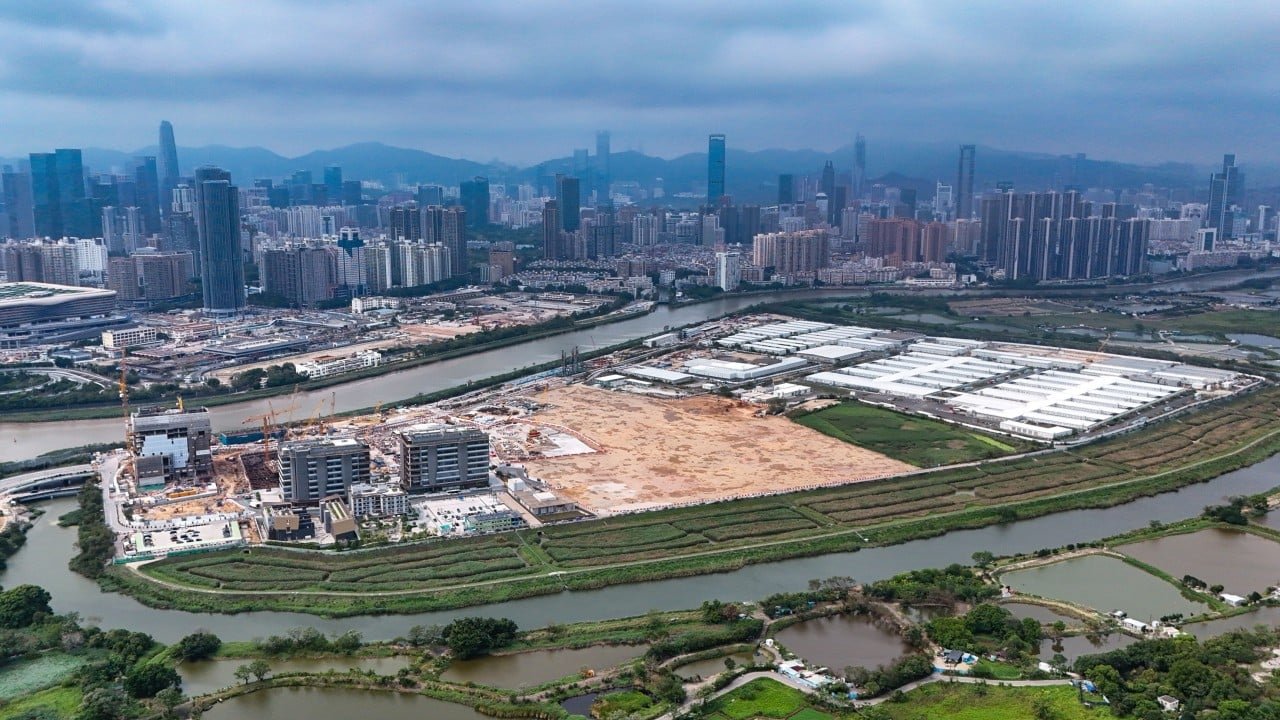
Financial Secretary Paul Chan wants you to believe that shoveling massive chunks of Northern Metropolis land directly to developers through large-scale disposal is a clean win-win. He looks at a balance sheet overflowing with structural deficits, looks at a mega-project requiring hundreds of billions in infrastructure outlays, and sees a neat accounting trick. Sell the dirt now, cash the checks, fund the rails, keep the machine humming.
It is a comforting narrative for bureaucrats staring down a red-ink fiscal year. It is also an expensive delusion.
I have watched governments try to auction their way out of structural budget pain for decades, and the script always ends the same way. When you bundle thousands of hectares and push massive land parcels onto a cooling market under the banner of expediency, you do not create a vibrant urban center. You trigger a fire sale that locks the city into long-term systemic vulnerability, transfers generational wealth straight to the balance sheets of a shrinking oligopoly, and destroys the flexibility required to adapt to a changing economic reality.
The lazy consensus in the official narrative treats land as static inventory. It assumes that as long as someone signs a deed and transfers billions to the Treasury, the policy objective has been achieved. That view ignores every lesson of modern urban economics.
The Fallacy of the Developer Monopoly
Let us address the structural mechanics of large-scale land disposal. When a government packages development rights into colossal lots that only a handful of multi-conglomerates possess the capital reserves to touch, competition vanishes. You eliminate mid-tier builders, innovative consortia, and specialized operators before the bidding even starts.
The official line claims this massive capital injection accelerates infrastructure delivery. The reality is that mega-disposals hand pricing power back to the exact entities the housing market needs to be insulated from. When only three or four bidders can clear the entry barrier, you do not get a competitive market clearing price. You get a negotiated oligopoly.
Imagine a scenario where the government decides to slice those massive plots into modular, highly accessible parcels open to specialized regional builders, tech-backed construction firms, and institutional syndicates with targeted mandates. The total upfront yield on day one might look smaller on a Treasury spreadsheet. But the velocity of secondary transactions, the diversity of architectural typologies, and the sheer speed of actual, organic neighborhood formation would dwarf the output of a single monolith contractor sitting on a land bank waiting for market conditions to peak.
Paul Chan is treating the Northern Metropolis like a liquidation sale at a failing enterprise. But cities are not retail liquidations. They are long-term capital investments that compound over a century. When you optimize for short-term cash flow, you sacrifice long-term value capture.
The Infrastructure Cart-Before-the-Horse Trap
Proponents of large-scale disposal argue that private capital relieves the public purse of the brutal cost of trunk infrastructure—roads, rail links, sewage treatment plants, and power grids. This sounds pragmatic until you examine who actually pays for that infrastructure in the long run.
Private developers do not absorb infrastructure costs out of corporate charity. Every dollar they spend upfront to build a transit link or a drainage basin is discounted from the land premium they are willing to pay the government. Worse, they demand compensation in the form of higher allowable densities, prime commercial zoning, or hidden municipal guarantees.
You end up with a lopsided ecosystem where the private partner dictates the timeline of public goods. If the broader property market dips—as it inevitably does during macroeconomic shifts—the developer slows down construction. The transit link stalls because the anchor development hasn't reached phase two. The entire northern economic engine sputters, not because the vision was flawed, but because the delivery mechanism was tethered to the private balance sheet of entities whose primary fiduciary duty is to their shareholders, not to Hong Kong's long-term housing security.
If you want infrastructure built on time, the state has to retain control of the sequencing. Publicly financed, debt-serviced infrastructure tied to phased, incremental land releases gives the government the ultimate leverage. You build the rail line first, let the land value appreciate naturally based on actual transit utility, and then release small parcels into a hungry market at peak value. Selling the raw dirt before the first rail spike is driven is not financial genius. It is desperation disguised as strategy.
What Real Market Resilience Looks Like
Defenders of the current approach point to past successes of the Hong Kong land tenure system as proof that the model is bulletproof. They argue that the rail-plus-property model is the envy of the global municipal planning community.
That argument commits a category error. The rail-plus-property model worked brilliantly when Hong Kong was a blank slate of rapid urbanization with a surging population and an infinite appetite for vertical residential expansion. The Northern Metropolis is operating in a completely different century.
We are looking at demographic shifts, a mutating financial services sector, remote work models, and a desperate need to attract high-value advanced manufacturing and life sciences talent. These industries do not want to buy standard-issue high-rise shoe-boxes built by developers maximizing floor-area-ratio above a suburban MTR station. They need flexible, campus-style innovation districts with low entry barriers for startups, experimental zoning, and spaces that evolve over decades.
Large-scale land disposal locks districts into rigid, twenty-year master plans devised by committee rooms inside corporate headquarters. By the time the first concrete is poured, the economic sector it was designed to house has already migrated elsewhere.
To fix this, the government needs to abandon the addiction to mega-auctions.
First, introduce mandatory fractional parcelling. Cap the maximum size of any single land disposal tract to ensure that mid-sized enterprises and non-traditional developers can compete.
Second, utilize conditional lease covenants that penalize land banking. If a developer buys a parcel and fails to break ground within twenty-four months due to market sentiment, the lease should revert to the public trust without compensatory golden handshakes.
Third, stop viewing land revenue as the primary engine of government solvency. A government that relies on land sales to balance its budget is structurally incentivized to keep property prices artificially high, destroying the economic mobility of the very workforce the Northern Metropolis is supposed to attract.
The current strategy is a short-term sugar rush for the Treasury paid for with the economic future of the next generation. Stop calling it a win-win. It is a slow-motion clearance sale of our most valuable strategic asset.