The images were hard to miss. Last Tuesday, Donald Trump stood in the Oval Office alongside German Chancellor Friedrich Merz and launched a verbal hand grenade at Madrid. He called Spain a "terrible" ally and threatened to sever all trade ties. Why? Because Spanish Prime Minister Pedro Sánchez refused to let the U.S. use the Rota and Morón military bases to strike Iran.
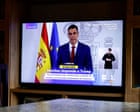
While Merz stood there in silence—effectively nodding along to the idea of an economic blockade against a fellow EU member—Sánchez didn't flinch. Within twenty-four hours, the Spaniard was on national television. He didn't offer a "measured" diplomatic response or a "cautious" statement. He looked into the camera and said, "No to war."
It’s a lonely position to be in. Most of Europe has spent the last year "Trump-proofing" through quiet submission or desperate flattery. But Sánchez has decided that being the last man standing for old-school European values is a risk worth taking.
The gamble of saying no
You have to understand the stakes here. Spain isn't just a random bystander. It’s one of the fastest-growing economies in the Eurozone, but it’s also vulnerable. Trump’s threat to cut off trade isn't just bluster; it’s a direct shot at Spanish exports and the billions of dollars American tech giants like Amazon have recently pledged to invest in the country.
Sánchez is playing a high-stakes game of chicken. He knows that a trade war with the U.S. could hurt, but he’s betting on two things. First, he’s betting that Trump’s transactional nature means he’ll eventually lose interest if the costs to American exporters become too high. Second, he’s betting on the Spanish public.
And he’s winning the second bet. Recent polling from El País shows that over 53% of Spaniards back his decision to block the bases. In Spain, the ghost of the 2003 Iraq war still haunts the political landscape. Sánchez isn't just being difficult; he's channeling a deep-seated national trauma. He knows that in Spain, standing up to a "cowboy" foreign policy isn't just good ethics—it's great politics.
Why the rest of Europe is staying quiet
If you look at the map of Europe right now, it’s a sea of nervous smiles. Friedrich Merz in Germany is terrified of tariffs on Mercedes and BMWs. Keir Starmer in the UK is trying to play the "special relationship" card, offering "defensive" base access while hoping nobody notices. They’re all terrified that if they move a muscle, the eye of Sauron will turn toward them.
Sánchez sees this silence as a failure of leadership. He basically called his peers "blind and subservient" in his latest address. It’s a stinging rebuke. While others are trying to survive the Trump era by blending into the wallpaper, Sánchez is positioning Spain as the moral compass of a continent that has lost its way.
This isn't just about Iran, either. The friction has been building for months.
- Defense Spending: Trump wants NATO members to hit 5% of GDP. Sánchez is holding firm at 2.1%, calling the higher target "unrealistic."
- Migration: While the U.S. and much of Europe are shifting toward mass deportations, Sánchez just legalized 500,000 undocumented migrants, explicitly calling out "cruel" policies elsewhere.
- Social Media: He’s even picked a fight with Elon Musk over plans to ban social media for kids under 16. Musk called him a "totalitarian," and Sánchez didn't even bother to reply.
The Iraq war parallel
Sánchez is a student of history. He remembers 2003 when his conservative predecessor, José María Aznar, ignored the Spanish streets and joined the "Coalition of the Willing." It was a disaster that ended Aznar's political career and left a scar on the Spanish psyche.
By invoking Iraq, Sánchez is telling his people: "I’ve seen this movie before, and I know how it ends." He’s framing the current strikes on Iran as an "extraordinary mistake" that bypasses international law. He isn't just saying no to Trump; he’s saying no to the 21st-century version of the "forever war."
It’s a message that resonates far beyond Madrid. While the European Commission has made some noise about "trade bazookas" and protecting member states from coercion, the actual heads of state are mostly MIA. Sánchez is effectively doing the job the EU leadership is too scared to do.
Can Spain actually survive an economic war
The big question is whether this is sustainable. Spain runs a trade deficit with the U.S., which actually gives them a weird bit of leverage. If Trump cuts off trade, American exporters might actually lose more than Spanish ones in some sectors.
But it’s about more than just oranges and olive oil. It’s about the "Anti-Coercion Instrument." This is the EU’s legal weapon designed to fight back when a superpower tries to bully a single member state. If the EU doesn't trigger it to help Spain, the entire project of European unity is basically dead. Sánchez knows this. He’s forcing Brussels to decide if the Union is a real thing or just a collection of terrified neighbors.
If you’re watching this from the outside, don't mistake Sánchez's move for simple stubbornness. This is a calculated attempt to reclaim European sovereignty. He’s gambling that being the only one to say "no" will eventually make him the leader everyone else has to follow when the "Trump-proofing" by submission inevitably fails.
Next time you see a headline about a "trade war" between Washington and Madrid, remember it’s not just about money. It's about whether a medium-sized power can still have a conscience in a world where everyone else is just trying to hide.
Keep an eye on the upcoming EU summit in Brussels. That’s where we’ll see if Sánchez’s "lone battle" starts gaining some reinforcements or if the rest of the continent is truly content to watch Spain go it alone. If you want to see how real-world diplomacy works when the gloves come off, watch how Madrid handles the next round of White House threats.