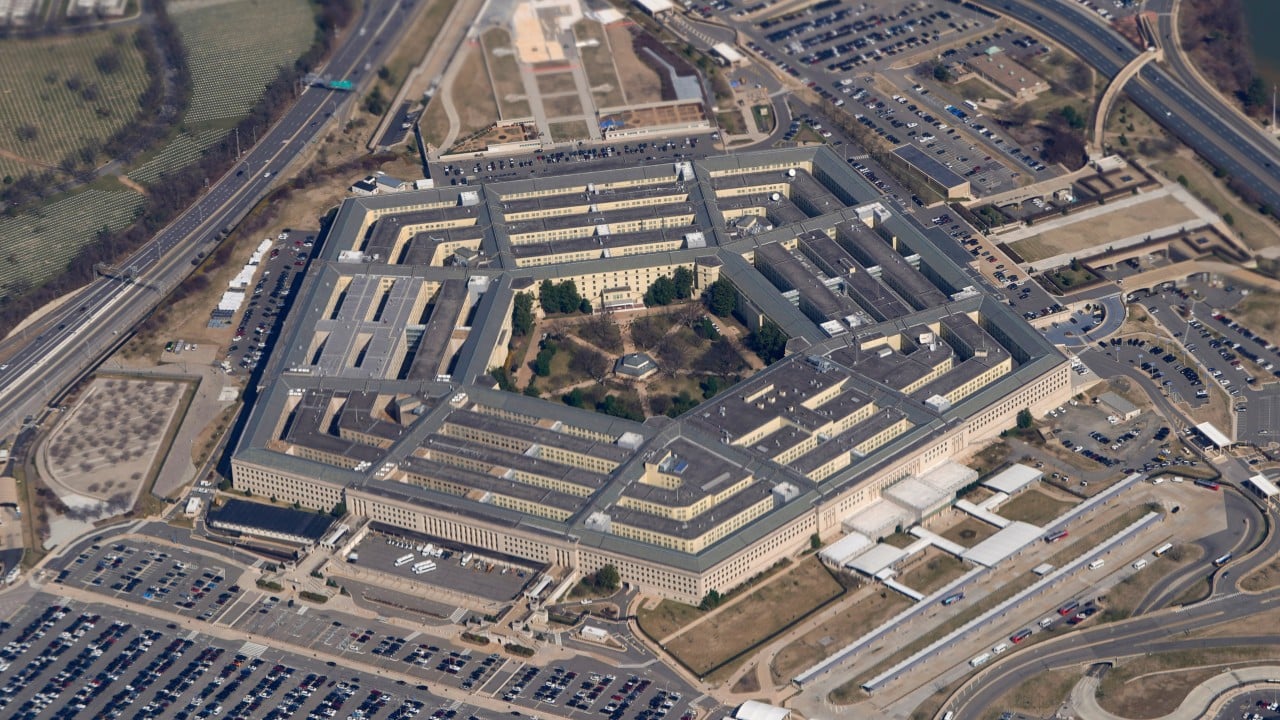
The headlines are singing a familiar, sterilized tune. The Department of Defense (DoD) inks billion-dollar contracts with Google, Nvidia, and SpaceX. The press releases are littered with the word lawful. It is a comforting word. It suggests guardrails, ethical frameworks, and the steady hand of international law.
It is also a total fabrication.
The "lazy consensus" surrounding these deals suggests that by bringing Silicon Valley’s "ethical" AI giants into the war room, we are somehow sanitizing the future of kinetic conflict. This narrative assumes that code can be moral and that a Large Language Model (LLM) or a computer vision algorithm can distinguish between a combatant and a civilian with the nuance of a Supreme Court justice.
The reality is grittier. We aren't making war more "lawful." We are making it more efficient, more detached, and infinitely more prone to catastrophic algorithmic failure. If you think a contract with Google ensures a "humane" drone strike, you haven't been paying attention to how software actually works in the wild.
The Myth of the Ethical Algorithm
The Pentagon’s focus on "lawful" AI is a PR masterstroke designed to neutralize internal employee revolts at Big Tech firms. Remember Project Maven? Google employees walked out because they didn't want to build "AI for war." Fast forward to today, and the rebranding is complete. It’s no longer "warfare"; it’s "Joint Warfighting Cloud Capability" and "Ethical AI Frameworks."
But software does not have ethics. It has objective functions.
When Nvidia sells H100 GPUs to the Pentagon, those chips don't care if they are rendering a video game or calculating the trajectory of a loitering munition. When Google provides Vertex AI to military planners, the system is optimized for accuracy based on training data, not moral philosophy.
The danger isn't that the AI will become "evil." The danger is that the AI will do exactly what it is told to do with terrifying, unblinking speed. In the heat of a multi-domain conflict, "lawful use" becomes a luxury that sub-millisecond processing speeds cannot afford. We are building systems that outpace human cognition, then claiming we can keep a human "in the loop" to ensure legality. You cannot be in the loop if the loop completes in the time it takes you to blink.
Why SpaceX and Nvidia are the Real Power Players
While the media fixates on Google’s "ethical" struggles, the real tectonic shift is happening at the hardware and connectivity layer.
Nvidia is no longer a chip company; it is the foundry of modern geopolitics. By embedding Nvidia hardware at the "tactical edge"—think ruggedized servers in the back of a Stryker vehicle—the Pentagon is moving away from centralized command. They are creating a distributed, autonomous mesh.
SpaceX, via Starlink and its secretive Starshield program, provides the nervous system. Without the low-latency bandwidth provided by Starlink, the Pentagon’s AI dreams are just expensive PowerPoints.
The contrarian truth? The "lawfulness" of the AI is secondary to the availability of the compute. We are witnessing the birth of the "Algorithmic Front." In this new theater, the side with the most optimized weights and the lowest latency wins. Period. To suggest that international law will be the primary constraint on these systems is to ignore the history of every arms race since the longbow.
The Data Poisoning Trap
Everyone talks about how AI will make the military smarter. Nobody talks about how it makes the military more vulnerable to adversarial machine learning.
Imagine a scenario where an adversary learns the specific training biases of a Google-developed vision model used for target identification. By placing specific, non-obvious patterns on the roofs of buildings or vehicles—known as adversarial patches—they can "ghost" the AI.
- Traditional warfare: You hide in a forest.
- AI warfare: You wear a shirt that makes the AI think you are a tree.
If the Pentagon relies on "lawful" autonomous systems that are hard-coded to avoid certain civilian markers, a savvy adversary will simply cloak their high-value assets in those markers. The AI's "ethics" become its greatest tactical weakness. By mandating "lawful" AI, we are effectively giving the enemy a copy of our ROE (Rules of Engagement) encoded in Python.
The Accountability Gap
When a human soldier makes a mistake, there is a JAG officer, a court-martial, and a clear line of responsibility. When an AI system misidentifies a wedding procession as a motorized infantry platoon, who goes to Leavenworth?
- The data scientist who curated the biased training set?
- The Nvidia engineer who designed the architecture?
- The commanding officer who clicked "Execute" based on a 98% confidence score?
The "lawful use" clause in these contracts is a legal shield for the private sector. It shifts the liability back to the government while allowing the tech giants to collect their checks. We are outsourcing the most solemn responsibility of the state—the application of lethal force—to black-box systems that even their creators don't fully understand.
Stop Asking if AI is Lawful, Ask if it’s Deterministic
The Pentagon is asking the wrong question. They are obsessed with "legality," which is a retrospective human construct. They should be obsessed with determinism.
Current LLMs and generative models are stochastic. They are probabilistic engines. They don't "know" facts; they predict the next most likely token. Using a probabilistic engine to make binary life-and-death decisions is a category error of the highest order.
I’ve seen departments blow tens of millions trying to "fine-tune" models to be 100% compliant with the Geneva Conventions. It is a fool's errand. You cannot fine-tune away the inherent uncertainty of a neural network.
The only way to use AI "lawfully" in combat is to limit it to non-kinetic logistics: supply chain optimization, predictive maintenance on F-35s, and personnel management. But that’s not where the money is. The money is in the "Kill Chain." And as long as the money is in the kill chain, the "lawful use" talk is just a sedative for the public.
The Silicon Valley Military Industrial Complex
The original Military-Industrial Complex was built on steel and TNT. The new one is built on silicon and proprietary data.
By tying the nation's defense to the stock prices of three or four massive tech firms, the Pentagon has created a new kind of "too big to fail" scenario. If Google decides that a certain military application violates its shifting internal "AI Principles," it can effectively de-platform the US Army.
Conversely, the Pentagon’s capital is now the primary driver of AI R&D. We aren't developing AI to cure cancer or solve fusion; we are developing it to process sensor data from the South China Sea. The "lawful" veneer is necessary to keep the talent pipeline open from Stanford and MIT. Without it, the engineers would go to startups. With it, they can tell themselves they are "building a safer world" while optimizing target acquisition.
The Brutal Reality of Algorithmic Warfare
We need to stop pretending that adding a "Lawful Use" header to a contract changes the nature of the technology.
AI is a force multiplier. Force multipliers are designed to win wars, not to conduct legal seminars. The moment a peer-level adversary uses "unlawful" AI to decimate a "lawful" US formation, those ethical guardrails will vanish faster than a disappearing Slack message.
The Pentagon isn't buying a moral compass from Nvidia and SpaceX. It's buying a bigger hammer. The sooner we admit that, the sooner we can have a real conversation about the risks of the automated battlefield. Until then, enjoy the press releases. They are the only part of this process that will be "seamless."
The code is already written. The chips are already shipping. The "lawful" use of AI is not a feature; it's a bug in our collective understanding of what happens when we give the machines the keys to the armory.
The human is no longer in the loop. The human is the bottleneck. And in the next war, the bottleneck will be the first thing to go.


