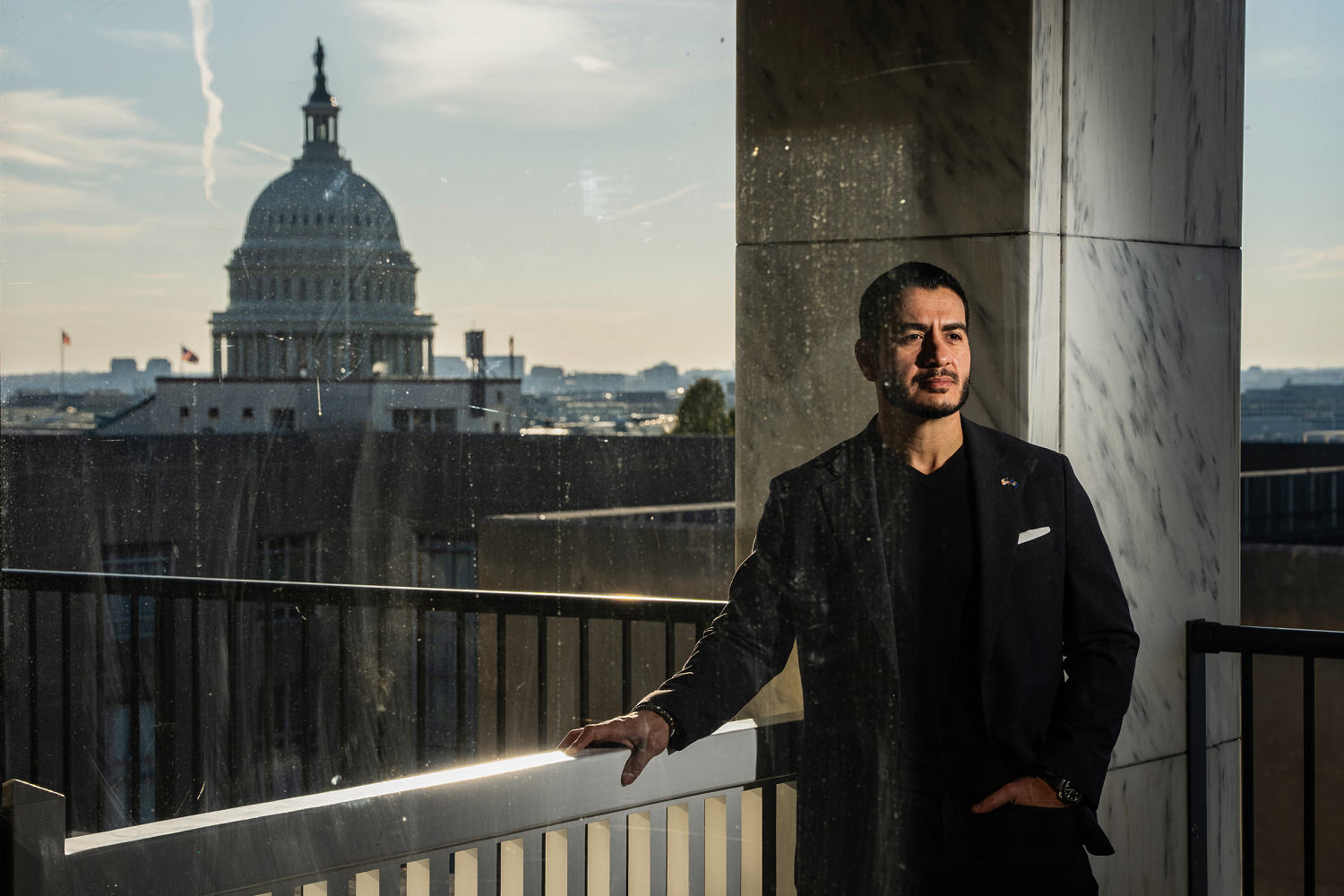
Everyone loves a clean political binary. Progressive firebrand versus conservative president. When Sen.-elect Abdul El-Sayed said he's open to working with the Trump administration, half the internet lost its mind while the other half declared him a sellout before he even took the oath of office.
They missed the point entirely.
Politics in Washington isn't a cable news panel where you score points by refusing to speak to the other side. It's a messy, transactional grind where federal dollars either land in your state or they don't. El-Sayed, a physician, former Detroit health director, and longtime progressive voice in Michigan, understands something that partisan purists constantly ignore. You can't fix lead pipes, lower insulin costs, or rebuild crumbling Michigan infrastructure with tweets alone.
Why Abdul El-Sayed Working With the Trump Administration Makes Sense
Let's look at the actual political math in Michigan. It's a quintessential swing state where voters routinely split tickets and punish ideological rigidity that blocks tangible results.
El-Sayed built his reputation on public health and economic populism, particularly during his 2018 gubernatorial run and his subsequent work leading Wayne County's Department of Health, Human, and Veterans Services. When a progressive Democrat from a battleground state signals willingness to find common ground with a Republican White House, it isn't ideological surrender. It's basic legislative survival.
Consider where progressive populism and Trump-era economic nationalism actually overlap. Both sides talk endlessly about bringing manufacturing jobs back to the Midwest. Both camps have voiced deep skepticism toward massive pharmaceutical monopolies and predatory healthcare pricing. Even on trade policy and tariffs, Rust Belt progressives and the Trump administration often share more DNA than either side likes to admit in public.
If El-Sayed can sit across from White House officials to secure federal grants for Detroit water infrastructure or push bipartisan prescription drug reforms, refusing the meeting out of spite would be political malpractice. Voters in Flint, Dearborn, and Grand Rapids don't care about ideological purity tests when their utility bills are spiking.
The History of Bipartisan Pragmatism in the Senate
This isn't a new playbook. Some of the most effective progressive senators in recent memory mastered the art of selective cooperation without abandoning their core principles.
Take Bernie Sanders during the first Trump term. Despite being polar opposites on almost every fundamental issue, Sanders worked alongside conservative lawmakers and engaged with administration priorities when it meant advancing veterans' healthcare reforms or challenging big pharma. Elizabeth Warren found narrow lanes of agreement with Republicans on banking oversight and breaking up monopolies. Sherrod Brown spent years in Ohio leveraging populist trade policies with the Trump White House to protect domestic steel and auto workers.
Does anyone seriously argue that Bernie Sanders or Elizabeth Warren became moderate Republicans? Of course not.
They recognized a simple truth about the U.S. Senate. Unless you hold a sixty-vote filibuster-proof majority and control both ends of Pennsylvania Avenue, governing requires finding narrow intersections of shared interest. You fight like hell on judicial nominations, civil rights, and tax giveaways for billionaires. Then, on Tuesday afternoon, you co-sponsor a bill on rural hospital funding or supply chain resilience with whoever holds the pen.
Where the Lines Will Still Be Drawn
Being open to working together doesn't mean rolling over. Anyone who has followed El-Sayed's career knows he isn't suddenly going to cheerlead deregulation or mass deportations.
In Michigan, El-Sayed represents a coalition that expects fierce resistance on core democratic norms, reproductive freedom, climate policy, and public health protections. Having led a major municipal health department through crises, he brings real-world medical expertise that puts him squarely at odds with many conservative healthcare proposals.
The real test for any incoming senator isn't whether they say they'll work with the president. Every smart freshman senator says that right after election day. The test is knowing when to shake hands and when to hold the line.
Here is how that distinction usually plays out on Capitol Hill:
- Infrastructure and Manufacturing: Expect aggressive cooperation. Michigan's auto sector is navigating a brutal transition, and federal support for domestic supply chains is non-negotiable for any Michigan senator.
- Healthcare Costs: There is genuine room for targeted deals on pharmacy benefit managers and hospital price transparency, even while fierce battles continue over Medicaid funding and the Affordable Care Act.
- Civil Rights and Climate: Zero compromise. These remain bright red lines for El-Sayed's base and his own public record.
What Voters Should Actually Watch For
Political rhetoric during the transition period between November and January is notoriously cheap. Everybody sounds reasonable before the committee assignments drop and the first floor votes get scheduled.
Instead of reacting to soundbites about Abdul El-Sayed working with the Trump administration, pay attention to the concrete paper trail once the new Congress convenes. Watch which committees he secures—appropriations, health, or commerce seats will tell you immediately where he plans to exert influence. Look at the first five bills he co-sponsors and see if any carry Republican names alongside his.
Track how federal grant announcements for Michigan projects get framed over the next twelve months. When an administration officials and a progressive senator show up at the same ribbon-cutting for a battery plant or a water treatment facility, that's the strategy working in real time.
Keep an eye on the Senate floor calendar, follow the actual legislative text rather than the cable news outrage cycle, and judge El-Sayed by what he brings back to Michigan.