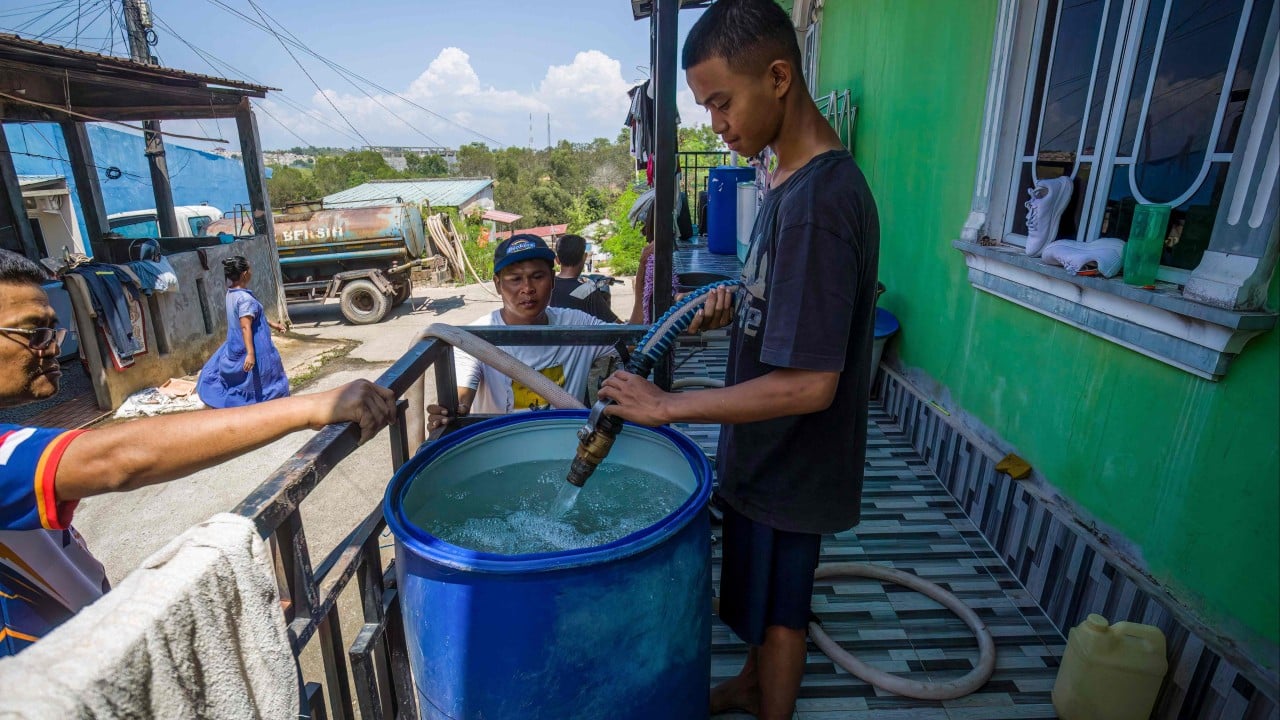
Turn on a kitchen faucet in parts of Batam right now, and you might get nothing but a dry hiss. Meanwhile, just down the road behind guarded perimeters at Nongsa Digital Park, brand-new artificial intelligence servers stay cool around the clock.
That contrast has sparked furious street protests across this Indonesian island, located just a short ferry ride south of Singapore. Residents say they can't cook rice, wash vegetables, or even take a shower while global tech firms pour billions into local server farms. If you've read the viral headlines, the story sounds simple: greedy AI companies are drinking a tropical island dry.
Except the reality on the ground is way messier than that.
Blaming server racks alone misses the real engineering, climate, and urban planning failures colliding in the Riau Islands right now. When you look closely at Batam's water grid, you find two completely separate pipe networks, a decade-old population warning everyone ignored, and a regional tech boom running straight into an El Niño wall.
Why Batam Became an AI Magnet Overnight
To understand why servers are sitting next to dry neighborhoods, you have to look across the Singapore Strait. Between 2019 and 2022, Singapore slapped a strict moratorium on new data center construction because the tiny city-state was running out of power and land.
Tech giants didn't slow down. They just moved next door.
Batam offered cheap industrial land, direct undersea fiber-optic cables to Singapore, and special economic zone tax perks. Operators like BW Digital, DayOne, Princeton Digital Group, and Gaw Capital Partners rushed into Nongsa Digital Park. According to a KPMG projection, Southeast Asia's data center capacity is set to triple from 2025 levels by 2030, fueled by a tenfold jump in AI workloads.
At first, locals welcomed the cash and construction jobs. Tradesman Juniardi Adinda Sembiring Gurukinayan told AFP that residents initially thanked God industry was arriving. That goodwill evaporated fast once municipal taps started sputtering out.
The Pipeline Split Nobody Mentions
Here is the technical detail most viral posts skip. In Nongsa, residential neighborhoods and the data center park don't actually share the same water source.
- Local homes: Residential communities around Nongsa pull their tap water from the nearby Nongsa Reservoir, which has dropped to critical lows during prolonged dry weather and suffered extra disruptions from electrical faults at pumping stations.
- Server farms: Facilities inside Nongsa Digital Park receive water from the Duriangkang Reservoir through a dedicated pipeline built by local authority BP Batam.
Does that let data centers off the hook? Not completely.
Even if servers aren't literally draining the exact pond feeding Nongsa kitchens, the optics are terrible. Residents watch tanker trucks roll into their streets delivering yellowish, foul-smelling water while the tech park stays supplied. In coastal Mata Ikan, locals told reporters they've had to use seawater to wash after using the toilet. Small food stall owners like 38-year-old Sulastri can't even make ice cubes to sell anymore.
Batam Mayor and BP Batam chief Amsakar Achmad insisted in October 2026 that the outages were caused by weather and climate rather than AI investors. Technically, his pipe-routing map backs him up. Politically, telling thirsty voters that the tech park uses a different reservoir doesn't fill a cooking pot.
A Water Crisis Ten Years in the Making
If you think Batam's water math broke in 2026, you haven't checked the island's demographic history.
Ahmad Dahlan, who served as Batam's mayor from 2006 to 2016, warned years ago that the island's freshwater reserves could comfortably support only about one million people. Today, Batam's population has blown past 1.3 million—and that's before counting heavy manufacturing and the new wave of server campuses.
Batam has no natural rivers or massive mountain aquifers. It relies almost entirely on six man-made rainwater catchment reservoirs. When rain falls, the system works. When El Niño heat arrives, everything tightens at once.
Research firm BMI recently flagged the Johor-Singapore-Batam corridor as one of the world's most exposed data center clusters to drought and heat stress heading into 2027. There's a brutal physics problem behind this: once outside air temperatures climb past roughly 25°C, many cooling systems switch from air cooling to evaporative water cooling. Every extra degree of tropical heat forces servers to consume more water at the exact moment reservoirs are shrinking.
What Regulators and Operators Are Actually Doing
Public anger outside Nongsa Digital Park—where protesters even brought empty buckets to the gates—forced officials to scramble. Several concrete changes are already underway.
First, local authorities told data center developers in late September 2026 that they must build seawater desalination plants for cooling instead of leaning on freshwater reservoirs. Since Batam is an island surrounded by ocean, pulling and treating seawater makes total engineering sense, even if it drives up capital costs for operators.
Second, water utility operator PT Air Batam Hilir (ABH) is dredging Batam's six reservoirs to expand storage volume, exploring cloud seeding during dry spells, and building a new pipeline to connect residential Nongsa neighborhoods to the larger Duriangkang Reservoir.
Third, operators are under pressure to ditch open-loop evaporative cooling. Gaw Capital Partners, for instance, stated that its facilities rely on closed-loop water systems that recirculate liquid rather than letting it evaporate into the tropical sky.
Practical Lessons for Infrastructure Teams and Observers
Whether you track Southeast Asian tech policy, manage infrastructure risk, or follow climate-driven resource conflicts, Batam offers a clear playbook for what happens when digital growth outruns physical utilities.
- Audit source-level water separation early. Don't just check total municipal capacity before siting or evaluating a facility. Check which specific reservoir feeds the industrial zone versus surrounding neighborhoods, because local politics will judge you by the driest tap within five miles.
- Factor wet-bulb temperatures into cooling budgets. In tropical hubs like Indonesia and Malaysia, evaporative cooling spikes right when drought hits. Closed-loop liquid cooling and seawater desalination aren't optional greenwashing anymore—they're basic license-to-operate requirements.
- Watch permitting shifts across the Johor-Batam corridor. Malaysia's federal government has already warned that water-stressed states won't get green lights for new data centers, and Batam's desalination mandate signals that Indonesia is tightening its rules too.
Data centers didn't invent Batam's water deficit, yet building high-tech campuses beside dry kitchens guarantees a fight. Until desalination plants come online and residential pipes catch up to population growth, every new server rack in the Riau Islands will remain a lightning rod.
For a firsthand look at the protests and residents dealing with dry taps on the island, watch Drought-Hit Indonesian Region Sees Public Anger at Data Center, which shows the local community pushback and water distribution conditions in Batam.