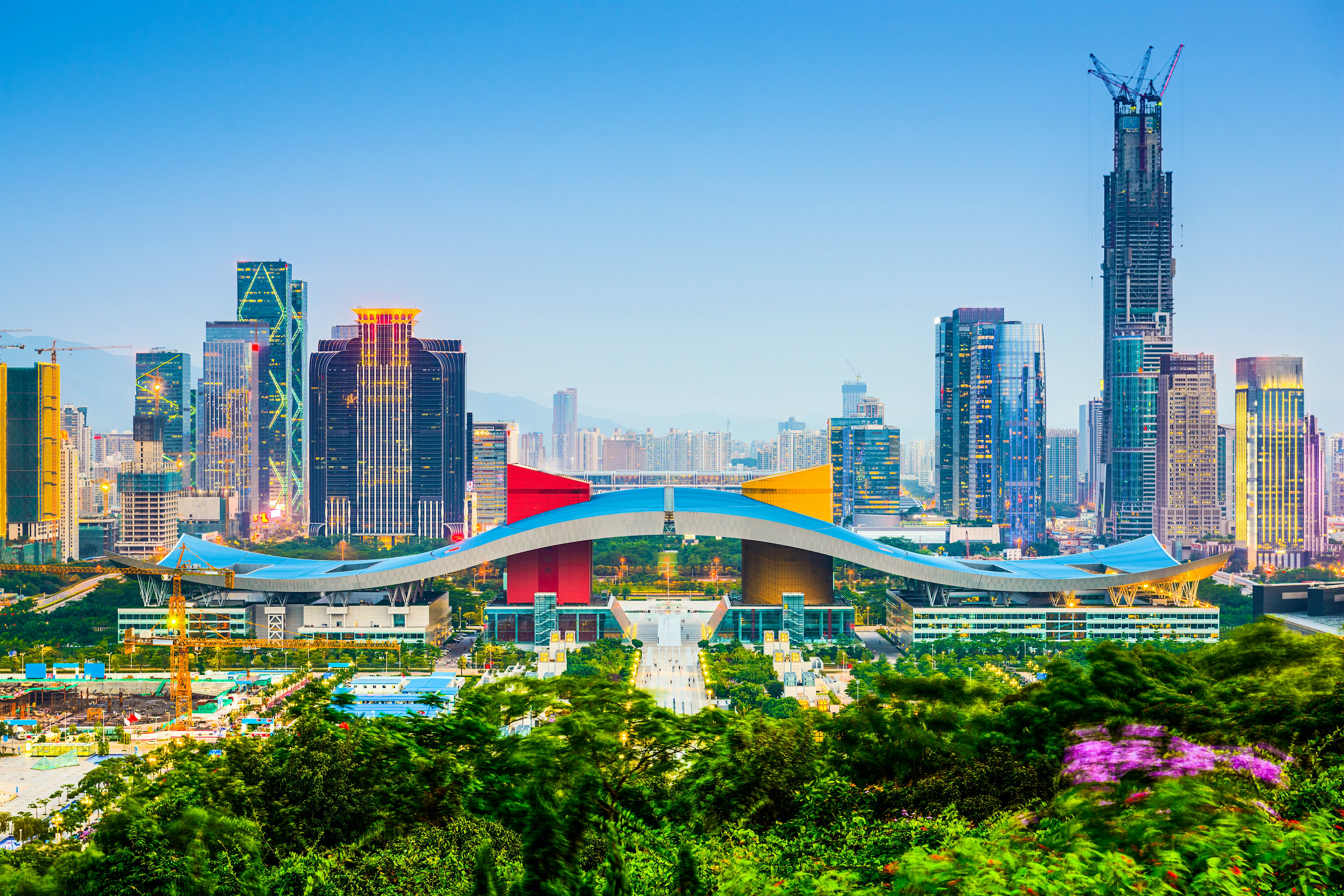
Beijing didn't pick Shenzhen by accident.
When Donald Trump touched down in southern China for the November 2026 Asia-Pacific Economic Cooperation summit, he became the first sitting US president to ever visit the city. Chinese officials rolled out a slick promotional campaign built around a simple message: "Witness the Wonders". They wanted the White House, international media, and global CEOs staring straight at flying drone deliveries, autonomous transit, and glass skyscrapers rising out of what used to be muddy farmland just four decades ago.
Here's the catch. Most coverage treats Shenzhen like a shiny tech showroom or a neutral backdrop for high-stakes diplomacy. That misses the point entirely. Choosing Shenzhen over Beijing or Shanghai was a calculated geopolitical flex designed to prove that American export controls haven't slowed down Chinese innovation. At the exact same time, local authorities spent months scrubbing away the gritty, gray-market reality that actually built the city in the first place.
I've followed supply chains and tech policy across the Pearl River Delta for years. Anyone who has walked the floor of Huaqiangbei knows Shenzhen isn't just clean corporate campuses and AI labs. It's a messy, hyper-pragmatic manufacturing engine that thrives on speed, reverse engineering, and intense local competition. By polishing the city to a mirror finish for the APEC summit, Beijing showed off its best angle while hiding the economic friction underneath.
Why Beijing Chose Shenzhen Over Beijing for the 2026 APEC Summit
Diplomacy is theater, and venue selection writes half the script.
If Xi Jinping wanted to project ancient imperial authority, he would have hosted Trump and Russian President Vladimir Putin in Beijing. If he wanted to project old-school financial muscle, Shanghai was right there. Picking Shenzhen sent a completely different signal to Washington.
Shenzhen is the physical proof of China's modern economic model. Back in 1980, Deng Xiaoping designated this quiet fishing village across the border from Hong Kong as China's first Special Economic Zone. Forty-six years later, it boasts more billionaires than any city outside New York and carries an average resident age of just 32. You don't see dusty state-owned factories here. You see the headquarters of Huawei, Tencent, BYD, and DJI.
Han Lin, China country director at the advisory firm The Asia Group, hit the nail on the head when talking about the summit optics. He noted that Shenzhen gives Beijing a powerful stage to present China as a primary source of global innovation rather than just a cheap assembly line.
Think about the timing. Washington spent years tightening semiconductor restrictions, slapping tariffs on Chinese electric vehicles, and trying to box in Beijing's tech sector. Bringing a sitting US president directly into the heart of China's hardware and AI capital was Xi's way of saying those containment efforts failed. Even more striking, the summit doubled as the setting for an unprecedented trilateral moment bringing Trump, Xi, and Putin together in the same city.
The Illicit Market Clean-Up Behind the Miracle City Optics
Before the motorcades arrived, Shenzhen had to hide its messy side.
In the run-up to the November 2026 summit, local authorities launched an aggressive sweep of illicit markets across the city. That detail matters way more than most readers realize.
Shenzhen didn't become the hardware capital of the world through top-down government grants alone. It grew through shanzhai culture—a sprawling, chaotic ecosystem of copycat electronics, gray-market chip brokers, and unmarked workshops where you can source a custom circuit board in an afternoon. Huaqiangbei, the city's famous electronics district, built its reputation on selling everything from legitimate components to knockoff phones and restricted semiconductors.
For years, foreign trade negotiators—especially from the US—pointed to Shenzhen's gray markets as exhibit A for intellectual property theft and sanctions evasion. You can't exactly invite the American president to "Witness the Wonders" of Chinese innovation while counterfeit goods and sanctioned chips are sitting on open stalls three miles from the convention center.
So the city cleaned house. Street vendors vanished, gray-market brokers went underground, and municipal crews wrapped construction sites in promotional banners. Visitors who flew in saw spotless boulevards, synchronized drone light shows, and an endlessly expanding metro network.
It's a classic "Potemkin village" dynamic, though with real skyscrapers behind the curtain. The tech prowess is genuine, sure, yet the frictionless perfection presented to APEC delegates required heavy-handed state control to stage-manage.
What the Shenzhen Tech Showcase Actually Reveals About US China Competition
Look past the diplomatic handshakes and photo ops, and the summit highlights a massive shift in how Washington and Beijing compete.
During the meetings in Shenzhen, Trump and Xi publicly touted artificial intelligence cooperation and hammered out guardrails for bilateral trade. On paper, that sounds like a thaw. Han Lin pointed out on BBC News Live that leader-level engagement gives working-level officials permission to look for practical solutions, creating a slightly more predictable environment for global businesses.
Don't mistake a temporary truce for peace.
Right alongside those warm optics, the structural tension hasn't budged an inch. As Lin also observed in commentary for the New York Times and Bloomberg, China's massive AI ambitions are running into real financial constraints, while Trump's push to attract Chinese investment into American manufacturing runs straight into expanding US national security red lines. Washington might accept intellectual property transfers in non-sensitive sectors to create American jobs, yet strict equity limits and security reviews block deeper integration.
Meanwhile, diplomatic veterans like Dr. Kurt Campbell warned ahead of the summit that Washington risks underestimating the durability of the Russia-China partnership on display in Shenzhen. And former US diplomat Kurt Tong noted that an unprecedented Trump-Xi-Putin trilateral gathering inevitably rattles traditional American allies across Asia.
Shenzhen's gleaming skyline makes China look unstoppable. Look closer at the city's balance sheet, though, and you'll see the pressures driving Xi to host this summit in the first place. Domestic consumption across China remains sluggish, property market debt still weighs heavily on local governments, and export-reliant tech firms desperately need access to Western markets to keep growing. Beijing needed Trump in Shenzhen just as much as it wanted to impress him.
How to Read Geopolitical Tech Summits Without Falling for the Spin
Whether you're an investor, a supply chain manager, or just someone trying to make sense of global news, high-profile summits like APEC 2026 are designed to distract you. Every camera angle is curated.
Next time world leaders gather in a "miracle city" and promise a new era of cooperation, run the headlines through three quick filters before making any decisions:
- Watch the regulatory text, not the podium quotes. Leaders love talking about "AI cooperation" and "economic guardrails" when cameras are rolling. Ignore the speeches and check the actual Commerce Department entity lists and tariff schedules thirty days later. If the export controls haven't changed, nothing has changed.
- Look at what got swept off the street before arrival. Every pre-summit crackdown tells you what the host government is actually insecure about. When Shenzhen authorities targeted illicit electronics markets right before Trump landed, they inadvertently confirmed that gray-market supply chains remain an active pressure point.
- Follow the capital restrictions, not the trade volume. Headline trade numbers bounce around every quarter. Pay attention to rules governing equity ownership, technology licensing, and cross-border data flows. That's where the real decoupling happens.
Shenzhen earned its reputation through relentless engineering, brutal market competition, and an ability to build physical products faster than anywhere else on earth. It didn't need a PR slogan to prove its relevance. By turning the city into a stage set for the Trump summit, Beijing reminded the world of its manufacturing power—while accidentally revealing how much effort it takes to keep the cracks out of frame.
For a visual breakdown of why Beijing selected this specific tech hub for the diplomatic gathering, watch Why Is Xi Jinping Taking Trump to China's Tech Capital, Shenzhen?, which examines the strategic messaging behind the summit location.