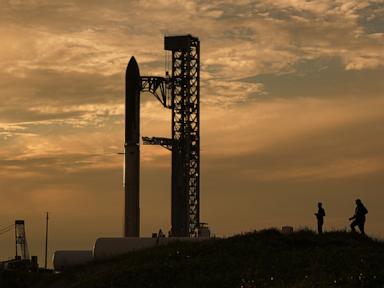
Watching a 400-foot stainless steel rocket erupt off a launchpad in South Texas is pure adrenaline. Most coverage of a SpaceX historic test flight treats the launch like a binary pass-fail exam where either the rocket reaches orbit or the whole thing was a waste of taxpayer money. That couldn't be further from reality.
I've followed orbital launch campaigns for over a decade, and the gap between how aerospace engineers view a test launch and how the general public reads a headline is massive. When SpaceX lights the fuse on an Integrated Flight Test—whether we're talking about the inaugural April 2023 Starship stack that blew up over the Gulf of Mexico, the October 2024 flight where the Mechazilla chopsticks plucked a 232-foot booster out of midair, or the subsequent Block 2 upgrades—the explosions aren't accidents. They're the entire business model.
Why SpaceX Blows Up Rockets on Purpose
Traditional aerospace works on a waterfall schedule. Agencies like NASA and contractors like Boeing spend ten years designing a vehicle on paper, simulating every vibration in a wind tunnel, and testing individual valves until the budget balloons into the tens of billions. By the time the Space Launch System (SLS) finally rolled out for Artemis I in 2022, it had to work on the very first try because a failure would have set the program back half a decade.
SpaceX flipped that math upside down. Instead of spending billions trying to predict every possible failure mode in software, they build cheap hardware quickly, fly it until something breaks, and look at the telemetry.
It's brutal. It looks messy on a livestream.
Engineers call this hardware-rich iterative development. When Starship's first integrated flight test tumbled out of control four minutes after liftoff in April 2023, critics immediately labeled it a disaster. They pointed at the crater blown into the concrete beneath Orbital Launch Mount A and the shower of sand that rained down on Port Isabel. Yet inside Starbase in Boca Chica, Texas, the mood was electric. The vehicle had cleared the tower, survived Maximum Dynamic Pressure (Max Q)—the point of peak aerodynamic stress—and generated terabytes of real-world flight data that no supercomputer could replicate.
If you want to understand why a SpaceX historic test flight matters, stop looking at whether the upper stage landed softly in the Indian Ocean. Look at what failed on the previous flight and whether that specific problem disappeared on the next one.
The Anatomy of a Modern Starship Test Campaign
To appreciate what's actually happening during these launches, you have to look at the sheer scale of the machine. Starship isn't just another rocket. Standing roughly 121 meters (nearly 400 feet) tall when stacked on top of the Super Heavy booster, it's the tallest and most powerful launch vehicle ever built, generating around 16.7 million pounds of thrust at liftoff—nearly double the thrust of the Saturn V that took astronauts to the Moon.
Every single test flight targets a very specific set of engineering bottlenecks.
Stage Separation and Hot-Staging
Early test flights revealed a nasty physics problem. Separating two massive stages while moving at hypersonic speeds in the thin upper atmosphere is tricky. On Flight 1, the booster and ship never separated at all because multiple Raptor engines failed on the way up, sending the entire stack into an unrecoverable spin before the Autonomous Flight Safety System (AFSS) detonated the tanks.
SpaceX didn't just tweak the separation bolts. They completely redesigned the interstage to use hot-staging. Instead of shutting down all 33 booster engines, coasting in zero gravity, and pushing the stages apart with pneumatic pistons, Starship now ignites its six upper-stage Raptor engines while still attached to the booster. A vented steel ring channels the superheated exhaust outward, blasting the booster away while keeping positive acceleration on the fuel tanks so the liquid methane and liquid oxygen don't float away from the engine inlets.
It worked on Flight 2. That single design change added roughly 10% to the rocket's payload capacity to orbit.
Surviving Atmospheric Reentry
Getting to space is only half the headache. Coming back down is where physics gets unforgiving.
During orbital reentry, a spacecraft slams into the upper atmosphere at roughly 17,000 miles per hour (Mach 25). Friction compresses the air in front of the hull, turning it into glowing plasma hotter than 2,600 degrees Fahrenheit (1,400 degrees Celsius). SpaceX uses 18,000 hexagonal ceramic heat-shield tiles glued and pinned onto the windward belly of the stainless steel ship.
During Flight 4 in June 2024, viewers watched live via Starlink cameras as plasma burned straight through one of the forward flaps. You could literally see molten steel peeling away while the camera lens cracked from the heat. Somehow, the hydraulic actuators kept working, the flap held together, and the ship still managed to flip upright and execute a soft splashdown in the Indian Ocean. That footage alone proved why stainless steel (specifically a custom 304L alloy) beats carbon fiber for reusable spacecraft—steel keeps its structural strength at temperatures where composites turn to ash.
The Booster Catch
Nobody outside Boca Chica seriously thought the chopstick catch would work on the first try. Even SpaceX engineers gave it coin-flip odds before Flight 5 in October 2024.
Think about what had to happen for Super Heavy Booster 12 to land back on the launch mount. A 20-story cylinder weighing over 200 metric tons without fuel fell from the edge of space, relit 13 Raptor engines to slow down from supersonic speeds, throttled down to three center engines, hovered in midair, and slid laterally into two mechanical arms attached to the launch tower with tolerances measured in inches. No landing legs. No concrete pad. Just two giant steel pins beneath the grid fins resting directly on the arms that stacked it hours earlier.
That catch wasn't a stunt. Landing legs add dead weight, and every kilogram of landing gear on a booster steals payload capacity from the upper stage. By putting the landing hardware on the ground instead of the rocket, SpaceX cut turnaround time from months to potentially hours.
What the Headlines Miss About FAA Licensing and Environmental Reviews
If you only read mainstream tech blogs, you'd think the biggest hurdle for SpaceX is engineering. Ask anyone who works near Starbase, and they'll tell you the real bottleneck is paperwork.
Before any SpaceX historic test flight leaves the ground, the company has to clear a gauntlet of regulatory hurdles managed by the Federal Aviation Administration (FAA), the U.S. Fish and Wildlife Service (USFWS), and the National Marine Fisheries Service (NMFS). Every time SpaceX changes the flight profile—like shifting a splashdown zone in the Gulf of Mexico or modifying the water deluge system beneath the pad—it triggers a fresh environmental assessment under the National Environmental Policy Act (NEPA).
In 2024, the tension between SpaceX's hardware cadence and federal review timelines spilled into public view. Rockets sat fully stacked on the pad for weeks waiting for license modifications while regulators reviewed sonic boom radii and wastewater discharge permits from the steel water-cooled flame deflector.
There are two legitimate sides to this debate, and pretending otherwise is dishonest.
On one hand, Boca Chica sits right next to the Lower Rio Grande Valley National Wildlife Refuge, home to endangered piping plovers, ocelots, and nesting Kemp's ridley sea turtles. When Flight 1 destroyed the uncooled concrete pad in April 2023, it hurled chunks of concrete thousands of feet into protected wetlands and sparked a brush fire. Environmental groups sued the FAA, arguing the agency rubber-stamped a launch license without a full Environmental Impact Statement.
On the other hand, SpaceX fixed the pad issue in less than seven months by installing a massive water-cooled steel plate that sprays hundreds of thousands of gallons of fresh water upward during ignition, absorbing the acoustic shockwaves and heat. Critics argue that forcing a company to wait 60 days for an environmental consultation every time a booster lands five miles closer to shore hands a massive strategic advantage to foreign competitors like China's state-backed launch providers, who face zero public comment periods.
How Starship Changes the Economics of Orbit
Why does any of this matter if you aren't a rocket nerd? Because launch costs dictate everything that happens in space, from rural internet speeds to lunar exploration.
Back in the Space Shuttle era, putting a single kilogram of cargo into Low Earth Orbit (LEO) cost roughly $54,500. When SpaceX introduced the partially reusable Falcon 9, they drove that price down to around $2,700 per kilogram. That drop alone made the Starlink satellite constellation financially viable, putting high-speed broadband in airplanes, cargo ships, and remote villages across more than 100 countries.
Starship aims to drop that cost below $100 per kilogram—and eventually closer to $10 to $20 per kilogram once full and rapid reusability is dialed in.
When launch costs fall by two orders of magnitude, the entire design philosophy of satellites changes overnight. Right now, aerospace engineers spend hundreds of millions of dollars miniaturizing components and folding solar arrays like origami so a satellite fits inside a 5-meter Falcon 9 fairing. With Starship's 9-meter diameter payload bay—larger than the entire pressurized volume of the International Space Station—you don't need to miniaturize anything. You can build space telescopes with monolithic mirrors, launch entire space station modules in a single flight, or put massive solar power arrays in orbit without worrying about weight budgets.
NASA is already betting the farm on it. Under the Artemis III contract, worth over $4 billion, a modified lunar variant of Starship (the Human Landing System) is scheduled to carry astronauts from lunar orbit down to the Moon's south pole. To pull that off, SpaceX has to master orbital propellant transfer—launching a tanker Starship to dock with a depot ship in Earth orbit and pumping hundreds of tons of cryogenic liquid methane and oxygen across in zero gravity before the lander heads to the Moon. Nobody has ever transferred cryogenic fuel at that scale in space. Upcoming test flights will spend months proving that single capability.
Common Myths About SpaceX Test Launches
Whenever a test flight trends on social media, the exact same misconceptions flood the replies. Let's clear up the biggest ones.
Myth 1: Taxpayers are paying for every rocket that explodes.
SpaceX funds the vast majority of Starship's research, development, and testing out of its own pocket using revenue from Falcon 9 commercial launches and Starlink subscriptions. While NASA has awarded SpaceX fixed-price contracts for the Artemis lunar lander, SpaceX only gets paid when it hits specific technical milestones verified by NASA engineers. If a test rocket blows up in Texas, SpaceX eats the loss, not the taxpayer.
Myth 2: Explosive failures mean the design is fundamentally flawed.
Every major rocket family in history blew up repeatedly during development. The Atlas, Titan, Delta, and Falcon 1 all suffered catastrophic failures early on. Even the Apollo program lost unmanned Saturn rockets during testing. The difference today is transparency. SpaceX broadcasts everything in 4K via Starlink, whereas legacy contractors used to test behind closed doors and quietly bury failed engine tests in quarterly reports.
Myth 3: Starship is just a billionaire's vanity project for Mars.
Elon Musk talks constantly about making humanity multiplanetary, which makes it easy to dismiss Starship as science fiction. In reality, Starship is first and foremost a cash-flow engine for Starlink. Falcon 9 simply can't launch the heavier, next-generation V3 Starlink satellites fast enough to meet global bandwidth demand. Starship can deploy dozens of massive satellites in a single launch, making it essential to SpaceX's immediate commercial survival on Earth.
How to Actually Watch and Track Future SpaceX Test Flights
If you want to follow the next SpaceX historic test flight like an insider instead of relying on sensationalized headlines, skip the mainstream news clips and look at the primary sources.
Start with NASASpaceflight (NSF) on YouTube. Their camera crews maintain 24/7 live streams pointed directly at the Starbase launch pads and production tents in Boca Chica. You can watch new boosters roll out of the Mega Bay, see cryogenic proof testing happen in real time, and spot subtle heat-shield tile upgrades weeks before SpaceX announces a launch date.
Second, keep an eye on FAA Temporary Flight Restrictions (TFRs) and local Cameron County road closure notices. SpaceX rarely announces a firm launch date more than a few days out because weather and hardware checks shift constantly. When Cameron County posts an official closure for Highway 4 between Boca Chica Village and the beach, a static fire test or an orbital launch attempt is usually within 48 hours.
Finally, watch the official SpaceX broadcast on X (formerly Twitter) starting about 30 minutes before T-0. Pay close attention to the telemetry graphic in the bottom corners of the screen. Watch the chamber pressure bars on the 33 booster engines at liftoff, look at the LOX and CH4 fuel levels during the boostback burn, and keep your eyes on the altitude and speed readouts during reentry. Once you know how to read those numbers, you'll know whether a flight succeeded long before the commentators say a word.