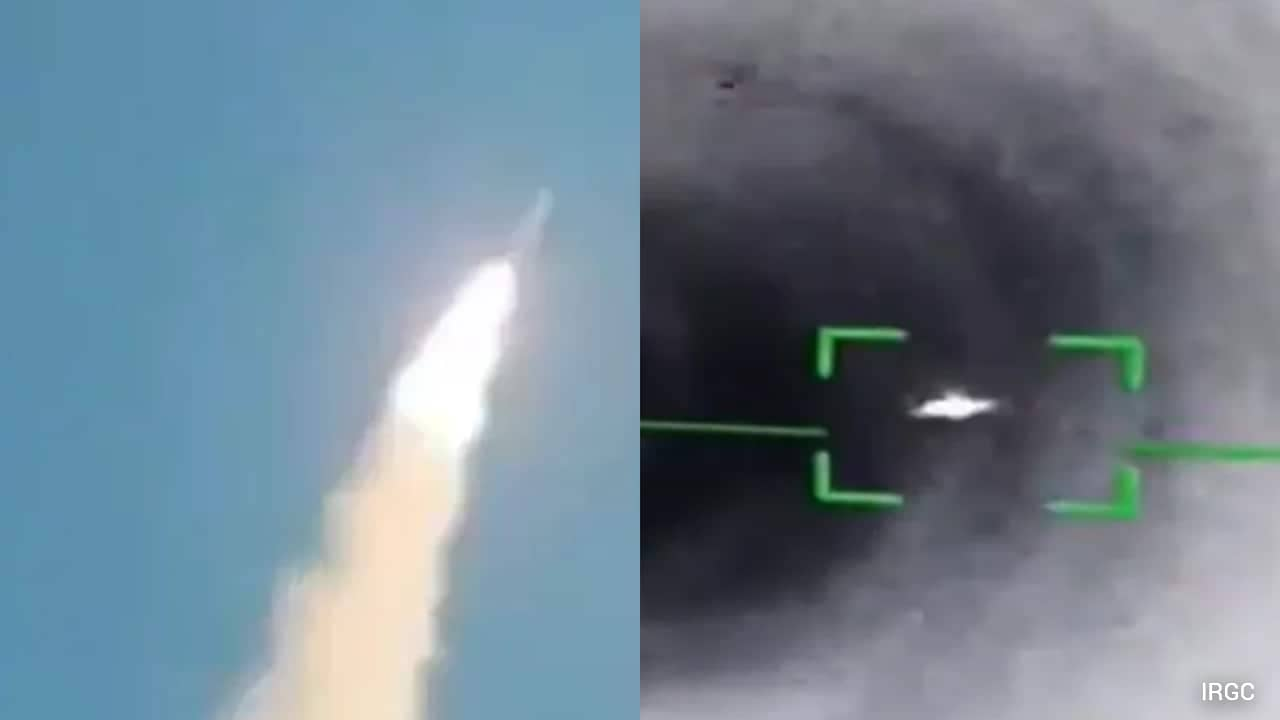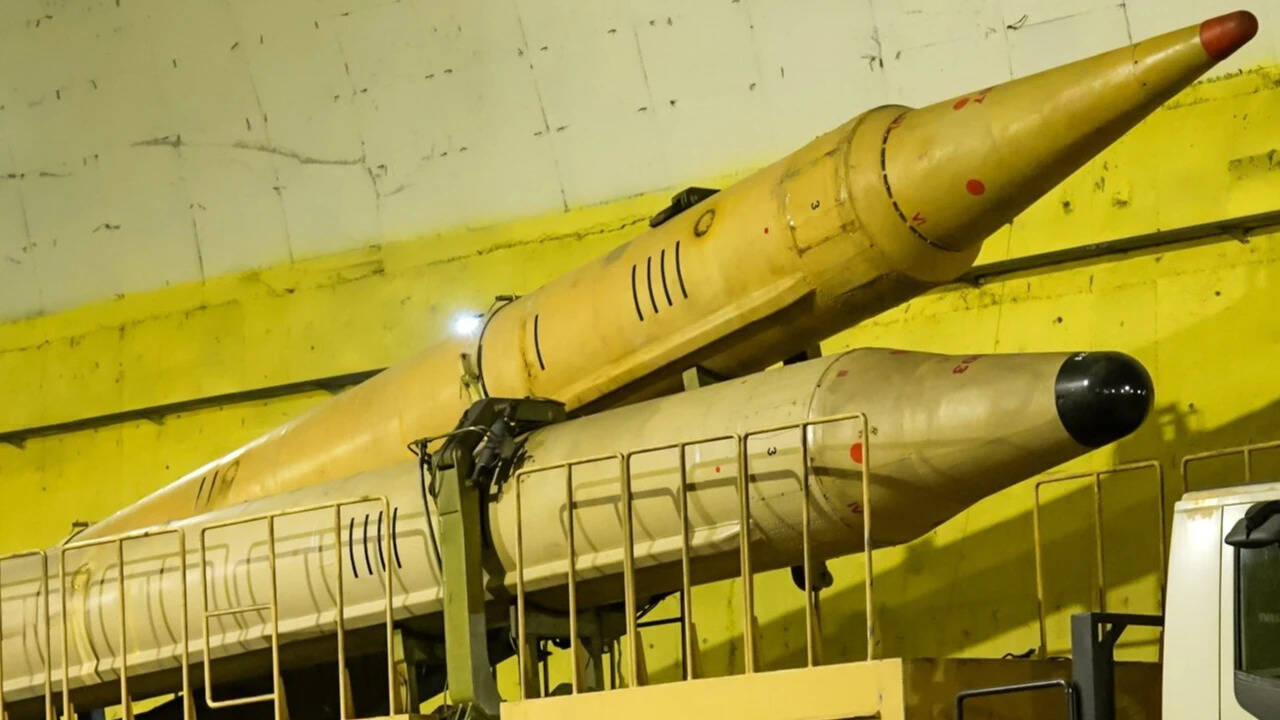
Military parades are pure theater, and underground missile base videos are no different. When state media releases high-definition footage of gleaming hardware rolling through cavernous tunnels, most commentators immediately jump to conclusions about imminent regional escalation or invincible deterrence. That reaction misses the real story behind Iran showcasing a new twin-missile launcher inside an underground complex.
Let's be clear about what we're actually looking at. Iran's Islamic Revolutionary Guard Corps (IRGC) Aerospace Force has spent years cultivating an image of subterranean invulnerability, often referring to these subterranean facilities as "missile cities." The recent footage featuring a dual-rail or twin-canister launcher system isn't just about flexing muscle for domestic consumption. It's a calculated response to a very specific operational headache that Tehran has faced in real combat scenarios.
Single-rail mobile launchers, known as Transporter Erector Launchers (TELs), have a glaring vulnerability when firing at modern air defense networks. You fire one missile, and your thermal signature immediately lights up overhead satellites and reconnaissance drones. By the time your crew reloads or repositions, counter-battery fire or airstrikes are already inbound. Doubling the payload on a single chassis changes the math.
The Operational Logic Behind Twin-Missile Launchers
Why go through the engineering hassle of mounting two heavy ballistic or cruise missiles onto one vehicle? Because saturation beats sophistication almost every time.
Modern missile defense architectures—like Israel's Arrow system, the US Patriot batteries, or THAAD—rely on high-cost, low-inventory interceptors to knock incoming threats out of the sky. A single TEL firing one projectile gives a defending radar battery plenty of time to track, calculate, and engage. When one vehicle can ripple-fire two missiles within seconds of each other, it compresses the defender's reaction window and forces them to burn through interceptors twice as fast.
Here's what actually changes on the ground when an army transitions to dual-launcher configurations:
- Reduced Footprint: You get twice the firepower without doubling the number of specialized heavy trucks, drivers, and maintenance crews needed to operate them.
- Faster Salvo Generation: Instead of coordinating two separate vehicles to fire simultaneously from different positions, one fire-control system handles the sequence automatically.
- Tunnel Efficiency: Underground complexes have finite floor space and strict ventilation limits. Packing two rounds per vehicle maximizes the lethal output of a cramped subterranean staging area.
Honestly, the engineering trade-offs are brutal. Adding a second missile means reinforcing the chassis suspension, upgrading the hydraulic erection systems, and managing massive exhaust blast deflection so the first launch doesn't fry the second missile sitting inches away. If you've ever looked closely at dual-rail systems like the Russian Iskander-M, you'll notice heavy blast shields and reinforced structural framing between the canisters. Iran's engineers had to solve those exact thermal and structural stresses before putting this system in front of cameras.
Inside Iran's Underground Missile Cities
People hear "underground complex" and picture a sci-fi fortress carved effortlessly out of solid granite. The reality is far grittier, more expensive, and surprisingly vulnerable if you know where to look.
Iran began digging these facilities in the 1980s during the War of the Cities with Iraq, when Saddam Hussein's Scud missiles battered Iranian urban centers and Tehran lacked the air superiority to protect its surface bases. Over the past four decades, the IRGC has excavated dozens of tunnels across the Zagros Mountains and along the Persian Gulf coast. Organizations like the Center for Strategic and International Studies (CSIS) and the International Institute for Strategic Studies (IISS) have tracked these developments through commercial satellite imagery for years.
The concept is straightforward. Keep your missiles, fuel, and launchers buried under hundreds of feet of rock where standard bunker-busting munitions can't reach them. When an order comes down, the launchers roll out to pre-surveyed firing positions, launch their payloads, and duck back inside before enemy aircraft can loiter overhead.
Except it rarely works that cleanly in practice.
The Chokepoint Problem
Every underground base has an Achilles' heel, and it's not the roof. It's the doors.
No matter how deep you bury a tunnel network, the missiles eventually have to come out to fly—unless you're using vertical underground silos, which are fixed targets and famously difficult to reload under fire. The portals of these subterranean bases are massive, reinforced concrete blast doors. They're easily visible from space.
During a high-intensity conflict, an adversary doesn't need to collapse the entire mountain to neutralize an underground complex. They just need to crater the exit ramps, collapse the tunnel entrances with precision-guided munitions, or scatter area-denial mines outside the portals. Suddenly, your multi-million-dollar twin-missile launchers are trapped in a concrete tomb with nowhere to go.
This is why the IRGC constantly rotates equipment between facilities and builds decoy entrances. If you watch the state media broadcasts carefully, you'll notice they almost always blur out the tunnel walls' specific rock formations, obscure exterior terrain features, and cut away before showing the exact layout of the exit portals. They want you to see the shiny hardware, not the geography.
Propaganda vs Battlefield Reality
We need to separate the glossy production value of IRGC media from actual combat performance. State television loves dramatic camera angles, sweeping drone shots inside brightly lit tunnels, and ominous background music. It's designed to project inevitability.
Look at how these videos are structured. You see rows of pristine launchers lined up bumper-to-bumper in wide, painted corridors. That looks terrifying on a smartphone screen. In real military operations, parking dozens of fueled missiles right next to each other in an enclosed space is a safety nightmare. One accidental spark, one hydraulic leak, or one successful sabotage operation turns the entire tunnel into a massive fuel-air explosive.
When operational security actually matters, those vehicles are dispersed, camouflaged, and kept far away from each other. The parade-style formations you see in the footage are staged strictly for the cameras.
Lessons From Recent Exchanges
Iran isn't designing these systems in a vacuum. The direct missile and drone exchanges between Iran and Israel in 2024 gave Tehran real-world telemetry on how its arsenal performs against layered Western and Israeli air defenses.
Those strikes revealed a harsh truth for Iranian planners. Massed launches of slower cruise missiles and drones get picked apart easily when defenders have early warning. Even ballistic missiles struggle to penetrate modern terminal defenses unless they arrive in tightly synchronized, high-volume waves.
A twin-missile launcher directly addresses that lesson. By increasing the launch rate per vehicle, Iran is trying to close the gap between firing the first shot and saturating the target's radar horizon. If ten vehicles can suddenly put twenty ballistic missiles into the air in under a minute, the defensive math gets significantly harder for everyone on the receiving end.
What Analysts Look For When New Footage Drops
When defense analysts and intelligence researchers examine a newly unveiled Iranian weapons system, they ignore the narrator's claims about "unstoppable" range or "pinpoint" accuracy. Instead, they freeze-frame the video to look at mundane mechanical details that state censors forgot to hide.
- Tire and Axle Configurations: The number of axles and the tread pattern on the commercial or military truck chassis tell you the approximate weight of the loaded missiles. Heavy solid-fuel missiles require beefier suspension setups than liquid-fuel variants.
- Canister Seals and Wiring: Sealed canisters usually indicate solid-fuel missiles that can sit ready to fire for months without maintenance. Exposed plumbing, venting hoses, and fueling ports point toward liquid-fuel rockets, which require hazardous fueling crews and take much longer to prep before launch.
- Erection Hydraulics: Watching how fast the twin rails lift into firing position reveals the sophistication of the hydraulic pumps and stabilization jacks. If the truck visibly wobbles or takes ages to level itself, the system isn't ready for rapid shoot-and-scoot warfare.
- Telemetry Antennas: The shape and placement of communication arrays on the cab tell you whether the launcher operates autonomously using inertial navigation or relies on real-time satellite and ground-relay links—links that can be jammed.
Most casual observers completely miss these clues because they're distracted by the spectacle. Yet those tiny engineering details determine whether a weapon is a genuine tactical threat or just a glorified parade float.
The Strategic Ripple Effect Across the Region
Unveiling a twin-missile launcher inside an underground base sends a message aimed at three distinct audiences simultaneously.
First, it's meant for Washington and Jerusalem. Tehran wants to signal that despite sanctions, supply chain restrictions, and ongoing regional friction, its domestic defense industry can still innovate and scale production. Showing off subterranean storage reinforces the idea that preemptive strikes won't wipe out their retaliatory capacity in a single night.
Second, it's aimed at Gulf neighbors. Countries like Saudi Arabia and the UAE have invested billions in missile defense shields, yet they remain acutely aware of their geographic proximity to Iranian launch sites. Demonstrating higher salvo density reminds regional neighbors that geography isn't on their side.
Third, and perhaps most importantly, it's meant for Iran's own domestic audience and regional proxy networks. Whenever economic pressure mounts or regional allies take heavy losses, the leadership relies on displays of military self-reliance to project strength and stability at home.
How to Read Future Military Announcements Critically
The next time viral footage of an underground base or a "revolutionary" new launcher hits your feed, don't take the headlines at face value. Military hardware demonstrations are carefully choreographed information operations.
Start by checking the source of the footage and looking for independent verification from open-source intelligence (OSINT) researchers who track chassis models and missile dimensions. Pay attention to whether the video shows actual live-fire testing out in the open desert or just static vehicles rolling slowly under fluorescent tunnel lights—a launcher that hasn't been filmed firing two missiles in rapid succession is still just a prototype on wheels. Finally, compare the claimed capabilities against known physical constraints like tunnel widths, vehicle weight limits, and regional air defense coverage. Looking past the dramatic camera angles gives you a much clearer picture of what's actually changing on the battlefield.