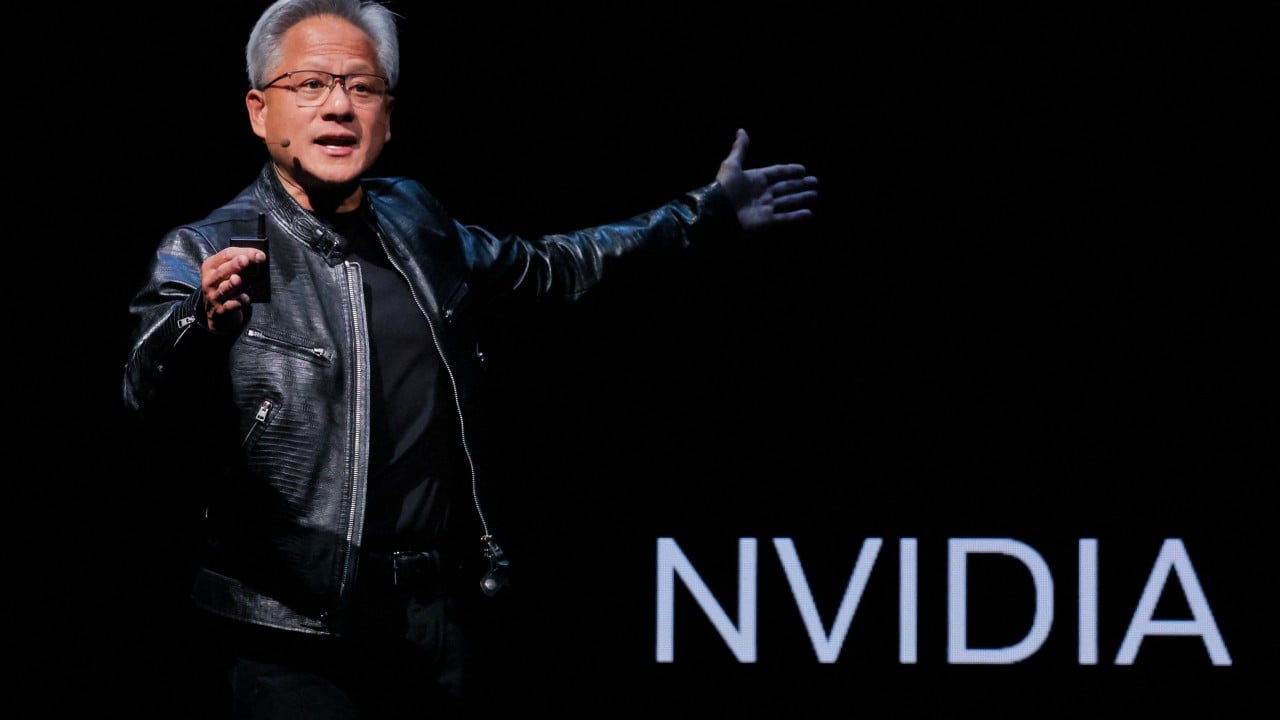
Reinstating Jensen Huang after an eleven-day resignation didn't make Nvidia's Washington problem go away. If anything, his return to the corner office just turned next week's Capitol Hill appearances into the highest-stakes corporate grilling of 2026.
Most coverage treats Jensen Huang agreeing to face Congress over the Nvidia scandal like a standard Silicon Valley PR apology tour. It isn't. When Huang sits down with three House panels on December 1 and faces live cameras before the Senate Banking Committee on December 3, lawmakers won't just be asking about a personal lapse in judgment. They're trying to figure out how billions of dollars in restricted AI hardware allegedly slipped through Southeast Asia into China while federal investigators were told to stand down. Also making waves lately: Why Tencent Just Torched Its Own Profit Margins on a Sixfold AI Bet.
I've watched corporate compliance crises unfold in Washington for years, and the pattern here is unmistakable. Wall Street sees the CEO back at his desk and assumes the storm has passed. Meanwhile, congressional investigators are quietly building a paper trail around export controls, political interference, and board governance that could reshape how AI chips are sold worldwide.
The Real Reason Lawmakers Are Dragging Nvidia to Capitol Hill
The tabloid headlines focused on Huang's extramarital affair with Alice Huang, a former executive at Singapore-based data center operator Megaspeed whom U.S. intelligence officials suspected of ties to Chinese intelligence. That personal scandal forced Jensen Huang out as CEO on November 12. By November 23, Nvidia's board had reinstated him, citing assurances from senior U.S. officials that his return posed no national security threat. More details into this topic are explored by Harvard Business Review.
Congress isn't buying the all-clear.
When you strip away the gossip, the congressional inquiry comes down to three concrete operational questions that Nvidia still hasn't answered publicly:
- How Megaspeed bought billions in chips: Starting in 2024, Megaspeed—a little-known Singaporean firm established by Alice Huang—began purchasing massive quantities of advanced Nvidia hardware and routing shipments from California to Malaysia. Singapore's Prime Minister Lawrence Wong later noted that some chips bought by Megaspeed transited Singapore without ever physically entering the country.
- Why a federal probe stalled: Credible reporting from The New York Times and Bloomberg indicates that Nvidia General Counsel Tim Teter intervened in a Department of Commerce investigation into Megaspeed last year, leading to unusual routing rules and a paused inquiry. Teter is scheduled for his own transcribed House interview on December 2, right between Huang's two appearances.
- Whether diversion occurred with company knowledge: The U.S. government finally added Megaspeed and its affiliates to the Commerce Department's Entity List on November 23, restricting U.S. exports to the firm. Lawmakers want to know whether Nvidia's own site inspections and contract teams missed obvious red flags—or looked past them.
Honestly, the affair is just the spark. The real fire is whether export-control enforcement broke down at the exact moment the U.S. was trying to keep frontier compute out of Beijing's reach.
Why the Two-Part Hearing Format Matters More Than You Think
If you want to understand how much danger Nvidia actually faces next week, look at the calendar. Lawmakers split this into two completely different battlegrounds.
First, on December 1, Huang sits for a closed-door, transcribed interview with leadership from the House Foreign Affairs Committee, the House Intelligence Committee, and the House Select Committee on the Chinese Communist Party. General Counsel Tim Teter follows in the same room on December 2. Don't mistake "closed-door" for friendly. Without television cameras, members of Congress don't waste time on five-minute speeches for cable news clips. Staff attorneys ask granular, document-heavy questions under oath or formal transcription rules, locking witnesses into exact timelines that can later be used against them if contradictions surface.
Then comes December 3. That's when Huang testifies in a live, public hearing before the Senate Banking Committee.
That public session will be brutal for entirely different reasons. Senators from both parties have already signaled they aren't letting this drop. Democratic Senator Elizabeth Warren and Republican Senator Jim Banks previously pressed the Commerce Department to review Nvidia's export licenses. Republican Senator John Cornyn publicly questioned how anyone concluded there was "no national security risk" without clarifying whether the FBI ever conducted a defensive briefing. And Democratic Senator Ron Wyden has framed the White House's intervention to bring Huang back as a sign of political favoritism.
Even President Donald Trump's personal involvement has complicated the optics. Trump confirmed he spoke directly with Nvidia's board and convinced them to rehire Huang, while financial disclosures filed with the Office of Government Ethics showed Trump held between $13 million and $58 million in Nvidia stock at the end of 2025. When you mix national security, export licenses, and presidential stock holdings in an open Senate hearing, every soundbite moves markets.
What Most Investors and Tech Watchers Misread About Export Controls
A common mistake I see among tech analysts is treating U.S. export rules like simple shipping labels—either Nvidia shipped a chip directly to Shanghai or it didn't. That's not how modern chip diversion works, and it's not what regulators are targeting.
Under the Export Administration Regulations enforced by the Bureau of Industry and Security, liability doesn't stop at the loading dock. If an American chipmaker sells high-end processors to an intermediary in Singapore or Malaysia while ignoring clear indicators that the compute capacity is being funneled to restricted Chinese entities, both the middleman and the supplier face intense scrutiny.
Look at what the U.S. government has already done in November 2026 alone:
- Sweeping remote-access restrictions: On November 15, the Bureau of Industry and Security issued an interim final rule barring large overseas data centers using U.S. chips from serving customers in China and other restricted jurisdictions.
- The Megaspeed blacklisting: Eight days later, Commerce placed Megaspeed on the Entity List after weeks of public friction between Treasury Secretary Scott Bessent and Commerce Secretary Howard Lutnick over why the listing took so long.
- Criminal referrals: The Justice Department and Commerce Department announced they would pursue the full extent of the law against Megaspeed for any criminal conduct.
Notice the limitation, though. Critics pointed out that adding Megaspeed to the Entity List primarily blocks exports from the United States. Because most advanced AI chips are fabricated in Taiwan, lawmakers argue that administrative blacklists alone leave massive loopholes. That's why three Republican House committee chairs are pushing to attach four new export-control bills directly to the annual National Defense Authorization Act.
Nvidia's Damage Control Playbook—and Where It Falls Short
Nvidia clearly knows its old compliance setup won't survive congressional scrutiny. Alongside Huang's reinstatement on November 23, the company rolled out a series of defensive moves:
- Halting sales of licensed chips to China altogether.
- Forming a standing National Security and Export Control Committee on its board made up exclusively of independent directors.
- Launching a search to hire the company's first-ever Chief Compliance Officer.
Wait a second. Read that third bullet again.
A multi-trillion-dollar company sitting at the center of global geopolitics didn't even have a dedicated Chief Compliance Officer until November 2026. And as the SOC Investment Group pointed out in a sharp letter to newly appointed Board Chair Harvey Jones on November 20, Nvidia operated for decades without an independent board chair at all—an arrangement found in roughly 1% of Russell 3000 companies.
You can see why institutional investors and senators alike are skeptical. Creating a compliance committee after the Justice Department opens a criminal probe into one of your biggest Southeast Asian buyers looks reactive. When Huang testifies next week, senators won't just ask what Nvidia plans to fix. They'll ask why basic guardrails weren't there in 2024 when Megaspeed's orders exploded.
Practical Steps to Track What Actually Matters Next Week
If you hold semiconductor stocks, run AI infrastructure, or follow tech policy, don't get distracted by viral clips from the December 3 broadcast. Focus on the concrete signals that actually determine whether this scandal turns into lasting regulation:
- Watch Commerce Secretary Howard Lutnick's December 10 hearing: Huang's testimony is half the story. Lutnick is scheduled to appear before the Senate Banking Committee a week later. Any contradictions between what Nvidia says happened during the 2025 Megaspeed inquiry and what Commerce officials admit will trigger immediate subpoenas.
- Track the NDAA amendment votes: Keep an eye on whether the four House export-control bills make it into the final National Defense Authorization Act text. Statutory mandates carry far more teeth than executive rules that can be softened behind closed doors.
- Audit third-party cloud and intermediary exposure: If your engineering team rents GPU clusters through overseas data center brokers, verify their compliance with the November 15 remote-access rules now. Regulators are actively targeting cross-border compute leasing, not just physical chip shipments.
- Read the House transcripts when they drop: The December 1 and December 2 interviews won't air live, but House committees routinely release redacted transcripts weeks later to build legislative records. That's where the real facts about Tim Teter's calls to Commerce and Nvidia's internal site audits will surface.
Jensen Huang survived an eleven-day ouster that would have ended almost any other executive's career. Keeping his title, however, means he personally has to defend Nvidia's China record under oath before a Congress that has run out of patience.