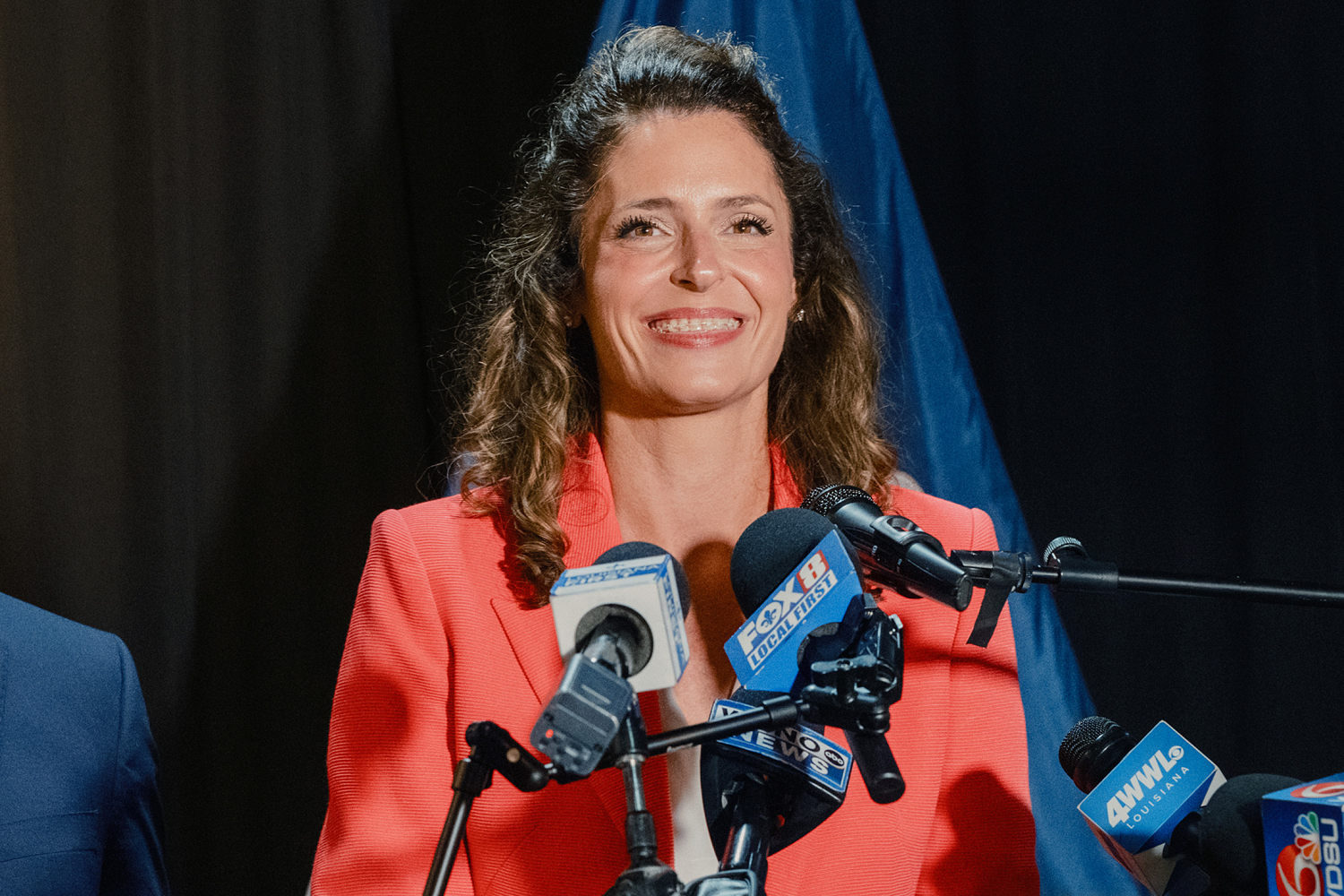
Donald Trump just proved his grip on the Republican party is as tight as ever, and he did it by cleaning house in the bayou.
When Representative Julia Letlow won the Louisiana Senate primary runoff on Saturday night, she didn't just beat state Treasurer John Fleming. She solidified a massive political shift that has been building for five years. This race was never about standard conservative policy. It was a loyalty test, plain and simple, and the incumbent senator who failed that test didn't even make it to the final round.
Bill Cassidy, the sitting Republican senator, was completely cast aside by voters in May. Why? Because he dared to vote to convict Trump during the 2021 impeachment trial. Trump didn't forget. He explicitly recruited Letlow to take Cassidy's seat, endorsed her before she even jumped into the race, and watched his hand-picked candidate cross the finish line with at least 57% of the vote.
If you think this is just another standard local election, you're missing the bigger picture.
The Grudge That Remade Louisiana Politics
Louisiana uses a unique majority-vote primary system where all candidates run on the same ballot. If nobody gets over 50%, the top two advance. In May, Cassidy came in a embarrassing third place with just 25%. He became the first sitting senator to lose a primary since 2017.
Letlow led that initial field with nearly 45% of the vote. Fleming pulled 28%. Because Letlow fell short of the outright majority, it triggered Saturday's runoff against Fleming.
Don't mistake Fleming for a moderate. He's a co-founder of the House Freedom Caucus and served in Trump's first administration. He tried hard to out-MAGA Letlow, running ads claiming he was part of the movement long before it was cool. He even complained on the campaign trail that allies of Louisiana Governor Jeff Landry blocked him from getting to Trump on the phone to secure an endorsement. When Fleming finally reached the former president, Trump supposedly called him fantastic but stuck with Letlow anyway.
The truth is, Fleming never had a chance once the endorsement machine spun into gear. Trump held a telephone rally for Letlow just days before the vote, calling her a fearless champion. Letlow had the full backing of the state's political heavyweights, including Governor Landry and House Majority Leader Steve Scalise.
Follow the Money to the Ballot Box
While both candidates spent about $1 million each from their official campaign accounts after the May primary, outside groups blew the race wide open. A super PAC backing Letlow poured $4.1 million into the state over the final six weeks. Total outside spending for her topped $5.1 million, completely burying Fleming on the airwaves.
The advertising got incredibly nasty. Super PACs supporting Letlow ran ads calling the 74-year-old Fleming an unhinged fraud and a career politician. Fleming fired back by attacking Letlow on diversity, equity, and inclusion initiatives from her past career as a university administrator.
Letlow's camp also hit Fleming over a controversial AI-generated video used during the campaign. Voters were flooded with negative messaging, but the spending imbalance made it a one-sided fight in the final stretch.
Who is Julia Letlow
Letlow is a 45-year-old former academic administrator with a doctorate in communication. Her entry into federal politics came through tragedy. Her husband, Luke Letlow, won Louisiana's 5th Congressional District seat in 2020 but died from COVID-19 complications just days before he was scheduled to be sworn into office.
She ran in the subsequent special election in 2021, secured Trump's backing, and won outright. She became the first Republican woman elected to Congress from Louisiana.
During her tenure on the House Appropriations Committee, she focused heavily on bringing funding back to her rural district. She also sponsored the Parents Bill of Rights Act, which passed the House in 2023. She has positioned herself as a reliable vote for the leadership, staying close to Speaker Mike Johnson and the Trump platform.
What Happens in November
Letlow enters the general election as the overwhelming favorite. Louisiana hasn't elected a Democrat to the Senate since Mary Landrieu lost her seat in 2014. Trump carried the state by 22 percentage points in 2024, meaning the Republican nominee is essentially a shoo-in.
She will square off against Democrat Jamie Davis, a row-crop farmer from Tensas Parish who cleared his own primary runoff with 80% of the vote. Davis is making history as the first Black major-party U.S. Senate finalist in Louisiana since the Reconstruction era.
If Letlow wins as expected, she will make history of her own as the first female Republican senator to represent Louisiana.
The national implications of this race are obvious. While Trump-backed candidates stumbled recently in gubernatorial primaries in Georgia and Iowa, Louisiana showed that his influence remains dominant when he targets an incumbent who crossed him. Cassidy learned the hard way that Republican primary voters have a long memory. Letlow used that anger to fuel her rise, and she's now positioned to head to Washington with a clear mandate to support the administration's agenda.
Republican candidates nationwide are watching this result. The message from Louisiana is clear. If you break ranks, there will be a well-funded, Trump-backed challenger waiting for you in the next cycle, and the party base will back them up.
If you want to keep tabs on how this alters the balance of power in the Senate, watch how current lawmakers adjust their voting records over the coming months. The survival instinct is strong in Washington, and Letlow's victory just provided a textbook example of what it takes to win in the modern GOP. Keep an eye on federal fundraising filings to see which PACS shift their cash toward loyalist challengers next.