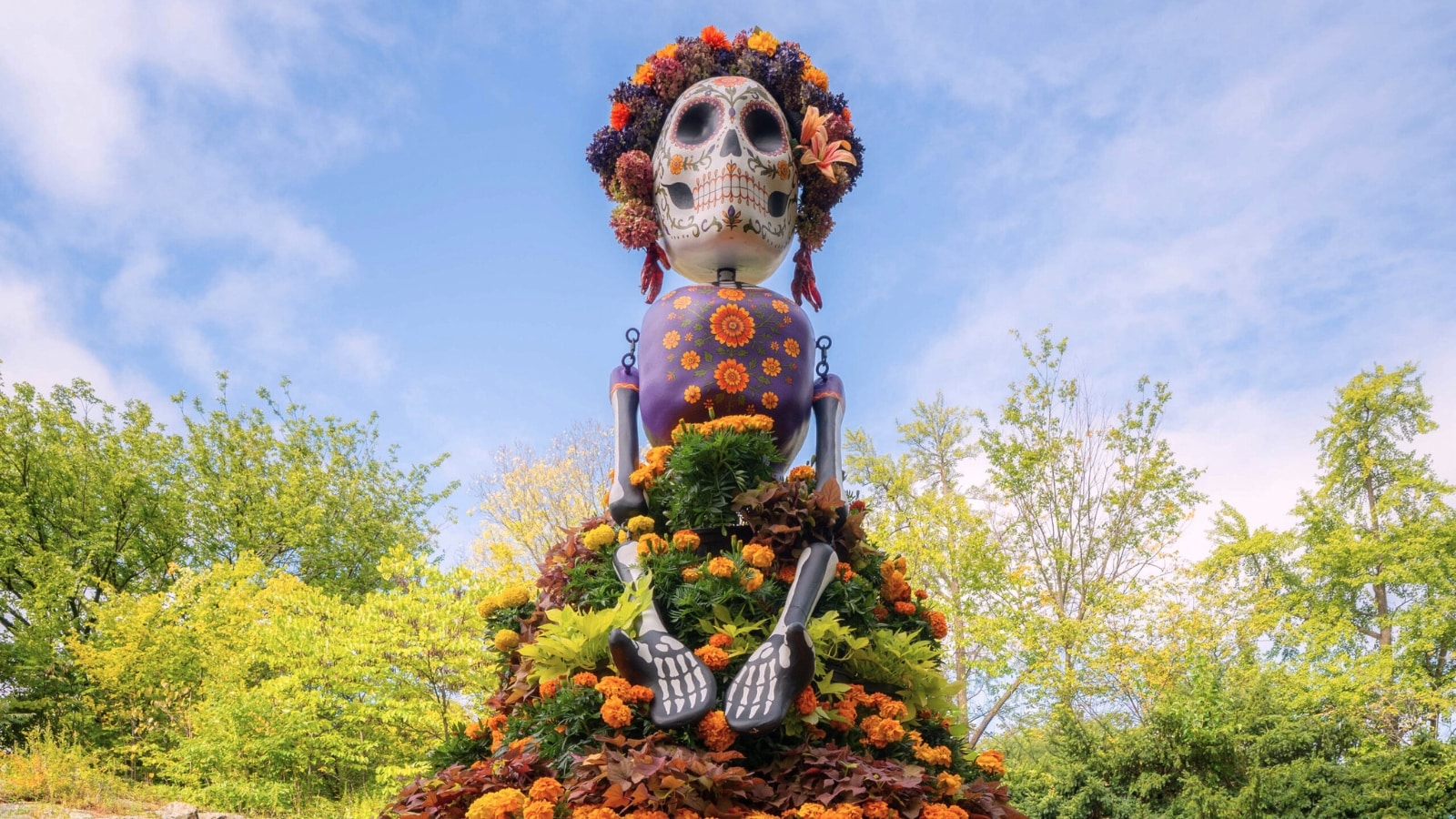
Walk through Oaxaca or Pátzcuaro on the night of November 1, and you won't find people weeping over tombstones in grim silence. You'll hear brass bands playing a dead grandfather's favorite ranchera, smell roasting chili peppers and copal smoke, and see families sharing bottles of mezcal right next to freshly swept graves.
If you've only seen Mexico's Day of the Dead through Hollywood cartoons or glossy tourist brochures, you're probably missing the entire point. It isn't "Mexican Halloween." It isn't a morbid obsession with skulls, either. Día de Muertos is a deeply practical, remarkably joyful annual reunion where the living invite the dead back home for a proper meal, a drink, and some company.
UNESCO recognized the indigenous festivity dedicated to the dead as Intangible Cultural Heritage back in 2003, noting how it blends pre-Hispanic Mesoamerican beliefs with Catholic traditions brought by Spanish colonizers. Yet outside Mexico, people still flatten the whole celebration into sugar skulls and face paint. Let's look at what actually happens on the ground—the specific flowers, the food that takes days to prep, and the rituals that keep entire communities connected across generations.
Why Marigolds Are Basically Scented GPS for Spirits
You can't walk ten feet in central or southern Mexico during late October without hitting a wall of bright orange. These are cempasúchil—Mexican marigolds—and their job isn't just looking pretty for photos.
In Nahua tradition, the flower's vibrant yellow-orange hue represents the sun, which guides souls through the darkness of the underworld back to the land of the living. Even more important is the smell. Crush a fresh cempasúchil petal between your fingers and you get an earthy, sharp, almost musky aroma that hangs in the cool November air.
Families scatter loose petals in literal trails leading from the front door of the house out to the street—or from the cemetery gate straight to a specific grave. Think of it as an aromatic runway. Without the scent and the color, the belief goes, a returning spirit might wander right past their own front door.
You'll also see two other flowers doing heavy lifting on traditional altars, known as ofrendas:
- Terciopelo (cockscomb): Deep velvety magenta blooms that symbolize the blood of Christ in syncretic Catholic tradition and add dramatic contrast to the orange marigolds.
- Nube (baby's breath): Delicate white clusters typically reserved for the altars of children, representing purity and innocence.
If you're visiting Mexico during the last week of October, skip the hotel lobby displays and head straight to a municipal wholesale flower market, like the Mercado de Jamaica in Mexico City or the Central de Abastos in Oaxaca. Arriving around 6:00 AM lets you watch trucks unload mountains of fresh-cut cempasúchil still wet with morning dew. The smell alone hits you from two blocks away.
The Ofrenda Isn't a Shrine—It's a Welcome Table
Tourists often call the ofrenda a shrine, which makes it sound cold and untouchable. In reality, it's closer to setting the dining table for relatives who traveled a long way and arrived starving.
Every single item placed on the multi-tiered altar serves a physical or spiritual purpose tied to the four classical elements—earth, wind, fire, and water. Nothing goes on that table by accident.
The Core Elements Every Traditional Altar Needs
Water comes first. A plain glass of water sits front and center because souls are exhausted and parched after their journey from Mictlán, the Aztec underworld. Alongside it sits a small dish of salt, which purifies the spirit and keeps it from being corrupted during its visit.
Fire arrives through beeswax candles, often arranged in the shape of a cross. Each flame represents hope and faith, lighting the path back to the living world and later guiding the soul back out when the holiday ends.
Wind is represented by papel picado—intricate, hand-chiseled tissue paper banners strung above the altar. When the thin paper flutters in an evening breeze, families know a spirit has arrived in the room. Artisans in places like San Salvador Huixcolotla in Puebla still chisel dozens of sheets at once using mallets and metal punches, creating skeletons riding bicycles, dancing, or playing guitars.
Earth brings the harvest, the marigolds, and the food. And then there's the smoke. Families burn copal—a hardened tree resin used in Mesoamerican ceremonies for thousands of years—in clay censers called sahumerios. The thick, sweet pine-like smoke cleanses the space of negative energy and carries prayers upward.
Personal Touches Matter More Than Symmetry
Here is where many outsiders get tripped up when trying to build an altar at home: they treat it like an interior design project. Real ofrendas are messy, deeply personal, and sometimes downright funny.
If Uncle Carlos loved cold Victoria beer and Marlboro Reds, you put an open bottle of Victoria and a pack of cigarettes next to his framed photo. If a grandmother spent forty years knitting, her needles and yarn sit beside her favorite sweet bread. You're reminding the dead that they are still known, quirks and all.
Food That Feeds Both the Dead and the Living
By November 2, the kitchen in a Mexican household has usually been running at full tilt for seventy-two hours. Cooking for Día de Muertos isn't convenience food; it's labor-intensive heirloom cooking meant to fill the house with familiar aromas.
Pan de muerto is the undisputed centerpiece. This lightly sweetened, yeast-risen brioche-style bread is flavored with orange blossom water and anise seeds, then dusted with white sugar. Look closely at the shape of a traditional loaf. The round dome represents the circle of life and death, the small ball at the very top symbolizes a skull, and the four bone-shaped dough strips radiating down the sides represent the four cardinal directions—or the tears of the goddess Chimalma, depending on which regional story you ask about.
Alongside the bread, you'll find:
- Mole negro or mole rojo: Especially in Oaxaca and Puebla, families spend days toasting chiles, grinding nuts, charring plantains, and simmering dozens of ingredients into rich, velvety sauces poured over chicken or turkey.
- Tamales: Wrapped in corn husks or banana leaves, stuffed with pork in green salsa, chicken in mole, or sweet pineapple and raisins.
- Calabaza en tacha: Local pumpkin slow-cooked in clay pots with piloncillo (unrefined cane sugar), cinnamon sticks, and oranges until the flesh turns dark, sticky, and caramelized.
- Calaveras de azúcar (sugar skulls): Molded from cane sugar paste and decorated with bright royal icing and foil. They aren't meant to be eaten like candy bars—most are rock hard. Instead, someone's name is written across the forehead in icing and gifted to a living friend or placed on the altar as a playful reminder that death comes for everyone eventually.
Here's a detail people always wonder about: what happens to all that food after November 2? Families eat it. Traditional belief holds that visiting spirits consume the essence—the aroma and spiritual nourishment—of the dishes during the night. The physical food stays behind, though locals will tell you with a straight face that the mole tastes slightly blander on November 3 because the dead already took the flavor.
How the Rituals Actually Unfold Across Multiple Days
Most travel articles compress Day of the Dead into a single party night, which misses how carefully structured the calendar actually is. While November 1 and 2 are the main events, preparations and arrivals begin days earlier in many communities.
In much of central and southern Mexico, the schedule follows a specific order based on how someone died:
- October 28: Dedicated to those who died suddenly, violently, or in accidents. Candles and white flowers are often placed at the exact spot of a fatal crash or on the altar.
- October 31 and November 1 (Día de los Angelitos): Reserved for infants and children. Altars change tone completely—no tequila or spicy mole here. Instead, you see hot chocolate, sweet tamales, milk, pan dulce, and wooden toys.
- November 2 (Día de los Fieles Difuntos): The main event for all adult souls. This is when the full feast hits the table and families head to the panteón (cemetery).
Inside a Cemetery Vigil
Visiting a cemetery on the night of November 2 looks nothing like a Western funeral. Days earlier, families arrive with buckets, brooms, and fresh paint to scrub the graves, pull weeds, and repaint faded headstones.
By dusk on November 2, the graveyard transforms into a sea of candlelight. Families spread woven blankets over the graves, set up portable altars right on top of the concrete slabs, and settle in for the night. In places like Mixquic on the southern edge of Mexico City, or Janitzio on Lake Pátzcuaro in Michoacán, thousands of candles flicker against the cold night air while church bells toll slowly through the dark.
People drink atole (a warm, thick corn-based drink) or coffee spiked with cane liquor to stay warm. Mariachi and norteño musicians walk between the rows of graves, taking requests from families who pay them to play a deceased parent's favorite song right over their resting place. Kids fall asleep wrapped in heavy wool blankets while adults trade stories about the people buried beneath them. Nobody is pretending death doesn't hurt—you'll definitely see quiet tears—but grief shares the space with humor and stubborn affection.
Regional Differences Most Visitors Miss
Mexico isn't a cultural monolith, and Día de Muertos shifts dramatically depending on where you stand.
In Oaxaca, the celebration spills straight into the streets through comparsas—neighborhood parades featuring brass bands, giant papier-mâché puppets called mojigangas, and locals dressed in satirical costumes mocking politicians, priests, and death itself.
Head up to the Huasteca Potosina region in San Luis Potosí, and the holiday goes by its Teenek and Nahua name, Xantolo. Here, masked dancers called huehues perform intricate, rhythmic dances in village squares for days, wearing hand-carved wooden masks to fool death into thinking they are already spirits.
Down in the Yucatán Peninsula, Maya communities celebrate Hanal Pixán ("food of the souls"). Instead of standard mole, families dig underground earth ovens called pib to bake mucbipollo—a massive, savory tamal stuffed with chicken, pork, achiote paste, and lard, wrapped in banana leaves and slow-cooked beneath hot stones and dirt.
And what about the giant James Bond-style parade in Mexico City? Honest truth: it didn't exist before 2016. Producers of the 2015 film Spectre invented a massive parade scene for the movie's opening sequence, and Mexico City officials decided to turn it into a real annual event the following year because tourist demand exploded. It's fun to watch, sure, but don't confuse a decade-old municipal spectacle with centuries-old indigenous ritual.
How to Experience It Respectfully If You Go
If you're planning a trip to see Day of the Dead firsthand, a little preparation separates a meaningful cultural experience from being an intrusive tourist with a camera in someone's face.
Book your flights and lodging at least six to eight months ahead, especially for Oaxaca City, Pátzcuaro, or San Miguel de Allende. Rooms sell out completely by spring, and prices triple by September.
When you visit a cemetery at night, leave the camera flash off—better yet, keep your phone in your pocket unless you ask permission first. You're walking through active family reunions in a graveyard, not a theme park. Buy your pan de muerto and sugar skulls directly from local neighborhood bakeries and market stalls rather than big chains, and pack heavy layers—high-altitude cities like Oaxaca and Pátzcuaro drop into the 40s (around 5–8°C) once the sun goes down.
If you want to honor someone from your own life at home, start small and keep it personal. Set out a framed photo, light an unscented candle safely, pour a glass of water, and place their favorite snack or drink beside it on November 1. You don't need an elaborate three-tier wooden structure to get the core idea right—you just need to remember them out loud.