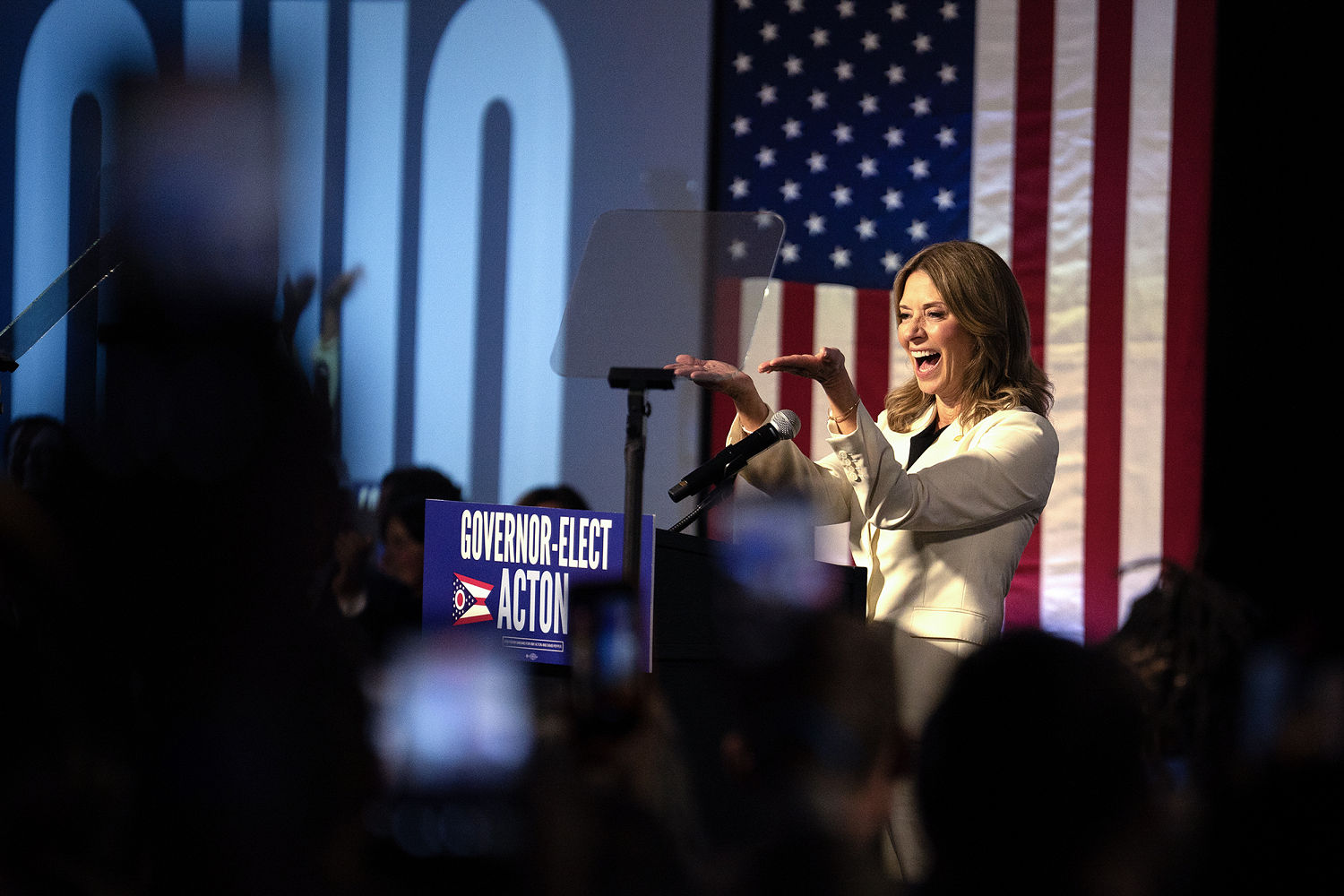
Thirteen. That's the number of women serving simultaneously as U.S. governors after the 2024 election cycle, breaking the previous record of twelve set just two years earlier in 2022. If you only read the celebratory headlines, you'd think American executive politics just hit a permanent tipping point.
You'd be wrong.
I've spent years tracking down-ballot statehouse races and executive mansions, and here's what the victory laps usually miss. A record number of female governors elected sounds like an unstoppable wave, until you look at how painfully slow the math actually is. Thirteen out of fifty is still just 26 percent. Almost three-quarters of state chief executives are still men, and nineteen states have never elected a woman to the top job—not once in the entire history of the republic.
The Real Numbers Behind the Record Number of Female Governors Elected
Let's strip away the cable news spin and look at the actual scoreboard from the Center for American Women and Politics (CAWP) at Rutgers University. Before 2022, the all-time high for women serving as governor at the same time was nine. That ceiling held for nearly two decades, from 2004 to 2022.
Then came a sudden jump. After the 2022 midterms, twelve women held the governor's office simultaneously. In November 2024, New Hampshire pushed that total to thirteen when Republican Kelly Ayotte won the open seat vacated by Chris Sununu, beating Democrat Joyce Craig in a race where both major-party nominees were women.
That New Hampshire race deserves way more attention than it got. It wasn't just another tick on the tally sheet. New Hampshire became the first state in U.S. history to have an all-female federal delegation alongside a female governor—Kelly Ayotte in the corner office, Jeanne Shaheen and Maggie Hassan in the U.S. Senate, and Chris Pappas being the lone man before Maggie Goodlander joined the House delegation. Even more telling, Ayotte's win meant women weren't just climbing through one party's pipeline anymore.
Right now, the thirteen women running U.S. states span both sides of the aisle and wildly different political terrain:
- Democrats (8): Katie Hobbs (Arizona), Kathy Hochul (New York), Laura Kelly (Kansas), Tina Kotek (Oregon), Michelle Lujan Grisham (New Mexico), Janet Mills (Maine), Maura Healey (Massachusetts), and Gretchen Whitmer (Michigan).
- Republicans (5): Kelly Ayotte (New Hampshire), Kay Ivey (Alabama), Kristi Noem (South Dakota, before her 2025 transition to DHS Secretary, succeeded by Larry Rhoden, dropping the simultaneous count back to twelve), Kim Reynolds (Iowa), and Sarah Huckabee Sanders (Arkansas).
Notice that parenthetical about South Dakota? That's the exact fragility I'm talking about. When Kristi Noem left Pierre for Washington in early 2025, her lieutenant governor, Larry Rhoden, stepped into the governor's chair. Overnight, the historic thirteen dropped back to twelve. We aren't talking about an entrenched majority here. We're talking about a razor-thin margin where a single cabinet appointment knocks the record off its perch.
Why Voters Still Hesitate at the Executive Door
People love to ask why Congress has hit nearly 29 percent female representation while governors' mansions lag behind. Having watched focus groups and donor roundtables across swing states, I can tell you the psychology of voting for a senator is completely different from voting for a governor.
A senator is one of a hundred. Voters view legislative seats through a team-sport lens—you send someone to Washington to vote with your side, argue on committee panels, and bring back federal grants. A governor is a solo commander. When a hurricane hits the Gulf Coast, when a budget deficit forces school cuts, or when state troopers have to clear a highway, there's nobody else to blame.
Political scientists call this the "commander-in-chief" bias. Voters still unconsciously associate solo executive authority—budget vetoes, National Guard deployments, emergency declarations—with traditional masculine traits. Candidates know this, too. Watch how successful female gubernatorial candidates campaign compared to female Senate candidates. They spend twice as much time talking about law enforcement endorsements, fiscal restraint, and military or prosecutorial backgrounds. Kelly Ayotte leaned heavily on her years as New Hampshire's Attorney General. Gretchen Whitmer built her brand around fixing physical infrastructure. Maura Healey ran on her record as Massachusetts' top prosecutor.
They don't run away from toughness. They over-index on it because the electorate demands proof before handing over the keys to the statehouse.
The Pipeline Myth That Needs to Die
If you hang around political strategists long enough, you'll hear the same tired excuse every election cycle. "There just aren't enough women in the pipeline."
Honestly, that excuse expired ten years ago. Look at the traditional stepping stones to the governor's office:
- State Legislatures: Women hold roughly a third of all state legislative seats nationwide, and in states like Nevada, Colorado, and New Mexico, they hold a majority.
- Statewide Constitutional Offices: Women serve as attorneys general, secretaries of state, treasurers, and lieutenant governors across dozens of states.
- Mayor's Offices: Women run major American cities from Phoenix and Chicago to Los Angeles and Boston.
The talent pool isn't empty. The bottleneck happens at the primary gate.
Running for governor costs obscene amounts of money, and early donor networks still default to familiar male archetypes. When a male state senator says he's thinking about running for governor, bundlers start taking meetings to see if he can win. When a female state senator with the exact same resume floats her name, those same bundlers ask if she's electable in rural counties. That single question—"Can a woman win statewide here?"—starves campaigns of early seed money before voters ever cast a ballot.
Even when women clear the primary, they face a bizarre double standard in media coverage. I've read dozens of local newspaper profiles where a male candidate's ambition is framed as "visionary leadership," while his female opponent's identical ambition gets described as "calculating" or "relentless." Voters absorb those framing cues without even realizing it.
How Recent Winners Actually Broke Through
Look closely at the women who actually won between 2018 and 2024, and a clear blueprint emerges. None of them won by asking voters to make history. In fact, making gender the centerpiece of a gubernatorial campaign is almost always a fatal mistake.
Take Laura Kelly in Kansas. Kansas isn't exactly a progressive bastion—Donald Trump won the state comfortably in 2016, 2020, and 2024. Yet Kelly won the governor's mansion in 2018 and won reelection in 2022. She didn't do it by running a nationalized culture-war campaign. She ran against the disastrous tax experiments of former Governor Sam Brownback, focused relentlessly on public school funding and rural hospitals, and positioned herself as the pragmatic adult in the room.
Or look at Sarah Huckabee Sanders in Arkansas and Kim Reynolds in Iowa. Both leaned directly into conservative populist grievances, cultural battles, and tight alignment with national GOP priorities. They proved that ideological alignment overrides gender hesitation every single time when a candidate speaks the native political language of their state.
Then you have the 2022 "woman-versus-woman" matchups that shattered another old assumption. In Arizona (Katie Hobbs vs. Kari Lake), Massachusetts (Maura Healey vs. Geoff Diehl, though the Democratic primary was a fierce contest), and later New Hampshire (Kelly Ayotte vs. Joyce Craig), voters had no choice but to elect a woman. When both parties nominate women, the "electability" panic vanishes overnight. Suddenly, voters judge both candidates on policy, temperament, and competence rather than comparing a woman against an idealized male baseline.
Nineteen States Still Have a Zero on the Board
It's easy to get swept up in the thirteen-governor milestone and forget the map's giant blind spots. As of 2026, nineteen states have never elected or appointed a female governor.
That list isn't confined to one region, either. It includes massive, politically influential states that pride themselves on being trendsetters:
- California: Despite electing women to the U.S. Senate for over thirty years and sending Kamala Harris to the vice presidency, Sacramento has never had a female governor.
- Florida: One of the largest states in the country, zero female governors.
- Illinois: Never elected a woman to run Springfield.
- Pennsylvania: A perennial presidential battleground that has never put a woman in the governor's mansion.
- Virginia: The only state where governors can't serve consecutive terms—meaning there's an open seat every four years—and still zero women elected, though the 2025 race between Abigail Spanberger and Winsome Earle-Sears finally guaranteed that streak would break.
- Georgia, North Carolina, Ohio, Minnesota, Wisconsin, Colorado, Indiana, Maryland, Mississippi, Missouri, Nevada, North Dakota, Tennessee, and West Virginia round out the rest of that nineteen-state club.
Think about California and Illinois for a second. Two of the bluest, wealthiest states in America have never elected a woman governor, while deep-red states like Alabama, Arkansas, Iowa, South Dakota, and Oklahoma have all done it. That contrast blows up the lazy narrative that female representation is simply a function of how liberal a state is. Often, entrenched party machines in big blue states are far harder for outsiders to crack than open primaries in smaller states.
Where the Map Shifts Next
If you want to know whether the record number of female governors elected will climb past thirteen—or stall out—stop watching national pundits and start tracking open seats.
Incumbency is the single biggest wall in state politics. Governors get reelected roughly 80 to 85 percent of the time. The real openings happen when term limits force an incumbent out, which is why the 2026 midterm cycle is such a massive inflection point.
Several current female governors hit their term limits in 2026, including Gretchen Whitmer in Michigan, Laura Kelly in Kansas, Michelle Lujan Grisham in New Mexico, Janet Mills in Maine, and Kim Reynolds in Iowa (who announced she wouldn't seek another term). That means five of the thirteen seats held by women are immediately up for grabs. If women don't win those open primaries—or flip open seats in states like California, Florida, Georgia, or Wisconsin—the national total could actually drop back into single digits by January 2027.
Progress in executive politics isn't a ratchet that only clicks forward. It's a tug-of-war.
If you care about tracking where state executive power is actually heading—whether as a voter, an advocate, or someone thinking about running for office yourself—stop waiting for general election headlines. Look at the candidate filing deadlines in your state six to nine months before the primary. Check who the early institutional donors are backing before a single debate happens, support down-ballot candidates running for attorney general, treasurer, and secretary of state where future governors are actually forged, and pull up the state-by-state executive data at CAWP to see where your own state actually stands.