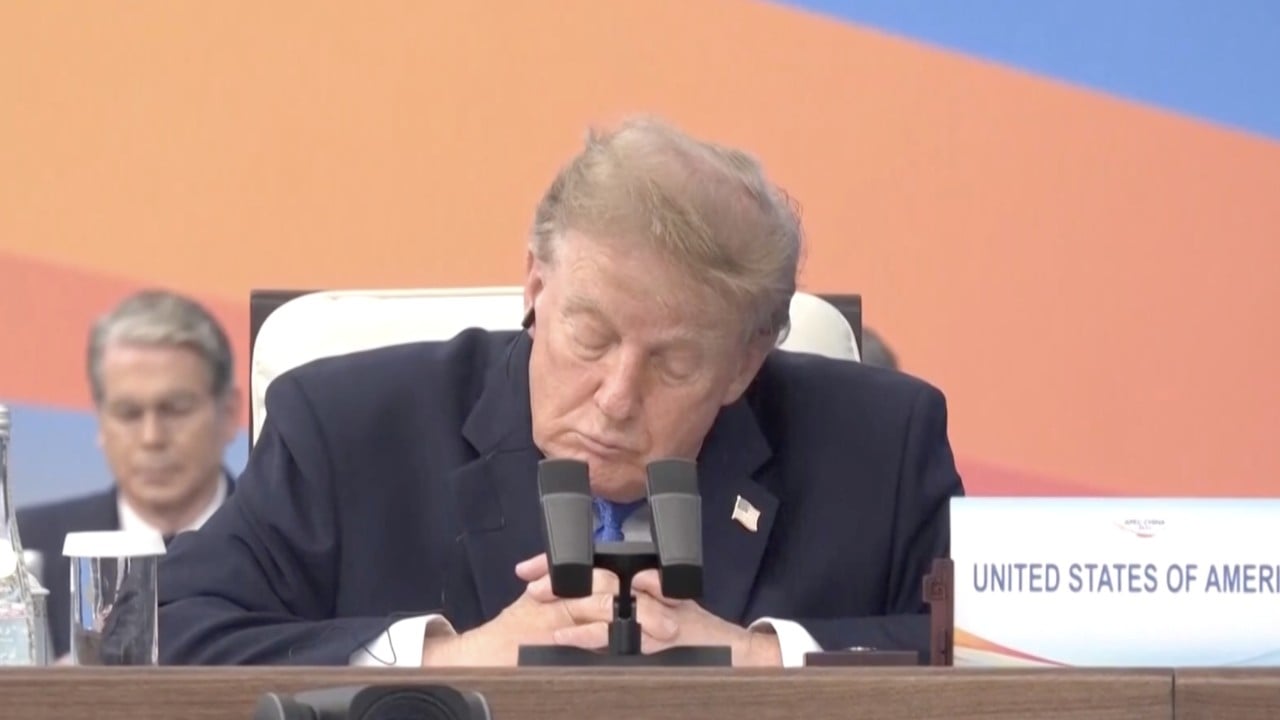
Have you ever tried staying awake through a three-hour economic summit after crossing the International Date Line? It's brutal. When clips surfaced of Donald Trump appearing to nod off during speeches at the Asia-Pacific Economic Cooperation (APEC) summit, the internet did what it always does. Critics pounced immediately. Supporters scrambled to claim he was just deep in thought or listening intensely with his eyes shut.
Both sides missed the actual story. Meanwhile, you can read related developments here: The Soft Power Illusion Behind Kim Hea Kyung and the Chinese Social Media Machine.
Whether Trump was resting his eyes or genuinely fighting off a micro-sleep during a long plenary session isn't really a partisan gotcha. It's a predictable biological collision between human circadian rhythms and the punishing logistics of presidential foreign travel. Having covered international summits and tracked diplomatic schedules for years, I can tell you that the physical toll of these trips is almost entirely misunderstood by people watching 15-second clips from their couches.
The Brutal Reality of Presidential Travel Schedules
You don't just hop on Air Force One, take a nap, and wake up fresh in the Indo-Pacific. Even with a private bedroom and a dedicated medical team onboard, crossing multiple time zones in a compressed window wrecks your internal clock. To explore the bigger picture, check out the excellent report by Reuters.
During major Asia-Pacific swings, a U.S. president typically logs tens of thousands of air miles in under a week. Before the main APEC leaders' summit even begins, the itinerary is usually packed with bilateral meetings, joint press conferences, cultural dinners, and trade negotiations. By the time the delegation reaches the main APEC plenary hall, staffers and principals alike are running on fumes and excessive caffeine.
Why APEC Speeches Are a Trap for Tired Leaders
If you've never sat through an actual APEC leaders' meeting, count yourself lucky. Unlike heated campaign rallies or rapid-fire press briefings, multilateral economic summits move at a glacial pace.
Twenty-one member economies are represented at the table. Each leader gets a turn to deliver prepared remarks, often read from a script in their native language. That means if you're sitting in the delegate chair, you're wearing an earpiece listening to simultaneous translation in a monotone voice. The room is usually kept cool to offset the television lighting, the chairs are comfortable, and the speeches are filled with dense diplomatic jargon about supply chain resilience and sustainable growth frameworks.
Put a 79-year-old executive in that chair after days of trans-Pacific travel and back-to-back bilateral talks. Give him an earpiece droning on about tariff harmonization. Honestly, it's a miracle more leaders don't face-plant onto their microphones.
The History of Presidents Falling Asleep on Camera
If you think this is unique to Trump, you haven't been paying attention to modern political history. Every single modern president has been caught on camera looking like they were losing a fight with gravity during a high-profile event.
Take Joe Biden at the COP26 climate summit in Glasgow back in 2021. Cameras caught him closing his eyes for nearly 30 seconds during opening speeches before an aide walked over to wake him up. Critics used that clip for years to question his stamina.
Before Biden, Barack Obama was famously photographed looking exhausted during long budget negotiations and international trips. Bill Clinton actually nodded off during a televised memorial service for Ron Brown in 1996, only to wake up and immediately wipe away a tear—a moment that became legendary among White House press corps veterans. Even George W. Bush was caught resting his eyes during a United Nations speech in 2005, famously scribbling a note to Condoleezza Rice asking for a bathroom break because he was struggling to stay alert.
The pattern is obvious. When the opposing party is in the White House, a heavy-lidded moment is treated as a national security crisis. When your own guy does it, he's just "working hard" or "absorbing the speech."
Circadian Misalignment and the Science of Micro-Sleeps
Let's look at what actually happens to the human brain during these trips. Sleep researchers at institutions like the American Academy of Sleep Medicine have studied jet lag and circadian misalignment for decades. The rule of thumb is simple. It takes roughly one day per time zone crossed for your body's internal clock to fully recalibrate.
When a U.S. delegation flies from Washington, D.C. to East Asia or South America, they're dealing with a massive shift in light-dark cycles. Your brain continues to pump out melatonin based on Eastern Standard Time, even when you're sitting under bright stage lights in Gyeongju or Lima at 2:00 PM local time.
During these dips, the brain can experience what neurologists call a micro-sleep. These are brief, involuntary episodes of unconsciousness lasting anywhere from a fraction of a second up to 30 seconds. Your eyes might droop or close completely. Your head might nod forward slightly before jerking back up. Most people don't even realize they've fallen asleep when it happens.
The Age Factor Nobody Wants to Discuss Honestly
We also have to be honest about biology. Age matters. Trump is the oldest person ever elected to the presidency, surpassing Biden's record from 2020. As humans enter their late seventies and eighties, sleep architecture changes drastically.
Older adults spend less time in deep, restorative slow-wave sleep and experience more fragmented rest throughout the night. Even if you have the best mattress in the sky aboard Air Force One, sleeping on a moving aircraft surrounded by engines, turbulence, and aides knocking on your door with intelligence briefings isn't quality rest. When you combine age-related sleep fragmentation with severe jet lag, daytime drowsiness isn't a sign of weakness. It's basic human physiology.
How White House Staffers Try to Prevent Viral Moments
Behind the scenes, advance teams and communications directors obsess over preventing exactly these kinds of viral clips. You might think a president's schedule is all about policy, but half of it is pure optics management.
Experienced White House schedulers use specific tactics to keep a principal alert during long international summits:
- Strategic caffeine timing: Staffers coordinate coffee or Diet Coke deliveries roughly 20 minutes before a televised plenary session begins, giving the caffeine enough time to hit the bloodstream without causing a crash mid-speech.
- Note-passing interventions: If a camera pool is locked onto the president and his eyes start to droop, a senior advisor sitting directly behind him will lean forward and hand over a folded piece of paper. It doesn't matter what's written on it. The physical motion forces the leader to shift posture, open their eyes, and engage with the text.
- Bilateral buffer blocks: Good schedulers never put a heavy meal right before a passive listening session. Digestion diverts blood flow to the stomach, which accelerates post-meal drowsiness.
When a clip of Trump nodding off makes the rounds, it usually means the pool cameras caught a moment before an aide could intervene with a well-timed folder or whispered update.
Why Viral Summit Clips Distort Political Reality
The real danger of obsessing over a ten-second clip from APEC isn't that it makes a president look tired. It's that it completely crowds out what actually happened at the summit.
APEC represents nearly 40 percent of the world's population and roughly half of global trade. Decisions made in those rooms dictate tariff rates, semiconductor supply chains, energy exports, and how the United States counters Chinese economic influence across the Pacific Rim.
Yet when the news cycle focuses entirely on whether Trump's eyes were closed during a speech, substantive policy shifts get buried. Voters end up judging foreign policy based on viral body-language forensics rather than actual trade agreements or diplomatic leverage.
If you want to evaluate how a president actually performs on the world stage, stop looking at still frames of their eyelids during a three-hour translation loop. Look at the joint communiqués signed at the end of the week. Check whether bilateral trade deficits moved, whether allies committed to new defense spending, and what concessions were extracted behind closed doors. Watch the press conferences where leaders have to think on their feet and answer unscripted questions—that's where you'll see whether someone is actually sharp or slipping.


