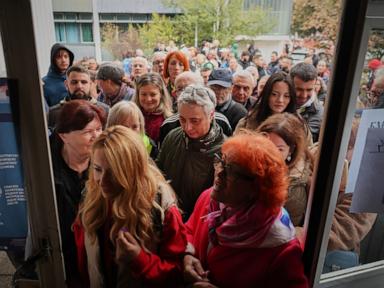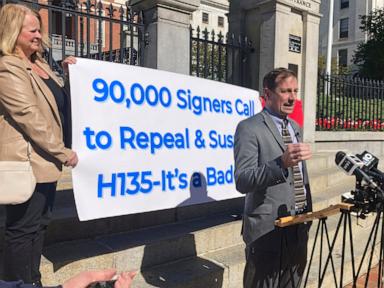
Two states. Two ballot initiatives. Completely opposite views on the Second Amendment.
When voters in Massachusetts and Idaho stepped into the voting booth, they weren't just casting ordinary ballots. They were deciding the exact boundaries of gun ownership in America through direct democracy, bypassing stalled legislatures and forcing the public to pick a side. On one coast, Massachusetts voters faced a veto referendum over sweeping new firearm restrictions. Out west, Idahoans weighed an initiative that didn't just protect guns—it sought to legally honor them as a foundational pillar of state heritage.
Honestly, most national coverage treated this split like a simple red-state versus blue-state cliché. That's lazy analysis. If you actually look at the mechanics of how these ballot measures got there, who funded them, and what they actually do to state law, you realize something much bigger is happening in American gun politics. Both sides have figured out that waiting for Congress or the Supreme Court takes too long, so they're turning to state-level ballot boxes to lock in their vision of gun culture.
Why Guns Are Landing on State Ballots Now
For decades, gun policy in the United States followed a predictable script. State legislatures passed bills, governors signed or vetoed them, and advocacy groups sued in federal court.
That script broke down after the U.S. Supreme Court's 2022 Bruen decision, which radically changed the legal standard for evaluating firearm regulations by requiring laws to align with the nation's historical tradition of gun regulation. Suddenly, blue states scrambled to rewrite their permitting and carry laws to survive constitutional challenges, while red states pushed forward with constitutional carry and Second Amendment sanctuary policies.
When the legislative process gets messy—or when voters feel their lawmakers aren't listening—ballot initiatives become the ultimate pressure valve.
In Massachusetts, the battle centered on Chapter 135 of the Acts of 2024 (often referred to by supporters as the Act Modernizing Firearm Laws). Governor Maura Healey signed the massive 100-plus-page bill into law in July 2024. It cracked down on unserialized "ghost guns," expanded the state's "red flag" extreme risk protection order system to allow school administrators and healthcare providers to petition courts, and banned firearms in additional public spaces.
Gun rights advocates didn't just sue. They launched a massive signature-gathering campaign for a veto referendum to suspend and repeal the law. Under Massachusetts law, if opponents gather enough certified signatures within 90 days of a bill's signing, they can force the law onto the statewide ballot and even temporarily halt its implementation until voters weigh in.
Meanwhile, over two thousand miles away in Idaho, the political momentum moved in the exact opposite direction. Idaho already boasts some of the most permissive gun laws in the country, including permitless concealed carry. Yet activists and lawmakers pushed a measure aimed at formally recognizing and honoring firearms—specifically elevating the cultural, historical, and constitutional status of gun ownership and shooting sports within state law and public life.
It wasn't about fixing a perceived loophole. It was about making a permanent, cultural statement.
Inside the Massachusetts Veto Referendum Battle
To understand why the Massachusetts fight got so heated, you have to understand how unusual the veto referendum process is in the Bay State. Massachusetts rarely sees laws challenged this way, largely because the signature threshold is steep and the timeline is brutal.
The Civil Rights Coalition, backed by the Gun Owners' Action League (GOAL), mobilized thousands of volunteers across gun clubs, town halls, and parking lots. They argued that Chapter 135 didn't target criminals—it turned tens of thousands of law-abiding Massachusetts gun owners into overnight felons through convoluted training mandates, expanded assault weapon definitions, and strict registration requirements.
Supporters of the law, including Everytown for Gun Safety and local advocacy groups, countered with hard data. Massachusetts consistently ranks among the states with the lowest rates of gun deaths per capita in the nation, according to figures tracked by the Centers for Disease Control and Prevention (CDC). Their argument was straightforward. Strict laws save lives, and updating those laws to address 3D-printed ghost guns and emerging threats is just common sense.
Here's what most pundits outside New England missed about this fight.
Even in a deeply blue state, rural and suburban gun owners represent a vocal, tightly organized voting bloc. When Governor Healey signed an emergency preamble in October 2024 to put the law into effect immediately—a move designed to prevent the veto referendum from suspending the statute prior to the election—it poured gasoline on the fire. Critics accused the administration of subverting the democratic process to block voters from hitting pause on the law.
The legal and political fallout showed just how fragile the consensus can be when executive power collides with direct democracy. Voters weren't just debating magazine capacities or background checks anymore. They were debating whether the state government had overreached.
Idaho's Push to Honor Firearms and Gun Heritage
While Massachusetts fought over the fine print of statutory restrictions, Idaho's ballot effort focused on identity and preservation.
In states like Idaho, firearms aren't viewed merely as tools for self-defense. Hunting, target shooting, and firearm ownership are woven into daily life, local economies, and family traditions. The push to put a pro-gun measure on the Idaho ballot reflected a growing fear among western conservatives that shifting demographics—driven by thousands of new residents moving into cities like Boise from California, Oregon, and Washington—could eventually dilute the state's traditional gun culture.
Instead of waiting for future legislatures to debate restrictions, proponents wanted voters to enshrine respect for firearms directly into state policy.
Measures like this typically target three specific areas:
- Protecting shooting ranges and firearm businesses from nuisance lawsuits or local zoning restrictions designed to choke them out of growing suburban areas.
- Recognizing firearm safety and heritage in public education and state-sanctioned observances, framing responsible gun ownership as a civic virtue rather than a public health hazard.
- Reinforcing state sovereignty against federal regulatory pressure, signaling to the Bureau of Alcohol, Tobacco, Firearms and Explosives (ATF) and Congress that Idaho stands firmly behind its gun owners.
Critics of the Idaho initiative argued that it was largely symbolic and unnecessary, pointing out that the Idaho Constitution already protects the right to keep and bear arms and that the state legislature consistently passes pro-gun bills with overwhelming majorities. Gun control advocates warned that elevating guns to an "honored" status ignores the real human toll of firearm suicides, which account for the vast majority of gun deaths in Idaho and across the Mountain West.
Yet symbolism in politics isn't meaningless. When voters approve a measure honoring firearms, they create a political shield that makes it exponentially harder for future lawmakers to pass even modest regulations down the road.
Two Americas Living Under Completely Different Gun Rules
Look at Massachusetts and Idaho side by side, and you start to see why national gun debates feel completely broken. People living in Boston and people living in Coeur d'Alene aren't just disagreeing on policy details. They are operating inside two entirely separate legal and cultural realities.
In Massachusetts, the baseline assumption is that firearms are inherently dangerous consumer products that require heavy state oversight, licensing, and storage mandates to protect the collective public. If you want to own a handgun, you apply through your local police chief, pass a background check, complete state-approved safety training, and follow strict transport rules.
In Idaho, the baseline assumption is that firearm ownership is an individual birthright that requires minimal government interference. Any law-abiding adult can carry a concealed weapon without a permit, buy a rifle in a private sale without state paperwork, and pass firearms down through generations without registering them with the police.
Neither side is going to convince the other to change its mind. That's the truth nobody in Washington wants to admit.
What makes these ballot measures so significant is that they remove the middleman. Politicians love to hedge. They love to pass watered-down compromises or blame the other party when bills die in committee. Ballot initiatives strip away all the political theater and force everyday citizens to vote a simple "yes" or "no."
What Happens When Direct Democracy Meets the Second Amendment
Using ballot initiatives to settle gun policy comes with serious trade-offs that both sides tend to gloss over during campaigns.
First, ballot language is notoriously hard to write—and even harder for average voters to decode. In Massachusetts, trying to summarize a massive, technical omnibus gun bill into a few paragraphs on a ballot creates massive confusion. Voters often end up voting on campaign slogans rather than the actual statutory text.
Second, money floods into these races from outside the state. National organizations like Everytown, Giffords, the National Rifle Association (NRA), and Gun Owners of America treat state ballot measures as proxy wars. Local voices frequently get drowned out by millions of dollars in out-of-state television ads, digital targeting, and direct mailers.
Third, ballot measures don't immunize laws from the courts. Even after voters in Massachusetts or Idaho make their voices heard, federal judges still have the final say under the U.S. Constitution. Under the Supreme Court's current Bruen framework, a state law passed by 70% of voters can still be struck down overnight if a federal court decides it lacks a historical analogue from the 18th or 19th century.
How to Actually Track and Evaluate State Gun Ballot Measures
If you live in a state that allows citizen-initiated ballot measures or veto referendums, you're going to see more gun policies landing directly on your ballot in upcoming election cycles. Don't rely on thirty-second attack ads or viral social media posts to figure out what a measure actually does.
Take a few practical steps before you fill in that oval:
- Read the actual statutory text, not just the ballot summary. Every Secretary of State's office publishes the full legal language of certified ballot initiatives online. Look for definitions—especially how a measure defines "firearm," "assault weapon," or "public place"—because the real impact hides in the definitions.
- Check the fiscal note. State budget offices are required to estimate how much a ballot measure will cost taxpayers to implement and enforce. If a measure creates new licensing portals, mandates state-funded programs, or triggers inevitable constitutional litigation, the fiscal note will tell you where the money comes from.
- Follow the campaign finance disclosures. Look up the ballot question committees on your state's campaign finance portal to see who is funding the "Yes" and "No" campaigns. Knowing whether a push is driven by local grassroots groups or national lobbying organizations gives you immediate context on whose interests the measure serves.
- Look at existing state preemption laws. Check whether your state allows cities and towns to pass their own local gun ordinances or reserves all firearm regulation strictly for the state legislature, as ballot measures often quietly alter that balance of power.
Massachusetts and Idaho proved that the fight over guns in America isn't confined to Congress or the Supreme Court anymore. Whether voters are trying to tighten the rules or carve gun heritage into stone, the ballot box has become the sharpest weapon in the debate.