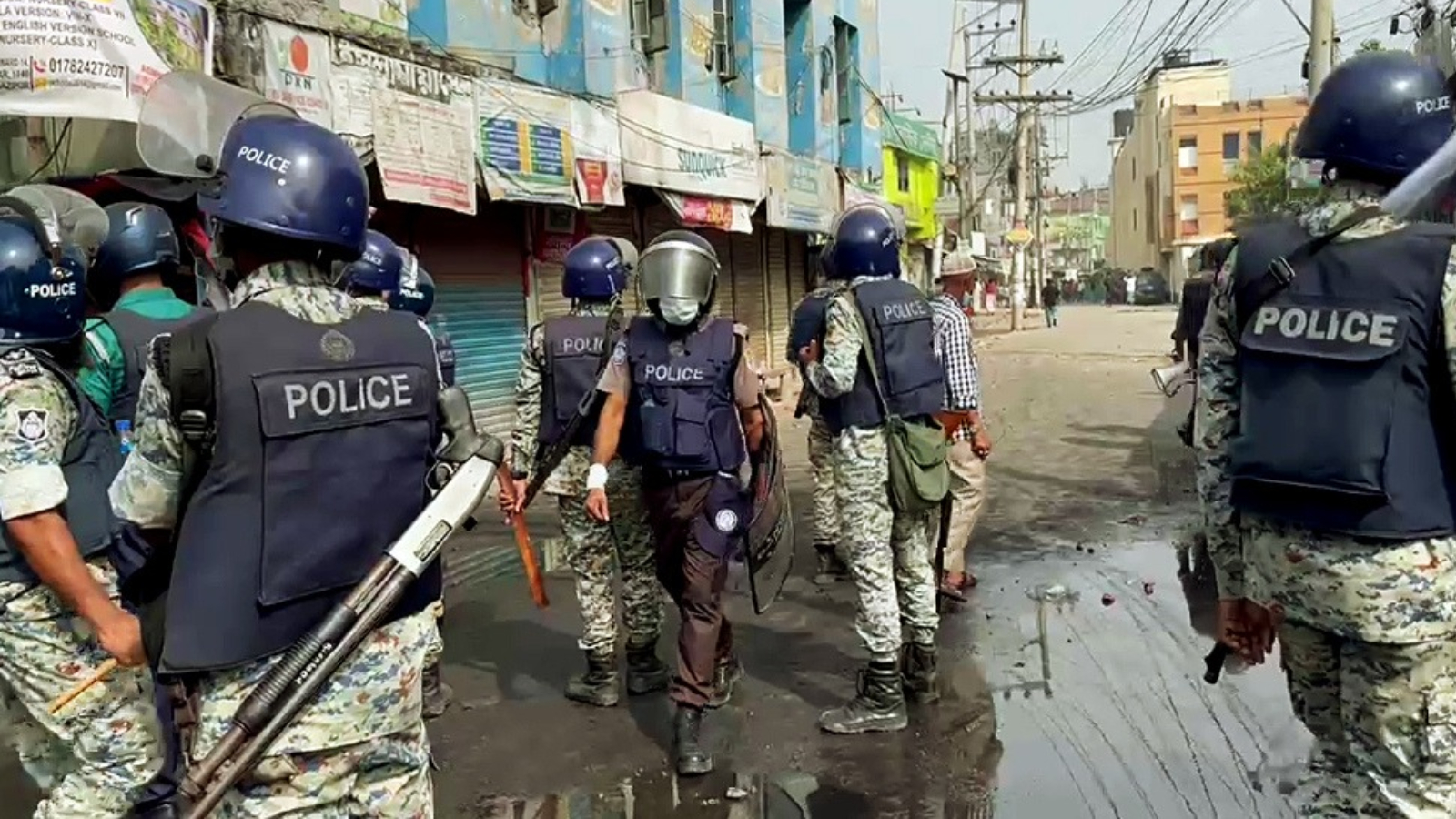
Walk through Liaquat Bazaar or Jinnah Road during a Quetta shutdown, and the silence hits you first. Metal shutters slam down across hundreds of storefronts, traffic disappears from the main arteries, and a city of over a million people effectively holds its breath.
Most headlines reduce these wheel-jam and shutter-down strikes to a single sentence about political friction or local unrest. That misses the point entirely. When opposition parties across Balochistan call for a complete strike in Quetta, they aren't just flexing political muscle—they're tapping into a boiling pot of runaway inflation, chronic joblessness, and deteriorating security that ordinary families deal with every single morning.
If you want to understand why these protests bring the provincial capital to a standstill time and again, you have to look past the surface-level press releases. You need to look at the economic squeeze on the ground, the political alliances driving the mobilization, and why Islamabad's standard playbook keeps failing to calm the streets.
The Real Forces Behind a Quetta Shutdown
A shutter-down strike in Quetta doesn't happen just because a party leader gives a speech. For shopkeepers, daily wage laborers, and transporters to voluntarily give up a day's income—especially when margins are already razor-thin—the frustration has to be personal.
In Balochistan, that frustration centers on three overlapping crises that reinforce each other.
First, there's the cost of basic survival. While inflation across Pakistan has hammered household budgets over the past few years, Quetta feels the shockwaves harder due to supply chain bottlenecks and transportation costs. Basic staples like wheat flour, sugar, cooking oil, and electricity bills have climbed far faster than local wages. When traders join a strike, they're protesting taxes, utility tariffs, and border trade restrictions that choke off legitimate commerce.
Second, unemployment in the province has reached a breaking point, particularly among educated youth. Balochistan holds massive reserves of natural gas, copper, gold, and coal, yet local graduates regularly protest outside the Quetta Press Club because they can't find entry-level jobs. State-run departments are bloated or frozen, private sector investment remains scarce, and cross-border trade—long a lifeline for border districts—faces frequent closures and tight regulations.
Third, security concerns hang over everything. Targeted attacks, highway blockades, and sporadic blasts don't just threaten lives; they scare away capital and stall infrastructure projects. Political parties argue—and many residents agree—that heavy-handed security measures and highway checkpoints disrupt daily movement without actually stopping militant violence.
Who Is Leading the Protests and Why Now
Balochistan's political arena is fragmented, with nationalist, religious, and mainstream parties often competing for the same constituency. Yet economic misery and security lapses have a way of pushing rivals onto the same stage.
When a Quetta shutdown gains real traction, it usually involves coordination among major regional players. Parties like the Balochistan National Party-Mengal (BNP-M), Pakhtunkhwa Milli Awami Party (PkMAP), National Party (NP), Jamiat Ulema-e-Islam-Fazl (JUI-F), and Jamaat-e-Islami (JI) frequently mobilize their student wings and trader unions to enforce strikes.
Here's why their messaging resonates right now:
- Border and trade restrictions: Thousands of families in Quetta, Chaman, and surrounding districts rely on informal and formal trade with Afghanistan and Iran. Tightened visa regimes and customs crackdowns have wiped out livelihoods overnight without offering alternative employment.
- Load-shedding and utility hikes: Even in the provincial capital, prolonged power outages and low gas pressure during freezing Quetta winters spark regular street demonstrations. Paying inflated bills for non-existent services pushes middle-class households straight into the opposition camp.
- Highway insecurity and blockades: National highways connecting Quetta to Karachi, Sukkur, and Taftan are economic lifelines. Frequent disruptions—whether from militant attacks or counter-protests—strand perishable goods and drive up consumer prices in the city.
- Disputes over resource governance: Local leaders consistently criticize federal policies regarding mega-projects like Reko Diq and Gwadar, arguing that decisions are made in Islamabad without transparent revenue-sharing or job quotas for Balochistan's residents.
Honestly, you don't need to be a political analyst to see why trader associations—like the Markazi Anjuman-e-Tajiran Balochistan—back these strikes. When your shop is losing money to taxes, power outages, and shrinking customer purchasing power, closing the shutters for a day becomes a form of self-defense.
Why Standard Government Responses Keep Backfiring
Whenever a major protest or Quetta shutdown is announced, the provincial administration and federal authorities tend to follow a predictable script. They deploy extra Frontier Corps and police contingents, place shipping containers on key roads leading to the Red Zone, and occasionally suspend mobile internet services.
It rarely solves anything. In fact, it usually makes the underlying resentment worse.
Blocking roads and cutting mobile data punishes the exact same small business owners and students who are already frustrated with state governance. Worse, treating economic and political grievances strictly as a "law and order" problem ignores the root causes. You can't use barricades to bring down the price of flour, and you can't use internet blackouts to create jobs for university graduates.
There's also a deep trust deficit around official committees. Over the years, both federal and provincial governments have formed dozens of high-level committees to negotiate with protesting traders, political alliances, and border sit-ins. Agreements get signed, strikes get called off, and then months pass with zero implementation. Once people realize promises are just a stalling tactic to clear the streets, the next protest becomes larger and harder to defuse.
What Actually Happens to Quetta's Economy During a Strike
People outside Balochistan often view a one-day strike as a minor symbolic gesture. On the ground, the financial damage is immediate and uneven.
Salaried government employees still get paid at the end of the month. Large corporate franchises absorb the temporary dip. The people who take the direct hit are the ones least able to afford it—rickshaw drivers, vegetable vendors, construction workers, and small shopkeepers operating on daily cash flow.
In major commercial hubs like Prince Road, Kandahari Bazaar, and Masjid Road, a single day of closure freezes millions of rupees in daily transactions. Perishable produce spoils in trucks parked outside the Sabzi Mandi. Intercity buses sit idle at terminals, leaving travelers stranded and transport operators burning through savings to cover maintenance and loan installments.
That's the harsh irony of a Quetta shutdown. Residents participate because they're desperate for economic relief, yet the protest itself inflicts short-term financial pain on the very community demanding change. People accept that trade-off only when they feel they have no other way to make policymakers listen.
Separating Political Posturing From Real Reform
It would be naive to pretend every political party calling for a strike is driven purely by altruism. Opposition groups use public anger to pressure the sitting provincial coalition, score points ahead of local elections, and stay relevant in national media cycles. Some leaders deliver fiery speeches at rallies in Quetta while maintaining quiet backchannel deals in Islamabad.
Voters in Balochistan know this. They've watched parties swap roles between government and opposition for decades without seeing basic infrastructure improve.
Still, dismissing the protests as "mere politics" is a massive mistake. Politicians can only mobilize crowds when the underlying pain is real. If inflation were under control, if young people had clear paths to employment, and if highways were safe for trade, no opposition leader could shut down Quetta on command.
Real stabilization in Balochistan doesn't come from temporary crackdowns or vague pledges. It requires targeted economic policy: streamlining legal cross-border trade with clear, predictable tariffs; enforcing transparent local hiring quotas in energy and mining projects; fixing power distribution infrastructure so businesses aren't crippled by outages; and keeping national highways open and secure without turning daily commutes into exhausting checkpoint gauntlets.
If you're following developments in Balochistan—whether as a researcher, business owner, or concerned citizen—don't just track whether the shutters go back up the next morning. Watch whether border trade restrictions ease, whether utility subsidies or tariff reforms actually reach local traders, and whether provincial leaders follow through on negotiated agreements thirty days after the cameras leave. Until those concrete indicators shift, every quiet morning in Quetta is just a pause before the next storm.