Most international media coverage treats a papal trip like a standard diplomatic tour. Handshakes, motorcades, staged photo ops, and vague speeches about peace.
They completely miss the point here. For another perspective, see: this related article.
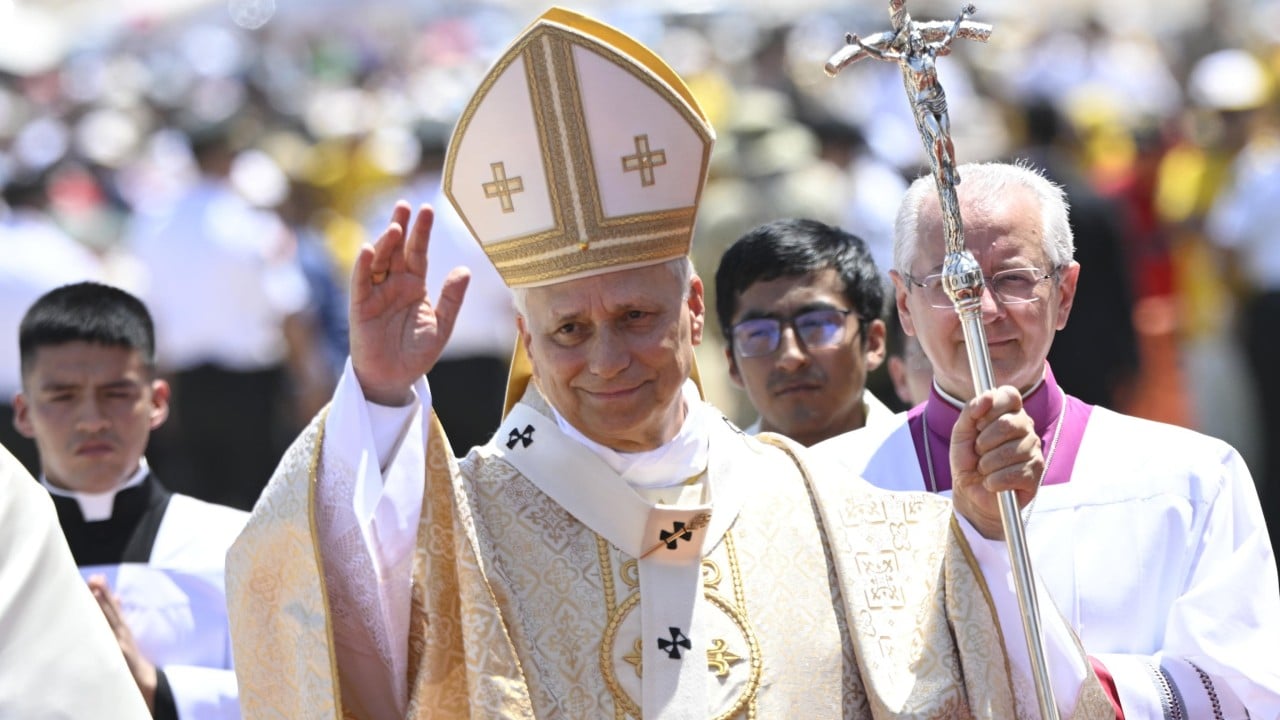
When tens of thousands of Peruvians flock to mass with Pope Leo in the exact city where he once served as bishop, you aren't watching a routine Vatican event. You're watching a homecoming. Before Robert Francis Prevost took the name Pope Leo XIV and stepped onto the balcony at St. Peter's Basilica, he spent years walking the dusty, sun-baked streets of Chiclayo in northern Peru. People there didn't just know him as a distant church official in Rome. They knew him as Padre Roberto—the guy who showed up during flood relief efforts, organized local soup kitchens, and actually learned the rhythms of coastal Peruvian life.
If you want to understand why the crowds in Chiclayo look so different from the polite, orderly gatherings you see in European capitals, you have to look at his history on the ground. It wasn't always easy. And honestly, the local Church in Peru has been through absolute turmoil over the last decade. Further reporting on this trend has been published by USA Today.
The Chiclayo Connection Nobody Explains Properly
To understand the sheer emotion at these masses, forget Vatican protocol for a second. Think about local geography and church politics.
Chiclayo sits in the Lambayeque region, roughly 770 kilometers north of Lima. It's a bustling commercial hub near the Pacific coast, famous for its food, its warm weather, and a deeply ingrained Catholic identity that mixes traditional Spanish colonial devotion with fiercely proud northern Peruvian culture.
Prevost arrived in Peru decades ago as an Augustinian missionary, long before he ever wore a bishop's miter. He worked in Chulucanas, Trujillo, and eventually became the Bishop of Chiclayo in 2015 after serving as apostolic administrator there starting in 2014.
Here's why that matters so much to the people crowding the avenues today:
- He wasn't an outsider parachuted in for a promotion. By the time Pope Francis named him to lead the Chiclayo diocese, Prevost had already spent years training seminarians, teaching canon law, and dealing with the everyday headaches of parish administration in northern Peru.
- He became a naturalized Peruvian citizen. That single detail carries massive weight locally. You don't become a citizen of Peru just to pad a resume. For locals, it proved he wasn't just passing through on his way up the Roman ladder.
- He weathered real crises alongside them. When catastrophic El Niño rains battered northern Peru in 2017, washing out bridges and flooding entire neighborhoods in Lambayeque, the local diocese mobilized emergency shelters and food distribution. People remember who was standing in the mud helping coordinate relief when government agencies stalled.
Most coverage glosses over these years with a single sentence in a biographical blurb. That's a mistake. Without those eight years as Bishop of Chiclayo, the massive turnout doesn't make sense.
What the Crowds at Mass Actually Look Like
If you've ever attended a major outdoor papal mass in Latin America, you know it's nothing like a Sunday service in North America or Europe.
People don't just show up twenty minutes before the liturgy starts. Families camp out overnight on flattened cardboard boxes. Vendors weave through the outskirts of security perimeters selling bottled water, chicha morada, and laminated prayer cards. Parish groups from rural districts outside Chiclayo—places like Ferreñafe, Lambayeque city, and Monsefú—charter battered buses hours before dawn just to claim a patch of asphalt within sight of the altar stage.
The atmosphere is loud, sweaty, emotional, and intensely personal.
When Pope Leo steps up to the altar in his old diocese, the dynamic shifts immediately. He doesn't have to rely on stiff, translated talking points written by a Vatican speechwriter who has never set foot in South America. He speaks Spanish with the familiar cadence of someone who spent half his adult life in the region. He knows the local Marian devotions, like the Cruz de Motupe, which draws massive pilgrimages in Lambayeque every year.
Watch the faces in the front rows during these broadcasts. You'll see former parish secretaries, catechists, and local priests who used to sit across from him in routine diocesan meetings. For them, the leader of the global Catholic Church isn't an abstract institution. He's their former boss and pastor.
Why This Visit Carries Serious Weight for the Peruvian Church
Let's be honest about the broader context. The Catholic Church in Peru hasn't exactly had a smooth ride lately.
Over the past several years, the Peruvian hierarchy has been rocked by bitter internal divisions, political polarization, and major abuse scandals—most notably the investigation and eventual Vatican intervention involving the Sodalitium Christianae Vitae (Sodalicio), a Peru-based lay society plagued by credible allegations of psychological, physical, and sexual abuse, as well as financial misconduct.
At the same time, evangelical and Pentecostal churches have grown rapidly across Peru, particularly in working-class urban districts and rural Amazonian and Andean communities. According to data from Peru's National Institute of Statistics and Informatics (INEI), while Catholicism remains the majority religion, its overall share of the population has steadily declined over recent census cycles.
So when hundreds of thousands of Peruvians pack the streets of Chiclayo to celebrate mass with Pope Leo, church observers pay very close attention.
A Morale Boost for Local Parishes
For everyday Peruvian Catholics who felt exhausted or embarrassed by institutional scandals in Lima, seeing a former local bishop elevated to the papacy—and watching him come back to celebrate mass in a provincial northern city rather than staying exclusively in the capital—sends an unmistakable signal. It tells ordinary parishioners that their communities aren't forgotten peripheries.
Navigating Peru's Political Volatility
Peru has cycled through a dizzying number of presidents, impeachment crises, and street protests in recent years. Trust in political institutions sits near rock bottom. In that vacuum, religious leaders often become the only figures capable of drawing massive, peaceful crowds across deep socioeconomic divides. Pope Leo has to walk a careful line during his remarks—speaking directly to poverty, corruption, and social justice without letting any single political faction claim him as an ally.
Common Misconceptions About Pope Leo and Peru
Whenever a major religious event hits international headlines, a few predictable misunderstandings start circulating online. Let's clear them up.
Misconception 1 He was just a short-term missionary.
Wrong. Prevost's ties to Peru stretch back to the mid-1980s. Even during periods when his duties as Prior General of the Order of Saint Augustine took him to Rome, he maintained constant contact with Peruvian Augustinian communities before returning full-time to lead Chiclayo in 2014.
Misconception 2 Chiclayo is a tiny rural village.
Not even close. Chiclayo is one of Peru's largest urban centers, with a metropolitan population well over 800,000 people. It's a major economic engine for northern Peru, known as the "City of Friendship," though it struggles with severe infrastructure deficits, informal labor markets, and recurring climate vulnerability.
Misconception 3 The massive turnout is purely about celebrity.
Papal visits always draw curious onlookers, sure. Yet the logistical effort required for rural families from the Andes of Cajamarca or the coastal valleys of Piura and La Libertad to travel to Chiclayo—taking days off informal jobs where missing work means missing income—goes way beyond casual curiosity. People make that sacrifice because they view his papacy as a direct validation of their own faith communities.
How to Follow and Contextualize the Visit Properly
If you're tracking the coverage of Pope Leo's masses in Peru or planning to follow the remaining stops on his itinerary, don't just read wire-service summaries that strip out all the local flavor.
- Watch the full local broadcasts from Peruvian outlets. Channels like TV Perú and RPP Noticias capture the unscripted moments—the local hymns, the regional dialects, and the interviews with elderly parishioners who knew him decades ago—that international clips cut out.
- Pay attention to the homily themes, not just the crowd size. Listen for references to synodality, care for the poor, and accountability within the Church. Because he knows Peru's internal ecclesiastical struggles intimately, his word choices carry deliberate weight for Peruvian bishops sitting behind him.
- Check the official Vatican press releases on Vatican.va. Compare the prepared Spanish text of his speeches against what he actually says off-the-cuff at the podium. In Chiclayo, surrounded by familiar faces, his unscripted remarks tell you far more about his priorities than the printed booklet ever will.