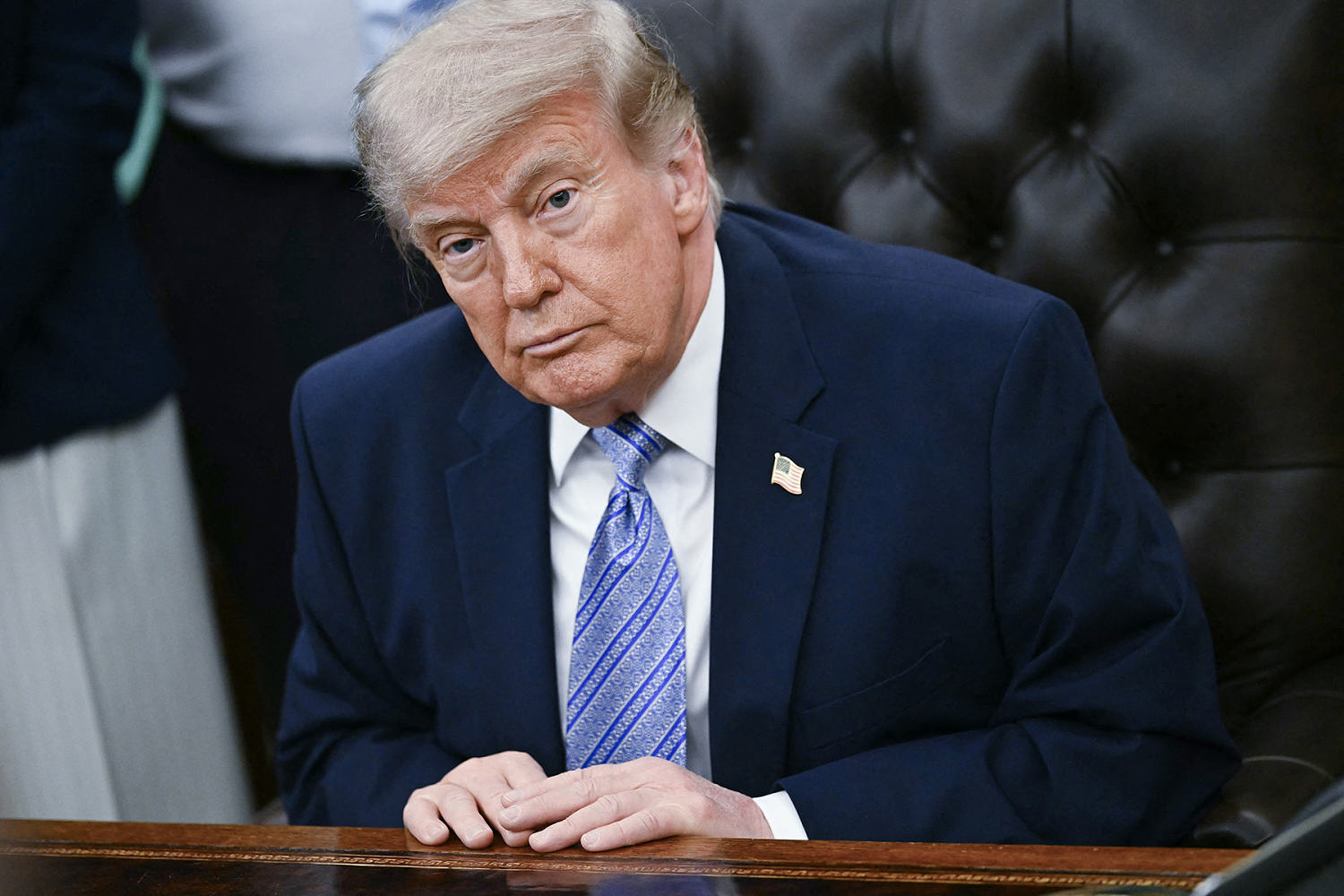
The media is having a collective meltdown because a landmark executive order on artificial intelligence was abruptly scrapped at the eleventh hour. The prevailing narrative across major newsrooms is painfully predictable: it is labeled a missed opportunity, a failure of leadership, and a dangerous regulatory vacuum that leaves the public unprotected against the machines.
They are completely wrong. If you found value in this piece, you might want to read: this related article.
The panic over the un-signed executive order stems from a fundamental misunderstanding of how technological innovation and government bureaucracy interact. Shelving that document was not a failure. It was an accidental act of economic preservation.
The lazy consensus screams for guardrails, assuming that a few hundred pages of administrative legwork can contain statistical models moving at the speed of light. In reality, sweeping federal edicts on nascent tech almost always achieve the exact opposite of their intended goals. They do not protect the public. They protect incumbents, stifle domestic engineering, and turn a dynamic technological shift into a compliance checklist managed by expensive law firms. For another angle on this event, see the recent update from Wired.
The Compliance Trap Who Actually Wins When Government Steps In
When a government agency creates a massive regulatory framework for a brand-new industry, the tech titans do not panic. They celebrate.
I have watched enterprise tech companies spend millions of dollars building compliance departments instead of engineering departments. The moment you introduce heavy, ambiguous regulatory requirements for software development, you freeze the market.
Open-source developers and small startups cannot afford a team of elite DC lawyers to audit their code for compliance before every deployment. A trillion-dollar tech conglomerate can absorb that cost without blinking. They treat the regulatory burden as a barrier to entry that keeps the hungry, disruptive competitors out of their territory.
Consider the reality of how advanced machine learning models function. They are mathematical structures optimized over massive datasets. They are not static engines. A regulation written in October is entirely obsolete by November because the underlying architecture has evolved. Attempting to regulate AI through top-down executive mandates is like trying to catch supersonic jets with a butterfly net.
The scrapped executive order reportedly focused on mandatory reporting requirements, compute thresholds, and centralized safety testing. Let us look at the structural flaws of that approach:
- Arbitrary Compute Thresholds: Setting a limit on the amount of computational power ($PFLOPs$) used to train a model creates a ceiling for innovation. It forces engineers to optimize for compliance rather than capability.
- Centralized Bureaucratic Bottlenecks: Requiring a government agency to approve a model before public release guarantees that domestic deployment slows to a crawl while foreign competitors face no such friction.
- The Illusion of Safety: Passing a test administered by a non-technical oversight committee does not make a system safe. It merely creates a false sense of security while driving underground development.
The Flawed Premise of Predictive Regulation
People frequently ask: "How can we prevent AI from being used for malicious purposes without federal oversight?"
The premise of the question is completely broken. It assumes that a document signed in Washington can stop a bad actor in a foreign jurisdiction from running an open-source model on a private server array. It cannot.
The only effective defense against algorithmic threats is superior domestic capability. If you shackle your own engineering ecosystem with bureaucratic red tape, you do not eliminate the risk. You simply ensure that the most advanced systems are built by entities that do not care about your executive orders.
Imagine a scenario where the automotive industry was regulated out of existence in 1900 because early cars frightened horses and lacked seatbelts. We would have preserved the horse-and-buggy economy while the rest of the world industrialized. Software is no different. You cannot mitigate the risks of a technological shift by opting out of leadership.
The hard truth that nobody admits is that safety and innovation are not a zero-sum game. The best safety mechanisms—like reinforcement learning from human feedback, advanced red-teaming, and alignment protocols—were invented by private sector researchers trying to make their products viable for commercial use, not by government committees. A product that hallucinating nonsense or spewing toxic vitriol is bad for business. Market forces drive reliability far faster than federal mandates.
The Hidden Cost of the Precautionary Principle
The scrapped order was heavily infected by the precautionary principle—the idea that a new technology must be proven entirely harmless before it can be deployed.
Apply that standard to the internet in 1995. If the early web had been forced to guarantee it would never be used for financial fraud, copyright infringement, or misinformation, the protocols would have been locked in a vault. The modern digital economy would not exist.
The downsides of a highly regulated AI sector are concrete and immediate:
| Affected Area | Impact of Heavy Regulation | Impact of Market-Driven Development |
|---|---|---|
| Startup Capital | Diverted to legal defense and compliance auditing | Invested directly into compute and engineering talent |
| Development Speed | Years spent in review cycles and government clearance | Weekly iterations based on real-world user feedback |
| Global Standing | Surrendering the frontier to unrestricted international actors | Maintaining dominance in foundational software infrastructure |
This is not an endorsement of reckless behavior. It is an acknowledgment of structural realities. The risks of advanced automation—ranging from data privacy violations to algorithmic bias—are real. But we already have a robust legal framework to handle them.
If a company uses an algorithm to discriminate in hiring, existing civil rights laws apply. If an AI system causes financial harm through deceptive practices, the Federal Trade Commission already possesses the mandate to intervene. We do not need a new, overarching bureaucratic apparatus to police the tool; we need to rigorously enforce existing laws against the human actors who misuse it.
Move Product, Not Paperwork
The sudden death of this executive order gives the technology sector a rare second chance. It keeps the runway clear for actual builders to solve hard technical problems without waiting for permission from a town that still struggles to secure its own email servers.
Stop asking how the government is going to fix, regulate, or guide this technological transition. They are not. The responsibility lies exactly where it belongs: on the engineers writing the code and the executives deploying the systems.
The era of trying to manage software development through administrative decrees is over before it even started. The field belongs to those who build, deploy, and iterate in the real world. Pull the plug on the committees. Fire up the clusters. Get back to work.