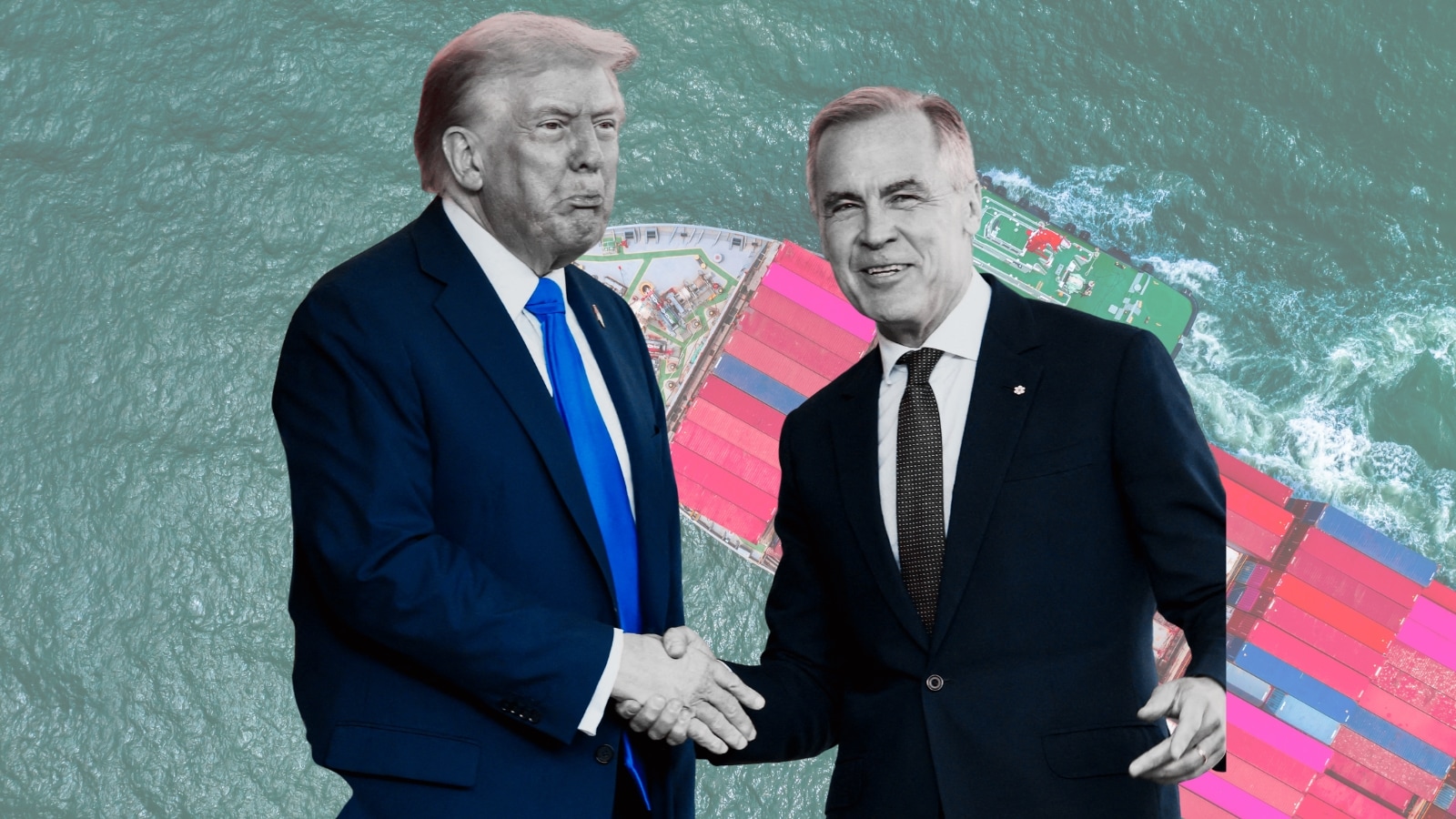
Every six months, a trade delegation flies into Manila, sips barako coffee in a Bonifacio Global City boardroom, and nods solemnly as a bureaucrat explains why the archipelago is the ultimate bridge between Southeast Asia and Latin America. It is a comforting narrative. It fits neatly into PowerPoint decks and sounds sophisticated at cocktail parties in Makati.
It is also complete nonsense. Recently making waves in this space: Germany Needs Less Private Capital Not More.
I have watched mid-level executives burn millions of dollars trying to force a trans-Pacific shipping, logistics, and corporate strategy through a geographic bottleneck that makes zero economic sense. The lazy consensus states that because Manila was once governed by Mexico via the Galleon Trade, and because both regions share a Catholic heritage and a penchant for Spanish surnames, a modern commercial corridor is waiting to be built.
History is not a balance sheet. Culture does not lower container tariffs. Additional details regarding the matter are covered by CNBC.
If you want to move capital, talent, or cargo between ASEAN and Latin America, the Philippines is the last place you should park your regional headquarters. Let us dismantle the lazy trade myths, look at the brutal logistics, and examine why this fixation on a trans-oceanic cultural reunion is costing companies millions.
The Geographic and Logistical Illusion
Look at a globe instead of a flat Mercator projection. The shortest paths between major Latin American economic hubs—Santiago, São Paulo, Bogotá, Mexico City—and ASEAN powerhouses like Jakarta, Singapore, Bangkok, or Kuala Lumpur do not run through Manila.
Direct maritime routes across the Pacific Ocean are vast, punishing stretches of deep water with limited intermediate refueling ports. When cargo ships cross from the west coast of South America or Mexico into Asia, they seek massive, hyper-efficient transshipment hubs capable of handling mega-container vessels with zero friction.
Singapore and Port Klang do this better than anyone on earth. They offer deep-water berths, automated customs clearance, and a density of connecting shipping lines that Manila’s port infrastructure cannot touch.
Manila port congestion is not an urban planning inconvenience; it is a structural tax on every container that passes through it. Terminal operators fight landside bottlenecks, trucking bans, and bureaucratic red tape that can turn a simple port transfer into a multi-day ordeal.
Imagine a scenario where a multinational manufacturer routes Latin American raw materials through Manila to supply factories in Vietnam or Indonesia. You have just added thousands of unnecessary nautical miles, doubled your customs exposure, and introduced a domestic trucking bottleneck in Metro Manila that routinely paralyzes local supply chains. It is logistics malpractice masquerading as regional strategy.
The Corporate Tax and Regulatory Maze
Proponents of the gateway theory love to talk about the Philippines' young, English-fluent population. That demographic dividend is real for call centers and business process outsourcing. It is entirely irrelevant for a multinational treasury center or regional logistics hub dealing with Latin American counterparties.
When a South American mining conglomerate or an agribusiness giant looks for an Asian base, they look at corporate income tax structures, ease of doing business rankings, and foreign ownership restrictions.
The Philippines maintains restrictive constitutional limits on foreign land ownership and foreign equity in specific industries. While recent legislative reforms have chipped away at some of these barriers, the regulatory environment remains a labyrinth of discretionary tax incentives and shifting bureaucratic interpretations.
Compare that to Singapore, Labuan, or even domestic hubs inside ASEAN where the rules are codified, predictable, and digitally integrated. If a Latin American fintech firm wants to expand into Southeast Asia, setting up shop in Manila means wrestling with central bank approvals, strict data localization whispers, and a tax regime that feels more punitive than welcoming. They go to Singapore instead. Every single time.
The Language Barrier Myth
Let us address the Spanish heritage argument, because it is the most frequently cited delusion in these trade forums.
Yes, a Filipino can pronounce Spanish surnames with native cadence. Yes, certain heritage words linger in Tagalog. But walk into a corporate law firm in Bogotá or a venture capital fund in Santiago and try conducting high-stakes commercial negotiations in colonial-era shared vocabulary. You will be met with blank stares.
Latin America runs on modern, fast-paced Latin American Spanish and, increasingly in business centers, fluent global English. The Philippines runs on English and Tagalog. Spanish ceased to be a working language in the Philippines generations ago.
The linguistic bridge does not exist outside of academic departments and cultural exchange programs. A Brazilian executive dealing with Portuguese and Spanish markets finds zero linguistic synergy in Manila. They find a country that communicates in English, which places Manila on the exact same footing as Singapore, Kuala Lumpur, or Sydney—except those other cities actually possess deep financial markets and stable macroeconomic fundamentals.
Where the Capital Actually Flows
Capital does not care about nostalgia. It flows along lines of least resistance, deepest liquidity, and highest yield.
Look at actual bilateral trade data between Latin America and ASEAN. The heavy lifting is done by commodity trade between South America (Chile, Brazil, Peru) and Northeast Asia (China, Japan, South Korea), with Southeast Asian nodes filtering through Singapore and Malaysia. Singapore acts as the financial clearinghouse because it hosts the global commodity trading desks, international law firms, and multi-currency banking infrastructure required to settle deals denominated in US dollars, renminbi, or local currencies.
The Philippines is a net importer of capital and a labor exporter. Its economy is fueled by remittances from overseas workers, domestic consumption, and business process outsourcing. These are noble, highly functional economic drivers, but they do not a regional trade gateway make. You cannot intermediate regional trade if your own domestic financial market is shallow and your currency volatility management requires constant central bank intervention.
The Honest Alternative
Stop trying to force an artificial bridge across the Pacific based on historical fan fiction.
If you are a Latin American company expanding into Asia, bypass the island archipelagos entirely. Establish your operational treasury in Singapore for capital allocation, park your manufacturing in Vietnam or Indonesia where the supply chains actually cluster, and use digital-first remote teams if you want to tap Filipino talent for back-office execution.
Conversely, if you are a Philippine enterprise looking outward, stop waiting for Latin America to land on your doorstep. Your immediate neighborhood houses six hundred million consumers with rapidly rising disposable incomes right next door in the rest of ASEAN. Master that market first. Win the supply chains that are geographically contiguous.
The gateway is closed because it was never built. Stop buying the brochure.