Global food security rests upon a fragile chemical equilibrium maintained by the consistent flow of natural gas and mineral salts through narrow maritime corridors. While much of the geopolitical discourse regarding conflict in the Middle East centers on crude oil price volatility, the more systemic threat to global stability lies in the potential decoupling of the nitrogen and phosphate supply chains. An escalation of kinetic conflict involving Iran does not merely threaten energy prices; it jeopardizes the caloric floor of the developing world by dismantling the "Fertilizer Triad": feedstock availability, processing capacity, and maritime throughput.
The Feedstock Dependency Function
Modern agriculture is, at its core, the conversion of hydrocarbons into carbohydrates. The Haber-Bosch process, which synthesizes ammonia from atmospheric nitrogen and hydrogen, is the primary mechanism for supporting half the global population. In this equation, natural gas serves as both the energy source and the hydrogen feedstock, typically accounting for 70% to 90% of the variable production cost for nitrogen-based fertilizers. Read more on a connected issue: this related article.
Iran holds the world's second-largest natural gas reserves. Beyond its own production, its proximity to the Persian Gulf puts roughly 25% to 30% of global urea and ammonia export capacity within the immediate "red zone" of kinetic impact. If a regional war disrupts gas extraction or the electricity grids powering liquefaction and synthesis plants in Qatar, Saudi Arabia, or the UAE, the global supply curve for nitrogen shifts violently to the left.
- Marginal Cost Escalation: As gas prices spike, high-cost producers (primarily in Europe) are forced to curtail operations, as seen during the 2022 energy crisis.
- Global Inventory Depletion: Low-latitude agricultural cycles (Brazil, India) rely on "just-in-time" shipments. A three-week disruption in the Strait of Hormuz exhausts the floating inventory of urea, leading to immediate localized price gouging.
The Geography of the Phosphate Trap
Unlike nitrogen, which can be synthesized wherever gas and air meet, phosphate is a mined mineral with extreme geographic concentration. Morocco, China, and the United States dominate the market, but the Middle East—specifically Saudi Arabia and Jordan—has become the critical marginal supplier. Additional analysis by The Motley Fool highlights comparable views on this issue.
The logistics of phosphate transport are uniquely vulnerable to the "Chokepoint Constraint." A significant portion of the world’s processed phosphate (DAP/MAP) must transit the Bab al-Mandab or the Strait of Hormuz to reach the high-demand markets of South Asia.
- The Suez-Hormuz Vector: If the Red Sea remains contested and the Persian Gulf becomes a combat zone, the insurance premiums for bulk carriers rise to a level that renders low-margin agricultural commodities uneconomical.
- Substitution Failure: Farmers cannot easily substitute phosphate with other nutrients. Depleting soil phosphorus leads to "hidden hunger," where crop yields may remain high in volume for one season but crash in nutritional density and future viability.
Infrastructure Fragility and the Desalination Link
A war in the Persian Gulf introduces a second-order effect rarely quantified in standard risk assessments: the water-energy-fertilizer nexus. Most fertilizer production in the region is integrated into massive industrial complexes that rely on desalinated water for cooling and steam generation.
These desalination plants are soft targets. If the power-to-water infrastructure is degraded by cyber or physical strikes, fertilizer production ceases even if the gas fields remain intact. The recovery time for a specialized ammonia synthesis converter or a high-pressure desalinator is measured in months, not days, due to the bespoke nature of the components and the specialized engineering required for installation.
Structural Divergence in Regional Impact
The impact of an Iran-led regional conflict is not distributed equally. It follows a hierarchy of vulnerability based on "Nutrient Sovereignty."
- Tier 1: High-Input Exporters (Brazil, USA): These nations face a margin squeeze. High fertilizer costs increase the break-even price of soybeans and corn. While they can afford the nutrients, the resulting food inflation exports instability to their trading partners.
- Tier 2: Subsistence Import-Dependent (Egypt, Pakistan, Ethiopia): These nations face a caloric deficit. Their foreign exchange reserves are often insufficient to compete for spot-market fertilizer during a supply shock.
- Tier 3: The Insulated Producers (Russia, China): These actors gain significant geopolitical leverage. China’s ability to implement "fertilizer nationalism"—banning exports to stabilize domestic prices—further tightens the global bottleneck.
The Logistical Feedback Loop
The breakdown of fertilizer supply chains creates a feedback loop that exacerbates the very instability that caused the disruption.
- Yield Reduction: Lower nutrient application leads to smaller harvests.
- Currency Devaluation: Food-importing nations must spend more hard currency on grain, weakening their local currencies.
- Political Instability: Historically, there is a direct correlation between the FAO Food Price Index and civil unrest in urban centers of the Global South.
Quantitative Risk Assessment of the Strait of Hormuz
The Strait of Hormuz is not just an oil artery; it is the "Nitrogen Pipe" of the world. Approximately 20 million metric tons of urea move through this corridor annually. A total closure or a high-intensity "Tanker War" scenario would remove a volume from the market that cannot be offset by increased production elsewhere in the short term. The global capacity utilization for nitrogen is already high; there is no "spare capacity" equivalent to the OPEC oil buffers.
The mechanism of failure here is the Inelasticity of Demand. Farmers must plant during specific windows. If fertilizer is unavailable in March, a surplus in August is irrelevant. This temporal rigidity means that even a brief conflict produces a permanent loss in annual global caloric output.
Strategic Mitigation and Re-Alignment
To navigate this volatility, institutional actors must move beyond reactive procurement.
Decentralization of Synthesis
Investment must pivot toward "Green Ammonia" facilities located in geopolitically stable regions with high renewable energy potential (e.g., Chile, Australia, parts of North America). By decoupling nitrogen production from natural gas and the Persian Gulf, the world can create a distributed manufacturing base that is immune to Middle Eastern kinetic risks.
Phosphate Reserve Strategic Stockpiling
Just as nations maintain Strategic Petroleum Reserves (SPR), there is a mandatory requirement for Strategic Nutrient Reserves (SNR). These should be located "downstream" of the chokepoints. For an importer like India, having a six-month buffer of phosphoric acid located in-country is the only viable defense against a Hormuz closure.
Enhanced Nutrient Efficiency (Precision Ag)
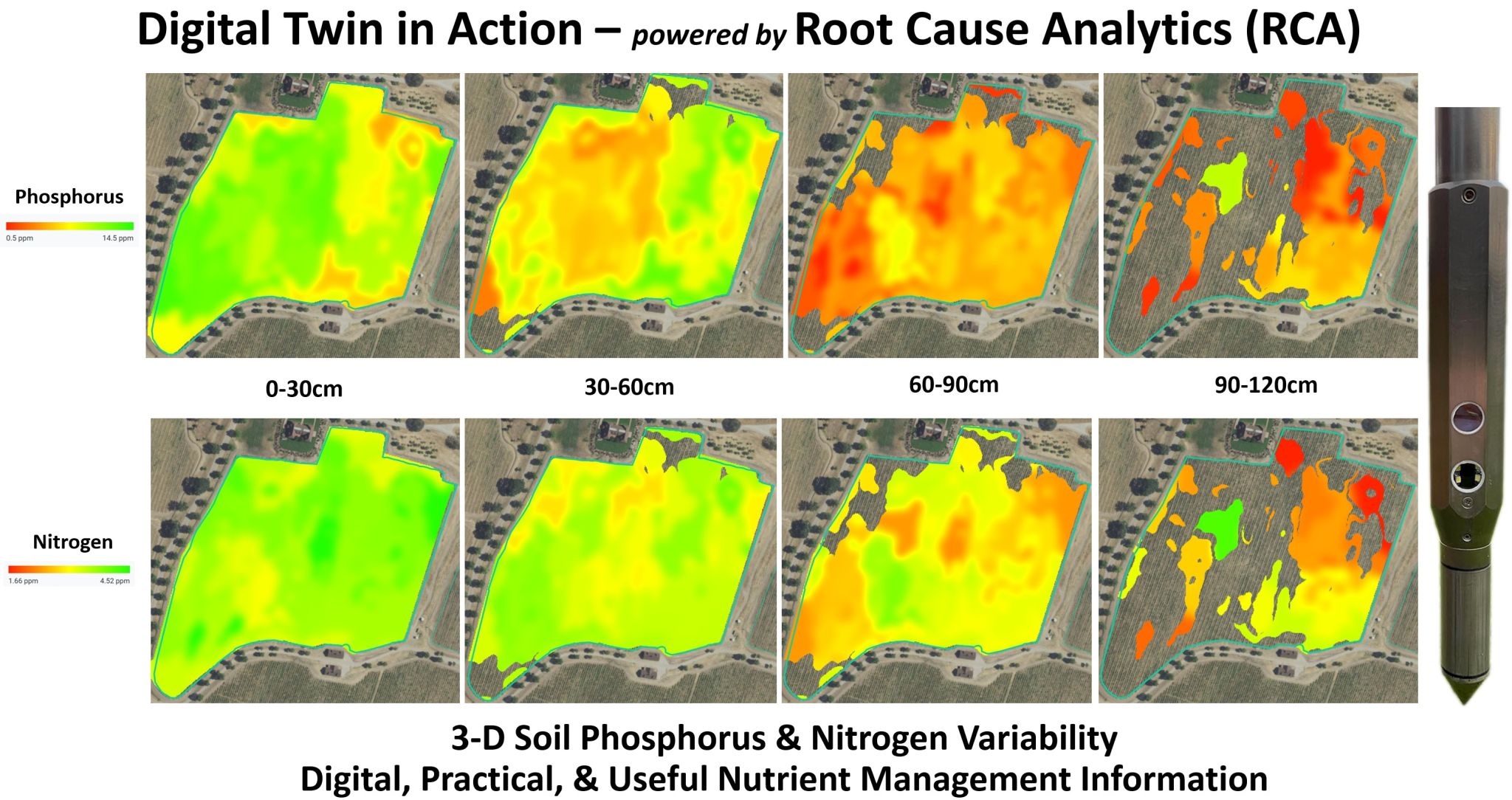
The transition from broad-spectrum application to variable-rate application (VRA) reduces the total volume requirement of imported salts. This is no longer a sustainability goal; it is a national security imperative to reduce the "Import Requirement Ratio."
The risk of an Iranian conflict is often priced in dollars per barrel. The more accurate metric of catastrophe is quintals per hectare. The strategy for the next decade must prioritize the hardening of these chemical lifelines, recognizing that the ability to feed a population is the ultimate prerequisite for every other form of security.
Institutional investors and sovereign wealth funds should prioritize the "Atlantic-Pacific Nutrient Bridge," favoring projects that utilize Canadian potash, Moroccan phosphate (via Atlantic routes), and US/Latin American nitrogen. Reducing the "Gulf-dependency coefficient" is the only logical path to de-risking the global food supply.
The final move for procurement managers is the immediate shift from spot-market reliance to long-term, fixed-volume contracts with North American or North African producers, effectively paying a "security premium" to bypass the Persian Gulf’s inherent volatility. Those who wait for the first missile to be fired before securing supply will find themselves priced out of the market entirely.