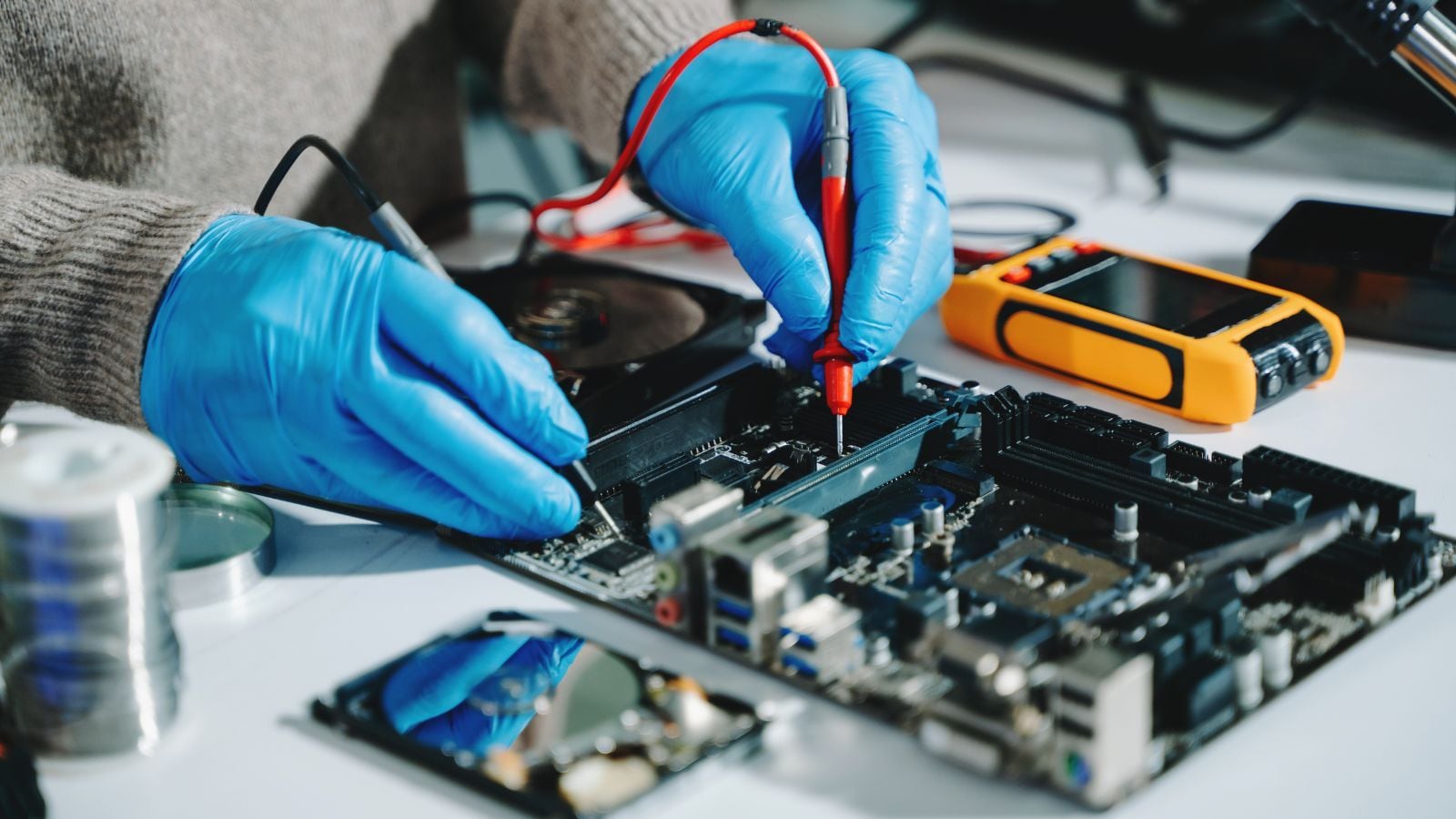
Rain falls differently on the glass facades of Huaqiangbei. It does not cleanse; it merely streaks, washing away the carbon grime of scooters that weave through the grey mist like frantic hornets. Inside the sprawling electronics markets, where you once had to shout to be heard over the chorus of a thousand ringtones and the clatter of ribbon cables being sorted, a strange, heavy quiet has settled.
It is the sound of six quarters of decline.
Meet Chen. Chen is thirty-four, and his fingers are scarred at the knuckles from twenty years of seating microchips into motherboards no bigger than a postage stamp. When Chen started in this industry, a smartphone was a declaration of modernity. It was a golden ticket out of the agrarian villages of Hunan, a glowing slab of potential that everyone—from the noodle vendor on the corner to the executive in the gleaming tower—needed to hold in their palm.
Now, Chen sits on a plastic stool, staring down at an unsold stack of mid-tier casings. The LEDs on his soldering station glow a soft, lonely orange.
"People are holding on," he says, not looking up. His voice is flat, worn smooth by repetition. "They aren't losing their phones. They are just losing their rush to replace them."
This is the hidden crisis of the world's most prolific manufacturing engine. For a decade and a half, the narrative of consumer technology was built on an unshakeable law of gravity: what goes into your pocket must, after twenty-four months, go into the drawer, replaced by something shinier, faster, slightly thinner.
Then, the gravity failed.
To understand why China’s smartphone shipments tumbled for six straight quarters—a historic slump that left analysts scrambling and supply chains gasping—we have to look past the spreadsheets of Beijing and Wall Street. We have to look at the psychology of the consumer who has reached saturation point.
Imagine buying a jacket that lasts forever. Imagine a winter coat that refuses to fray, whose zippers never stick, whose warmth never fades. At first, you are thrilled. Then, you buy a second one. But by the fifth year, when the store downtown rolls out a new coat with slightly shinier buttons, you check your current coat. It keeps you warm. The pockets hold your keys. Why spend the money?
That is the existential wall the mobile industry has hit.
For years, upgrades were measured in leaps. A camera that could suddenly see in the dark. A screen that bent like paper. 5G speeds that turned buffering into a ghost story. Consumers lined up around the block because tomorrow was visibly, undeniably better than yesterday.
Then the law of diminishing returns arrived with a sledgehammer.
Today, a phone built three years ago takes pictures good enough to fool an art director. It streams video without stuttering. It runs the apps that dictate our modern lives—payments, navigation, work chats, and midnight scrolling—with casual indifference. The processor speeds have outpaced human perception. When a device is already fast enough, making it twice as fast is like putting a rocket engine on a bicycle.
And so, the upgrade cycle stretched. It cracked. It broke.
Data from market researchers tells the cold story: shipments plunged quarter after quarter, down double digits year-over-year at the trough. Factories that once hummed twenty-four hours a day with the nervous energy of assembly lines now power down sections of their floors by five in the afternoon. Warehousing rents in Shenzhen dipped as inventory sat frozen, waiting for buyers who were busy paying down mortgages, managing economic anxieties, or simply deciding that their current rectangle of glass and aluminum was quite good enough, thank you very much.
The global ripple effect of this stagnation is profound. When the world’s largest smartphone market sneezes, the components suppliers in Seoul, the chip designers in Silicon Valley, and the rare earth miners in Inner Mongolia catch a cold. Apple, Samsung, Xiaomi, and Oppo found themselves staring at the same uncomfortable mirror: how do you convince a population to buy a new device when the old one refuses to break?
Consider what happens next in an economy built on perpetual replacement.
When hardware sales plateau, the battleground shifts from what the phone is to what the phone does. This is why companies suddenly pivoted toward artificial intelligence integrations, whispering promises of personal assistants living inside your pocket that can draft emails, summarize meetings, and edit out strangers from vacation photos. They are desperately trying to manufacture a new kind of obsolescence—not physical wear and tear, but psychological inadequacy. They need you to feel like your phone is no longer just old, but ignorant.
Yet, walking the aisles of Huaqiangbei, you realize the psychological pitch is falling on increasingly deaf ears.
Chen packs up his tools as the overhead fluorescent lights flicker, signaling the end of another slow afternoon. He wipes his hands on a rag, leaving a smudge of thermal paste. He is not bitter, just bewildered by the speed of the turn. He remembers when everyone wanted the future, and they wanted it every two years like clockwork.
Now, the future sits quietly on the shelf, waiting for a reason to be born again.